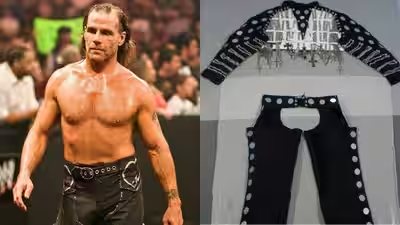
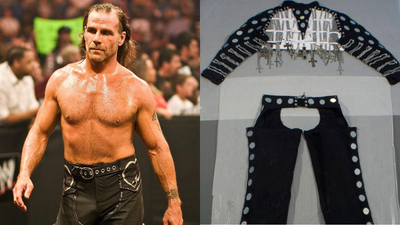
Shawn Michaels is remembered for his high-energy performances, signature wrestling moves and distinctive stage costumes. However, preserving the outfits worn by the WWE legend presented a different kind of challenge. The synthetic materials used in some wrestling costumes can deteriorate over time, leaving conservators with the difficult task of protecting both the fabric and its visual details. Conservation science offers a way to address this problem by examining how materials age and how carefully selected adhesives can help stabilise damaged components. The work highlights the role of chemistry in preserving sports and entertainment history, where costumes are more than clothing. They are part of the visual identity and cultural legacy of performers who shaped professional wrestling.
Shawn Michaels’ WWE costume that was falling apart
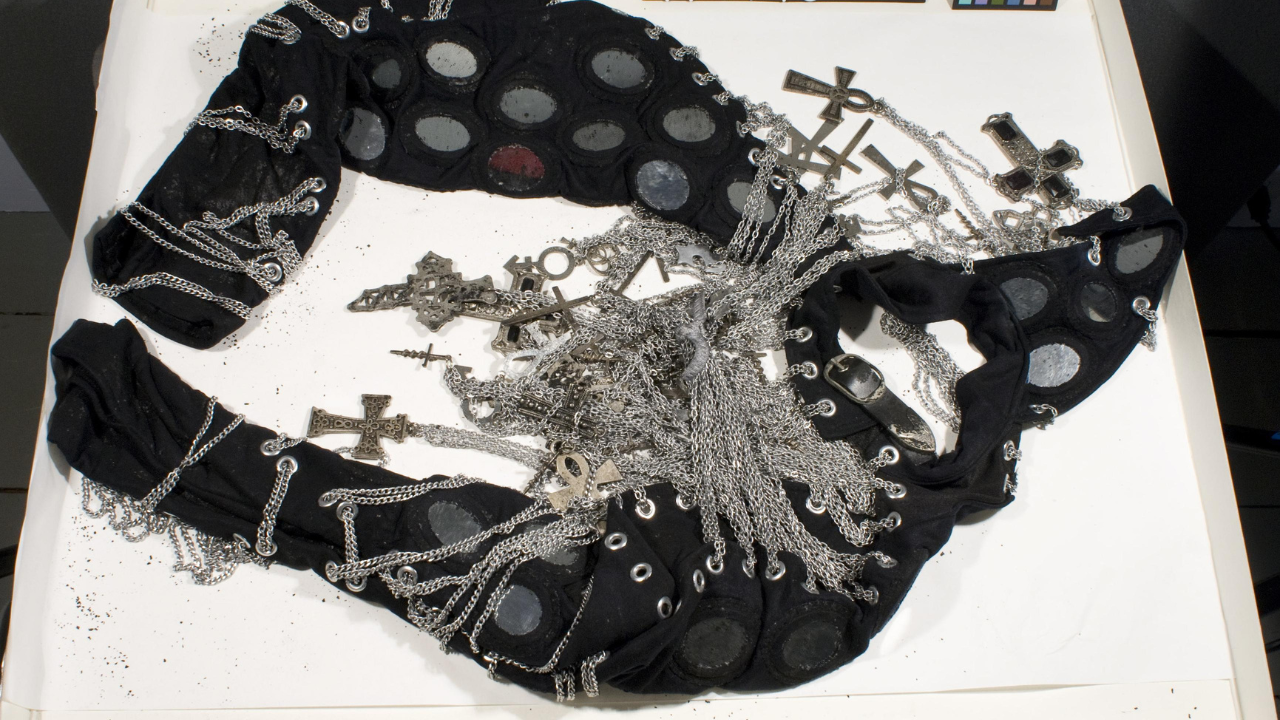
The preservation project began when World Wrestling Entertainment (WWE) contacted the Textile Conservation Workshop in South Salem, New York. Conservator Alison Castaneda explained that the organisation had an outfit belonging to Shawn Michaels that had deteriorated badly during storage. The costume, made from synthetic leather, had been kept in a plastic container for many years.When the conservators examined it, they found a severely degraded pair of synthetic leather chaps and a top. The outfit also featured chains, crosses and other decorative elements. Before deciding how to treat the costume, they needed to identify the material causing the deterioration.
Chemistry revealed the material behind the damage
Castaneda and her colleagues used research and testing to determine the type of synthetic leather. The material was identified as polyurethane ester, a type of polyurethane that can deteriorate over time.The team used the Biostine Copper Test and examined flakes from the costume. They also boiled some of the flakes in sodium hydroxide for 30 minutes to help establish the material’s composition.Identifying the material was an important step because the conservation treatment needed to be compatible with the synthetic leather and its underlying structure.
Testing adhesives to find a suitable solution
The conservators investigated previous treatments used on polyurethane ester sculptures. They considered several adhesives, including Impranil DLV, Plextol B500, gelatin and B-72.To compare their performance, the team placed small flakes on nylon fabric and tested the adhesives using an ultrasonic nebuliser. This method helped distribute the adhesive through the flakes rather than leaving it only on the surface.The samples were then tested using a blower, a brush and gentle physical movement. Impranil DLV produced the strongest adhesion among the tested options, making it the preferred adhesive for treating Michaels’ costume.
How the specialised adhesive preserved the costume
Once Impranil DLV was selected, the conservators began treating the costume. They first vacuumed the outfit to remove loose material. The costume consisted of a nylon substrate, a thin polyurethane foam layer and an embossed skin layer.Where the outer skin had already disappeared, only powdery foam remained. The team removed this residue because it did not represent the original appearance of the costume and could attract dirt and environmental pollutants.The remaining skin layer was preserved. The conservators then applied Impranil DLV in a 22% solution using an ultrasonic nebuliser. The treatment helped secure the remaining flakes and reduce further loss, although it could not restore pieces that had already completely detached.
Why the costume could not return to display
Following treatment, the outfit was placed in an archival box. The chains were secured to prevent them from moving and striking the fragile synthetic leather.The costume was returned to WWE, which was pleased with the work and subsequently brought three more Shawn Michaels costumes to the conservators for similar treatment.However, the original costume was considered too degraded for display. Its intended future was long-term archival storage rather than exhibition. Castaneda explained that polyurethane synthetic leather naturally deteriorates over time, making preservation particularly challenging.
Chains, mirrors and other decorative details
The costume’s synthetic leather was not the only material requiring attention. As the polyurethane degraded, it became tacky and adhered to the metal components and mirrors.To address this, the conservators used a diluted ethanol solution and cotton swabs, combined with mechanical cleaning. This removed the residue from the decorative elements and improved their appearance.The treatment demonstrates that preserving a costume requires attention to the interactions between different materials, not just the primary fabric.
WWE brought more Shawn Michaels costumes for conservation
After the initial treatment, WWE supplied three additional costumes associated with Shawn Michaels. According to Castaneda, the outfits included a gladiator-inspired design, a zebra-like costume and a red synthetic leather outfit decorated with black chains.She also discussed the costume designers, explaining that two sisters had begun designing outfits for Michaels after one of them sent him a costume she had made. Their work later expanded to designing costumes for other WWE performers.The conservation project therefore extended beyond a single outfit, highlighting the long-term challenges of preserving performance costumes made from synthetic materials.