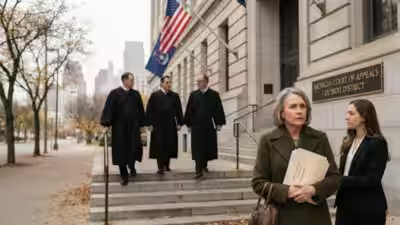

The work of a legal rights organisation rarely follows the pace of a news cycle. Cases can remain unresolved for years, laws may take even longer to change, and people facing discrimination or imprisonment often struggle to find legal representation. It was against this backdrop that George and Amal Clooney established the Clooney Foundation for Justice, an organisation focused on providing legal support to people whose rights have been violated. Working across more than 40 countries, the foundation concentrates on two broad areas: defending freedom of speech and advancing the rights of women and girls. Its work includes representing journalists, supporting survivors of violence and challenging legal systems that deny people a fair hearing.
How the Clooney Foundation for Justice began its work
The Clooney Foundation for Justice (CFJ) was established by actor George Clooney and human rights lawyer Amal Clooney to address inequalities in access to justice. Rather than concentrating on a single country or category of legal disputes, the organisation works internationally, offering free legal assistance to people who might otherwise struggle to challenge unfair treatment through the courts.Its activities extend beyond individual cases. The foundation monitors criminal proceedings, reports on trials where fairness is in question and takes legal action against laws it considers unjust. It also helps establish legal aid clinics for vulnerable communities and supports younger advocates working in the field of gender justice.Reportedly, the organisation’s work is spread across more than 40 countries, reflecting the range of legal and human rights issues it addresses. Some cases require immediate intervention, while others involve years of legal proceedings before any meaningful progress becomes visible.
Two programmes focus on journalists and women’s rights
The foundation operates through two principal initiatives, each addressing a different area of legal vulnerability. TrialWatch concentrates on freedom of speech and the treatment of journalists facing criminal prosecution or imprisonment. Waging Justice for Women, meanwhile, provides legal assistance to women and girls dealing with discrimination, violence and restrictions on their rights.Together, the programmes form the main part of CFJ’s legal aid work. Both involve supporting individuals through legal processes while documenting wider problems within the justice systems in which their cases arise.
TrialWatch works to defend journalists facing unfair imprisonment
Through its TrialWatch initiative, the foundation provides free legal representation to journalists who have been imprisoned in circumstances where their right to a fair trial is in question. The programme also monitors criminal proceedings internationally, making it possible to identify cases where legal protections may not have been properly observed.The initiative is designed to address more than the circumstances of individual journalists. By examining how criminal trials are conducted, TrialWatch also seeks to bring attention to broader concerns surrounding press freedom and the use of legal systems against people reporting on matters of public interest.CFJ describes the programme as the first initiative of its kind to monitor criminal trials globally. Its approach combines legal assistance with the documentation of proceedings, giving the organisation a basis for raising concerns about cases in which journalists face imprisonment.
Waging Justice for Women provides legal support to women and girls
The foundation’s second programme, Waging Justice for Women, focuses on people whose rights are affected by discrimination, child marriage and violence. It provides free legal assistance to women and girls, including those seeking protection from practices that restrict their freedom or prevent them from exercising their legal rights.The programme recognises that access to legal representation can be particularly difficult for women facing abuse or discrimination. Without appropriate support, challenging such treatment through the courts can become difficult, especially in communities where established social practices and legal barriers overlap.Through this initiative, CFJ works to help women and girls pursue legal remedies and defend their rights. The programme also contributes to the foundation’s wider efforts to support gender justice advocates and improve access to legal assistance.
Supporting survivors of atrocities beyond the headlines
Some of the foundation’s work concerns human rights violations that continue to affect survivors long after international attention has moved elsewhere. CFJ says it remains involved in cases involving atrocities in the Democratic Republic of Congo and Sudan, alongside efforts to address violence and discrimination against women and girls in different parts of the world.One of the causes closely associated with Amal Clooney’s legal work is the pursuit of justice for Yazidi women who were raped and enslaved by Islamic State (ISIS). The foundation identifies her representation of these women as part of its continuing efforts to secure accountability for crimes committed against vulnerable communities.Such cases can involve complicated legal proceedings and lengthy efforts to establish responsibility. The passage of time does not necessarily bring an end to the legal difficulties faced by survivors, particularly when those responsible for abuses have not been brought before a court.CFJ’s stated approach is to continue working on these matters even when they no longer receive sustained media coverage. Its work combines individual legal representation with wider efforts to challenge discriminatory laws and improve the availability of legal support.
Why the foundation’s work can take years
Legal action in cases involving human rights violations does not always produce quick results. Investigations, court proceedings and efforts to challenge existing legislation can stretch across several years. In some situations, survivors must also contend with legal systems that offer limited protection or make it difficult to hold perpetrators accountable.The foundation acknowledges that the route to justice can be lengthy, particularly in cases involving violence, discrimination and restrictions on freedom of expression. Its programmes are therefore structured around continued legal assistance rather than short-term interventions.