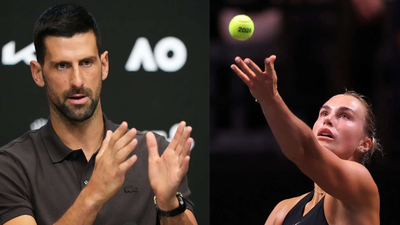
The dispute between tennis players and the four Grand Slams has intensified ahead of this month’s French Open, with world No. 1 Aryna Sabalenka suggesting players could eventually boycott the tournaments if negotiations over prize money and player welfare continue to stall. Speaking during the opening week of the 2026 Italian Open in Rome, Sabalenka addressed the issue directly after joining a group of 20 leading players, including Novak Djokovic, Jannik Sinner and Iga Świątek, in signing a statement expressing “deep disappointment” over the financial structure surrounding the majors. “Without us there wouldn’t be a tournament and there wouldn’t be that entertainment,” Sabalenka told Sky Sports. “I feel like we deserve to be paid more. “I think at some point we will boycott it. I feel like that’s going to be the only way to fight for our rights.”
Players challenge Grand Slam revenue split
The players’ statement was released after French Open organisers confirmed a roughly 9.5 per cent increase in prize money for Roland Garros, with the total purse rising to 61.7 million euros ($72.1 million), up 5.3 million euros ($6.2 million) from last year, with the men’s and women’s singles champions each set to receive 2.8 million euros ($3.28 million). Runners-up will earn 1.4 million euros ($1.64 million), semi-finalists 750,000 euros ($878,685) and first-round losers 87,000 euros ($101,927), while the men’s and women’s doubles champions will receive 600,000 euros ($702,786) and the mixed doubles winners 122,000 euros ($142,899). Despite those increases, the players argue that their overall share of tournament revenue continues to decline.The statement released on Monday said the players’ share of Roland Garros tournament revenue had declined from 15.5 per cent in 2024 to a projected 14.9 per cent in 2026, despite tournament revenues continuing to rise sharply.“According to tournament officials, Roland Garros generated 395 million euros in revenue in 2025, a 14% year-on-year increase, yet prize money rose by just 5.4%, reducing players’ share of revenue to 14.3%,” the statement said.
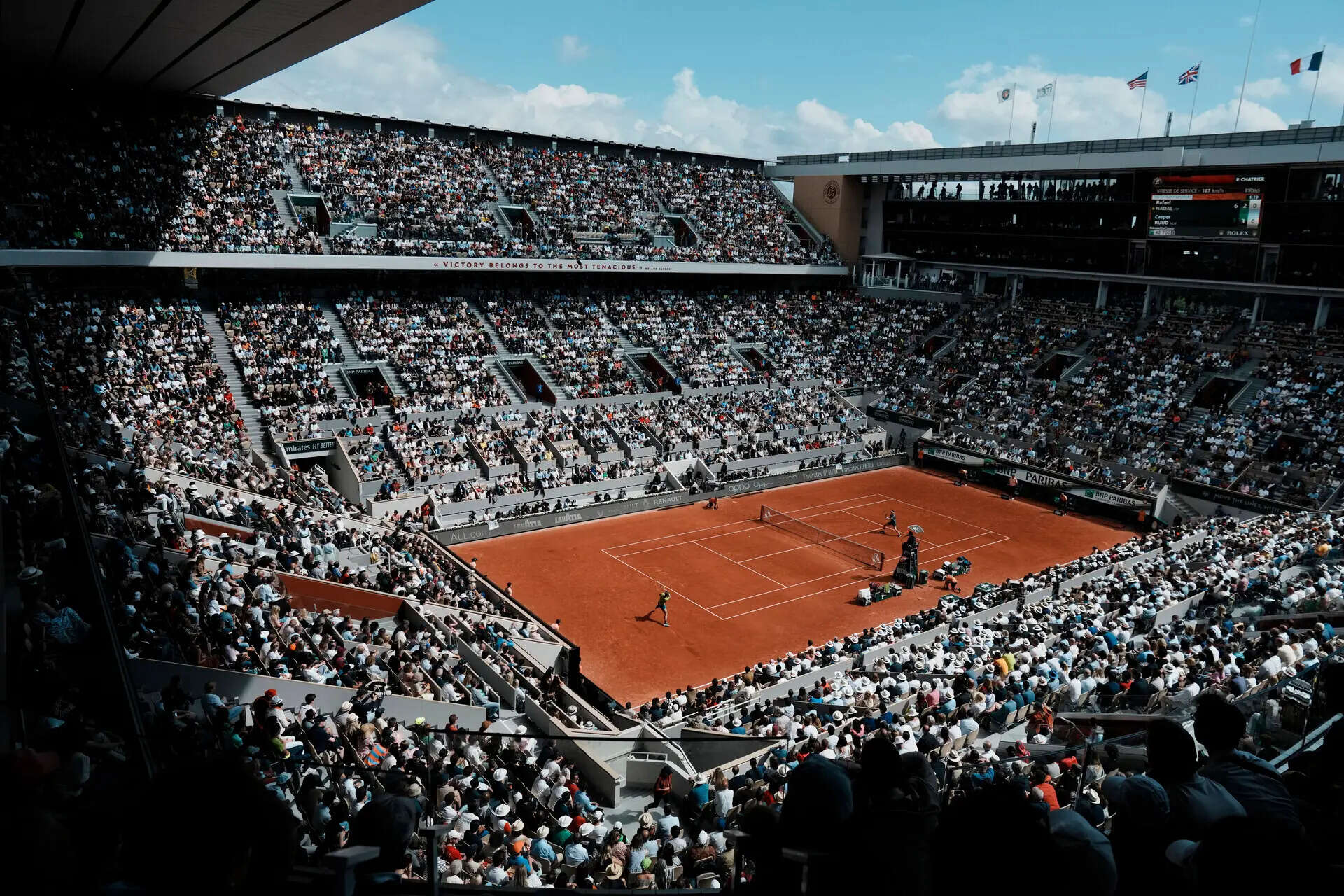
FILE – The crowd watch Norway’s Casper Ruud playing against Spain’s Rafael Nadal on the court Philippe Chatrier, known as center court, during their final match of the French Open tennis tournament at the Roland Garros stadium on June 5, 2022 in Paris. (AP Photo/Thibault Camus, File)
“With estimated revenues of over 400 million euros for this year’s tournament, prize money as a percentage of revenue will likely still be less than 15%, far short of the 22% that players have requested to bring the Grand Slams into line with the ATP and WTA Combined 1000 events. As Roland Garros looks set to post record revenues, players are receiving a declining share of the value they help create.” The players also argued that the issue extends beyond prize money itself. “More critically, the announcement does nothing to address the structural issues that players have consistently and reasonably raised over the past year. There has been no engagement on player welfare and no progress towards establishing a formal mechanism for player consultation within Grand Slam decision-making. “The Grand Slams remain resistant to change. The absence of player consultation and the continued lack of investment in player welfare reflect a system that does not adequately represent the interests of those who are central to the sport’s success.”
Welfare, pensions and scheduling concerns
The same group of players had already signed a letter sent to the heads of the four Grand Slam tournaments last year, seeking more prize money and a greater say in what they called “decisions that directly impact us.”The communications firm that released the statement said it was issued in the name of the original signatories to the initial letter, later adding that Novak Djokovic had not signed the new statement, according to AP. The concerns raised fall broadly into three categories: a higher prize money-to-revenue ratio, increased contributions toward pensions, healthcare and maternity support, and greater player involvement in scheduling and tournament decisions. Players have pointed out that the ATP and WTA Tours distribute roughly 22 per cent of revenue to competitors and contribute around $80 million annually toward player welfare and pension programmes, while estimates for the Grand Slams generally place their distribution between 12 and 16 per cent. The discussion around scheduling has also become part of the wider disagreement, with players raising concerns over late-night finishes, expanding tournament formats and increasingly congested calendars. Sabalenka’s comments came during the Italian Open at the Foro Italico, which runs from May 5 to May 17 and serves as one of the final major clay-court tournaments before Roland Garros begins later this month. Djokovic is competing in Rome after returning from a six-week absence caused by a shoulder injury, having missed both the Miami Open and the Madrid Open during his recovery period, while reigning champion Carlos Alcaraz is absent from the tournament because of a wrist injury.
Świątek urges negotiation rather than boycott
Świątek, a four-time French Open champion and one of the signatories to the statement, stopped short of endorsing a boycott and instead called for direct discussions with tournament organisers before Roland Garros begins on May 24. “The most important thing is to have proper communication and discussions with the governing bodies so we have some space to talk and maybe negotiate,” Świątek said. “Hopefully before Roland Garros there’s going to be an opportunity to have these types of meetings and we’ll see how they go. “But boycotting the tournament is a bit of an extreme situation.” French Open organisers did not respond to a request for comment from AP following the release of the players’ statement, while Djokovic, who has previously advocated for increased prize money at the majors, remains among the leading figures backing the campaign as discussions continue ahead of the second Grand Slam of the season.Full list of the players who have put their name to the campaign to change the prize money structure at Roland-Garros:Women: Aryna Sabalenka, Coco Gauff, Iga Swiatek, Jessica Pegula, Madison Keys, Jasmine Paolini, Emma Navarro, Zheng Qinwen, Paula Badosa and Mirra Andreeva.Men: Jannik Sinner, Carlos Alcaraz, Alexander Zverev, Taylor Fritz, Alex De Minaur, Casper Ruud, Daniil Medvedev, Andrey Rublev and Stefanos Tsitsipas.