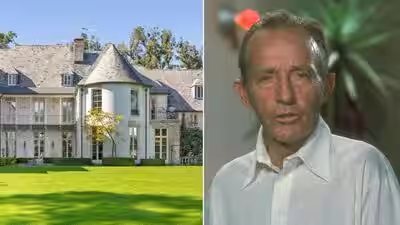

Sarah Beeny has won a major planning battle to keep her so-called ‘mini-Downton Abbey’ farmhouse on her Somerset estate, despite previously being ordered to demolish the property for unauthorised work.According to a report by the Daily Mail, the 54-year-old television presenter and property entrepreneur, along with her husband Graham Swift, has finally received the green light from Somerset Council following years of planning disputes over the elaborate farmhouse at Stokeford Farm in Stoney Stoke.However, the decision has drawn criticism from local residents and parish councillors, who questioned the council’s change of position and raised concerns about the enforcement of planning regulations.Neighbour Kevin Flint accused Beeny of creating tension in the village, claiming she had been allowed to disregard the conditions attached to the original planning permission.“She thinks she can move down here and ride roughshod over everybody but it’s not going to happen,” Flint said, adding that he believed unauthorised development should be demolished.
How Sarah Beeny’s farmhouse planning row began
Beeny and Swift purchased the rural estate for £3 million in 2018 and subsequently embarked on an extensive redevelopment project.In 2020, they secured permission to demolish the original 1970s farmhouse and replace it with a new property. However, instead of demolishing the existing building, the couple extended and refurbished it without obtaining the necessary planning permission.The property later featured in Beeny’s Channel 4 series New Life in the Country, which documented the family’s move to the Somerset countryside and their efforts to transform the estate.When the couple applied retrospectively to regularise the unauthorised work, their application was rejected in September 2024. They subsequently lost an appeal to the Planning Inspectorate in February 2025 and were ordered to demolish the building.
How a revised planning application changed the outcome
The couple’s planning team, Avalon Planning & Heritage, subsequently pursued an alternative approach that allowed them to seek permission to retain the farmhouse.An earlier planning approval had permitted the conversion of disused agricultural buildings on the estate into five new homes. However, the development had not been completed.According to the Daily Mail, the couple then applied to vary the existing planning conditions. Under the revised proposal, they would build four new homes instead of five and retain the original farmhouse.Jason Baker, chair of Planning South at Somerset Council, confirmed that the application could be determined under delegated powers, citing the existing approval for five new dwellings as an alternative development option.The revised proposal was ultimately approved, bringing the long-running dispute closer to resolution.
Parish council questions Somerset Council’s decision
The decision has not gone down well with Shepton Montague Parish Council, which maintained its objection to the proposal and expressed frustration over the time taken to enforce the demolition order.The parish council accused the couple of repeatedly modifying their original planning proposals in an attempt to circumvent the consequences of the unauthorised development.It also argued that the council’s reversal undermined the “credibility and effectiveness” of its planning rules.Flint similarly questioned why the couple should be permitted to retain the farmhouse when the original permission had required its demolition. He compared the situation with the case involving Captain Tom Moore’s daughter, who was ordered to demolish an unauthorised spa complex at her property.
Council cites ecological and sustainability benefits
Despite the objections, Baker backed the revised proposal, highlighting the farmhouse’s potential environmental advantages.He cited “ecological and sustainability benefits” associated with embodied carbon and biodiversity considerations.The approval also includes a legal agreement limiting the development permitted at Stokeford Farm.The decision marks a significant development in Beeny and Swift’s lengthy planning dispute, although it has left some local residents questioning whether planning rules are being applied consistently.