The Meacham Creek floodplain in Oregon has undergone a major restoration effort aimed at reconnecting the river with areas that can support native fish. Since 2006, the Confederated Tribes of the Umatilla Indian Reservation(CTUIR) have restored the contiguous miles of stream, removing high-priority levees and placing 3,700 pieces of large wood along the creek. According to the Oregon Watershed Enhancement Board, the work has also created new channels, improved wetlands and helped bring back species including beavers and lamprey.
Removing 25 levees to restore 6.6 miles of floodplain
The restoration of Meacham Creek grew from a long history of changes to the watershed. The Oregon Watershed Enhancement Board explains that overgrazing, timber harvesting and development by Euro-American settlers had affected the wider watershed since the 1850s. The construction of the Union Pacific Railroad also changed the landscape, while levees built around Meacham Creek separated the stream from its natural floodplain.That separation affected the way water moved through the area and reduced access to habitat used by native fish. That’s why the restoration work focused on bringing the creek and its floodplain back into closer connection.The CTUIR identified by the Oregon Watershed Enhancement Board as the grantee for the project, began restoration efforts in the late 1980s and early 1990s. Early work focused on stabilising the channel and reconnecting flows between Meacham Creek and the mainstem Umatilla River.A more comprehensive approach developed after the Meacham Creek Analysis and Action Plan, with major restoration activity beginning in the 2000s. Since 2006, the work has covered 6.6 continuous miles of stream.One of the most significant parts of the project has been the removal or modification of 25 high-priority levees. According to the Oregon Watershed Enhancement Board, these changes have helped reconnect the stream channel with its floodplain.Instead of treating the creek as an isolated channel, the project has worked to restore a more connected river system. That includes creating and reconnecting different types of water habitat, giving fish more places to move, spawn and grow.
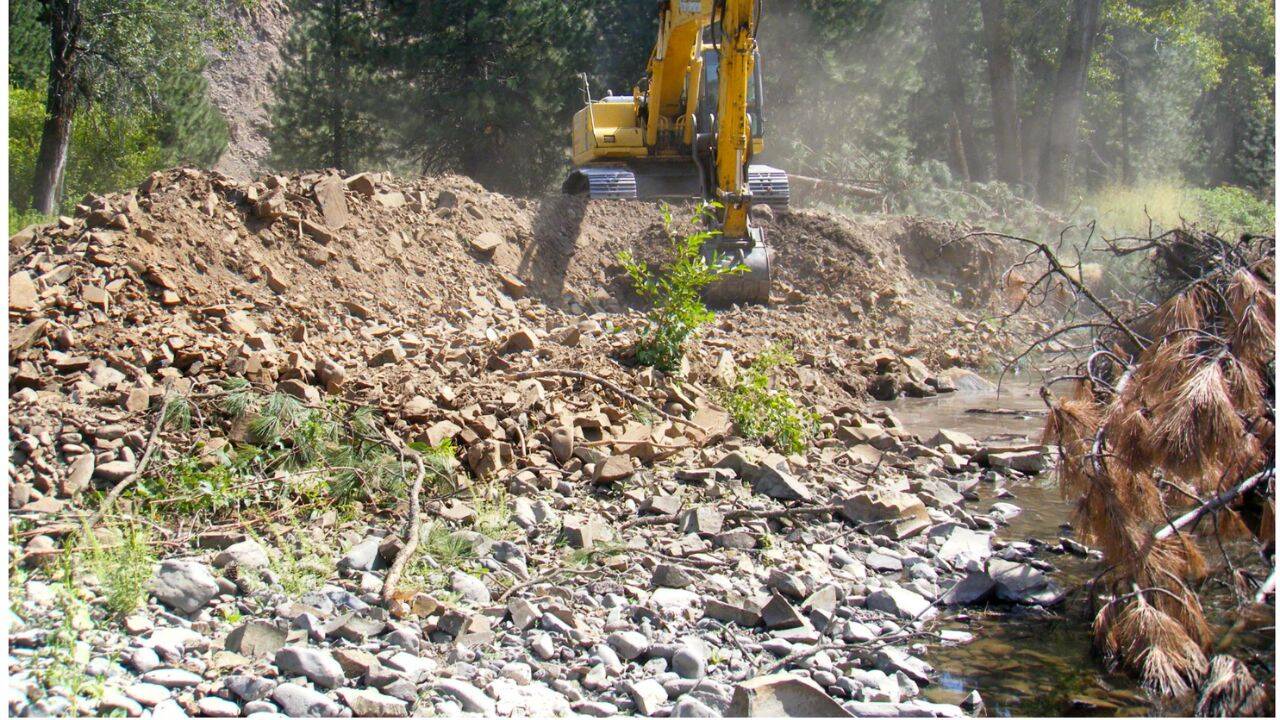
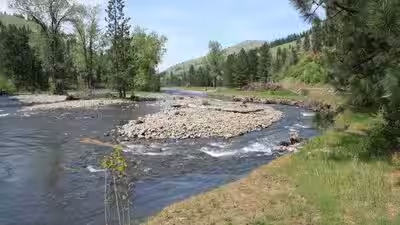
Since 2006, CTUIR has restored floodplain processes over 6.6 contiguous miles of stream. Image Credit: ArcGIS StoryMaps(Meachum Creek Watershed)
How 3,700 pieces of wood changed the creek
Large wood has also played an important role in the restoration. The project placed 3,700 pieces of large wood in the creek using helicopters and heavy equipment, the Oregon Watershed Enhancement Board reports.The wood was added to improve the complexity of the stream channel and provide better spawning and rearing habitat. In a natural river system, fallen trees and branches can influence the movement of water and create different conditions within the channel. The restoration work used that principle to make the creek more varied and suitable for native fish.The project was not limited to placing wood in the water. Creekside vegetation was planted, while key areas were fenced to prevent animal browsing. These measures have helped support vegetation in areas where the floodplain has been reconnected.
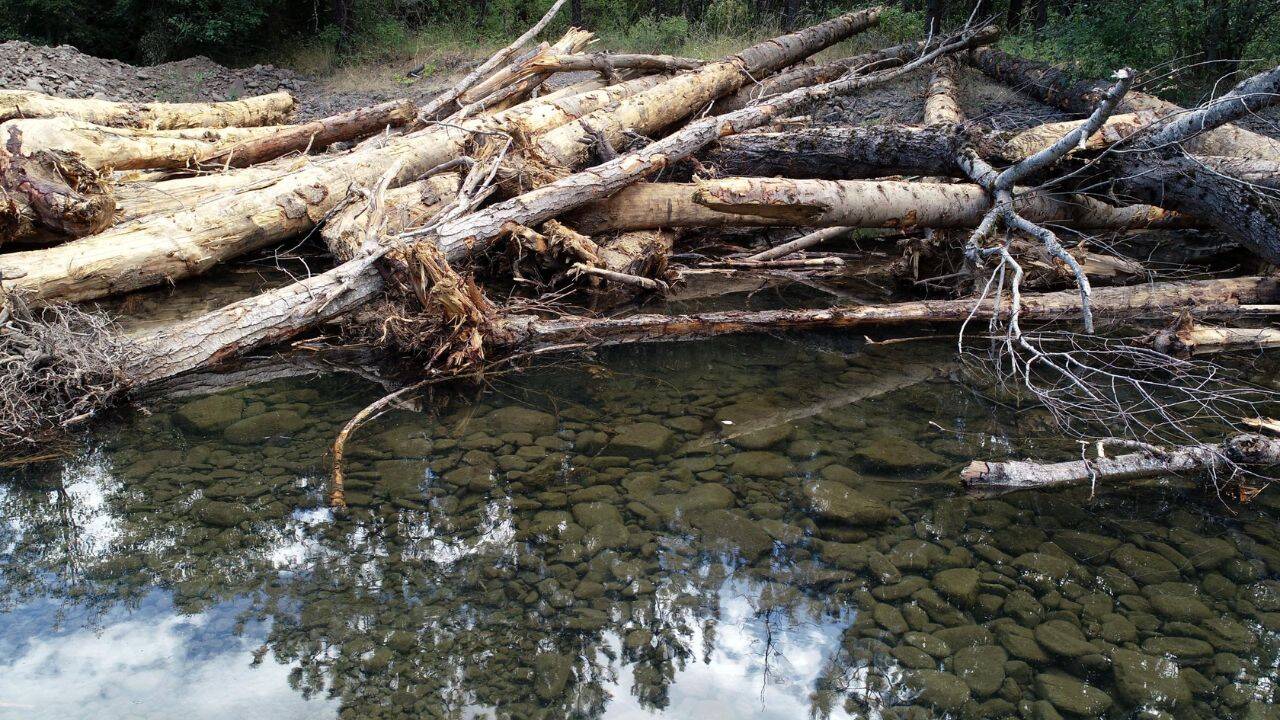
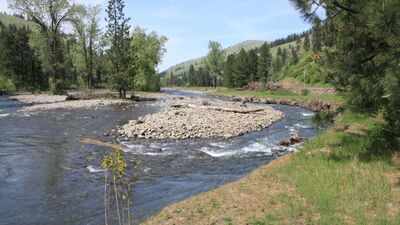
Since 2006, CTUIR placed about 3,700 pieces of large wood by helicopter and heavy equipment onto selected gravel bars within the floodplain of Meacham Creek. Image Credit: ArcGIS StoryMaps(Meachum Creek Watershed)
New channels have opened more habitat for native fish
Another part of the project involved changing the way water moves through the restored area. The Oregon Watershed Enhancement Board says the work realigned and connected 2.65 miles of new primary channel, along with 2.79 miles of off-channel and side-channel habitat.These additional waterways have created more habitat alongside the main stream. For fish, such areas can provide different conditions from the central channel, including places for spawning and rearing.The restoration also enhanced another 3.3 acres of wetland within the floodplain. Together with the new and reconnected channels, these changes have expanded the range of aquatic and floodplain environments available within the project area.
Changes happened in the restored floodplain
The Oregon Watershed Enhancement Board reports several changes following the restoration. Groundwater levels have increased, while surface water temperatures have decreased.The reconnected floodplain has also begun supporting more plant growth. Trees, shrubs and water-loving plants are flourishing in areas affected by the restoration, helping the landscape develop beyond the stream itself.Wildlife has responded as well. Native species including beavers and lamprey are returning to the area, according to the Oregon Watershed Enhancement Board.The restoration ultimately centres on improving conditions for native fish. The Oregon Watershed Enhancement Board says quality salmon spawning and rearing habitat is now newly available as a result of the work.After decades in which development and infrastructure separated the creek from its floodplain, the 6.6-mile restoration programme has worked to reconnect those parts of the landscape. The result is a river system with additional channels, wetlands and vegetation, alongside improved conditions for salmon and other native species.