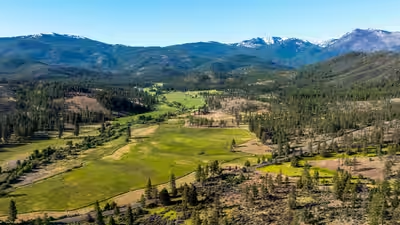
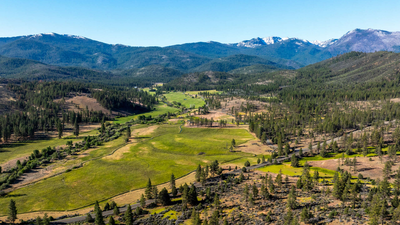
The Wildlands Conservancy has agreed to buy one of Northern California’s oldest working livestock operations, protecting 14,177 acres of historic wilderness in Siskiyou County and turning it into a huge public preserve. The $15.5 million purchase of the AP Ranch, detailed in reports by the San Francisco Chronicle and official documents from The Wildlands Conservancy, marks a major change for a landscape that has been privately owned for 170 years. Located in rural western Siskiyou County near Gazelle, the vast property will be combined with the existing 6,094-acre Beaver Valley Headwaters Preserve. Once the deal is complete, the connected public preserve will cover more than 20,000 acres across the Scott River watershed. Founded in 1856 by Alexander Parker soon after the California Gold Rush, the AP Ranch is one of the region’s oldest continuously operating agricultural properties. The Newton family bought the estate in 1961 and later expanded it by purchasing nearby land. They ran the property as a year-round cow-calf operation with capacity for about 500 mother cows. According to listing details from California Outdoor Properties, the ranch has varied terrain centred around the prominent Lover’s Leap peak. Elevations range from about 3,600 feet to 5,400 feet, with the Marble Mountain Wilderness and Klamath National Forest forming the backdrop.
Protecting headwaters and wildlife corridors
The purchase is important not only because of the ranch’s history, but also because of its ecological value. The AP Ranch contains the headwaters of the East Fork of the Scott River, which runs freely for eight miles through the property. The Scott River provides important spawning habitat for wild Coho salmon, king salmon and steelhead trout. The deal also includes extensive adjudicated water rights on the East Fork and its tributaries, as well as rights connected to two alpine lakes, Kangaroo Lake and Rock Fence Lake. Conservationists hope these rights will help protect water flows during the dry summer months, when falling water levels can make it harder for migratory fish to survive and move through the watershed. The Wildlands Conservancy said the surrounding landscape is also an important link for wildlife moving through mixed-conifer forests, oak woodlands and alpine meadows. The expanded preserve will border thousands of acres of federal forest land and provide habitat for many native species, including Roosevelt elk, Columbia blacktail deer, black bears, mountain lions, wild turkeys and American goshawks. The area is also within the growing range of California’s recovering gray wolf packs. Rewilding work will focus on restoring habitats and supporting native wildlife. The Scott River basin is home to American beavers, a keystone species whose dams can slow water, restore floodplains and help recharge groundwater. The conservancy plans to work with local tribal and environmental groups, including the Quartz Valley Indian Reservation, the Karuk Tribe, the Lomakatsi Restoration Project, California Trout and the Scott River Watershed Council, to improve the health of the wider watershed.
From working ranch to public preserve
The sale brings an end to more than six decades of ownership by the Newton family. Albert Newton III said the family had developed a deep personal connection to the land during its long tenure. “Over the years, the ranch has hosted everyone from dignitaries and politicians to our kids’ college friends,” Newton said, highlighting the property’s role as a gathering place in the Scott Valley. The AP Ranch includes seven homes, six historic timber barns and large cattle corrals equipped with certified scales. Under the new plan, The Wildlands Conservancy will gradually end intensive commercial operations while developing facilities for public use. The non-profit organisation operates California’s largest private preserve system and welcomes more than 1.5 million visitors each year to protected areas across California and Utah, with no admission fee. The new preserve will offer free public access for activities such as hiking, wildlife watching and educational trips for local schools. Higher parts of the property have views towards Mount Shasta and will also offer opportunities for winter activities, including cross-country skiing and snowshoeing. Fundraising is now underway. The Wildlands Conservancy is seeking private donations and public grants to cover the $15.5 million purchase and support long-term management, trail building and habitat restoration across the newly protected landscape.