
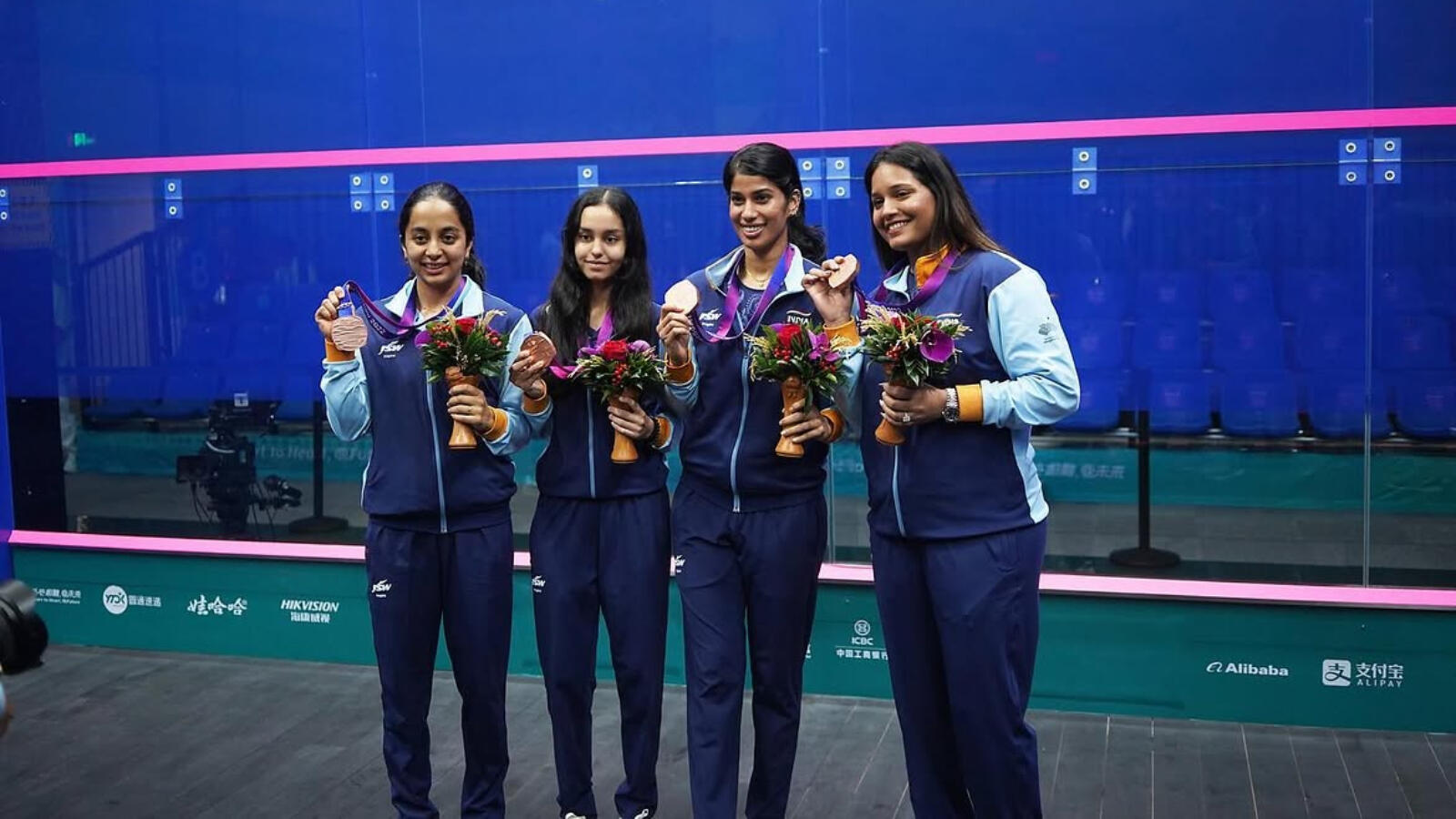
Anahat Singh’s first reaction after winning the World Junior Squash Championship was not about what the title might do to her profile.This was her last year in the junior circuit, and after years of playing squash, she finally had the title she wanted before moving fully into senior competition.“I think it’s a good way to end my junior career, I’d say, because it’s my last year playing juniors as well. I’m going to be turning 19 before I can play any other junior event so I think it’s just a good way,” Anahat told Timesofindia.com.“I’ve been playing squash for 10 years, and it’s a good note to end it and start my senior career so I can start it confidently and in a good way as well.”The timing is crucial because the Asian Games are already here. Anahat is the third seed in the women’s singles draw at Aichi-Nagoya, with a first-round bye. World No. 6 Satomi Watanabe is the second seed; defending champion Sivasangari Subramaniam is the top seed.And the singles gold also carries an Olympic consequence as well. The women’s singles winner gets a quota place for the 2028 Los Angeles Games, where squash will make its Olympic debut.Anahat already has experience of having played at the Asian Games once. At Hangzhou, three years back, she won bronze in the women’s team event and another bronze in mixed doubles. This time she is in the singles draw and understands the importance of the continental event.
The Asian Games comes next
“The Asian Games is way more important. And it’s a pivotal point in my career as well for me to reach the LA 2028. And I think just working more towards that and focusing on one thing at a time, and not focusing on what’s there in two years and just taking it step by step.” she said.Her parents have been telling her the same thing since she started playing squash.“I mean, I think that’s one thing that my parents have always taught me since I’ve started playing squash that once an event is over, OK, you enjoy it for like a few more days. And then once it’s done, you focus on the next event.”The junior title has also changed the expectations around her.“I mean, of course, it [expectations] would definitely change it, but I still think there’s so much for me to achieve.
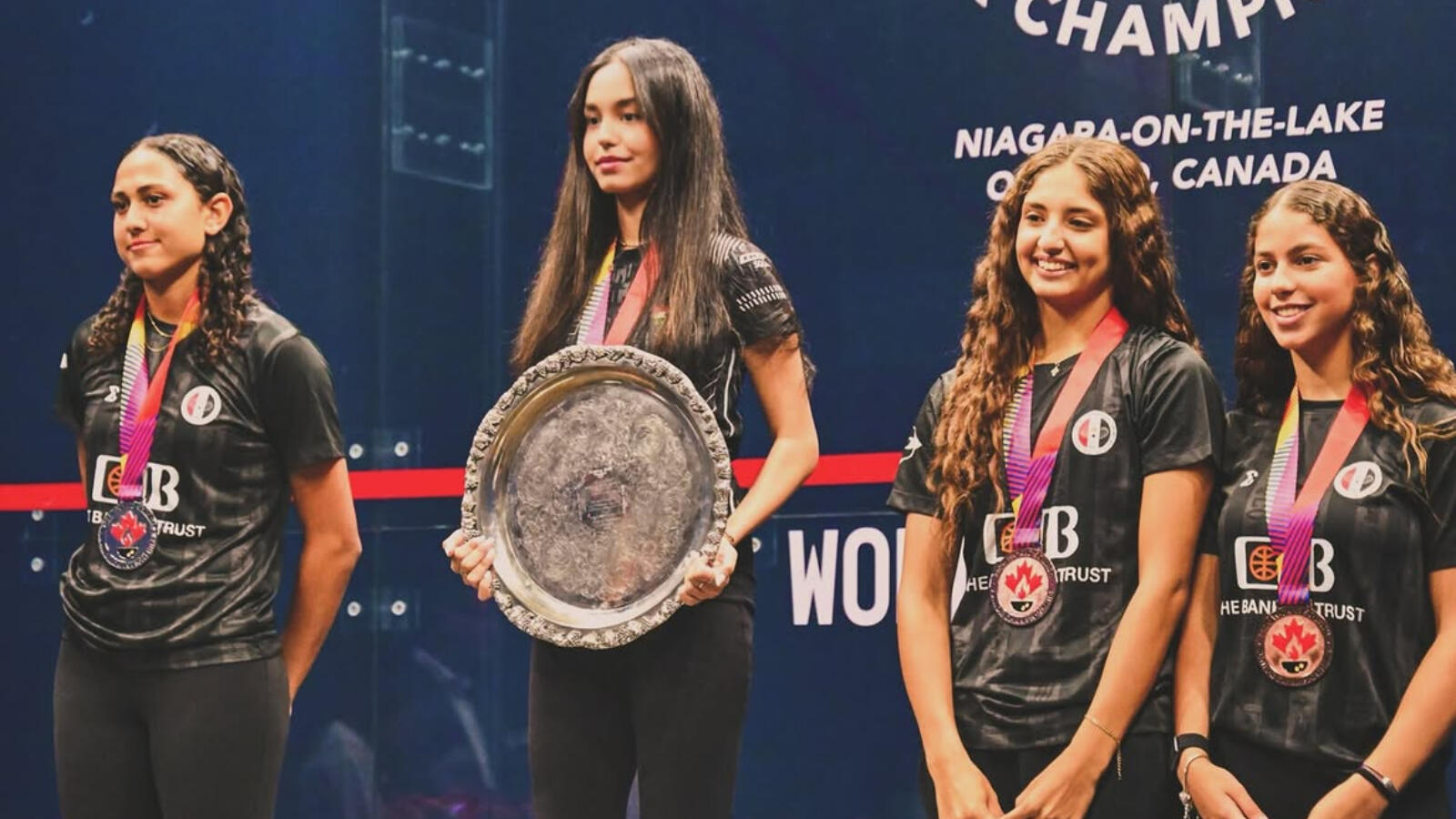
“It’s still just the junior stage, I still have to go into the seniors, and I think this event is just something that gives me more confidence going into the seniors knowing that, you know, like I’ve mentioned before that I’m ending juniors in a very good note and I can start off my new chapter really well and, you know, continue to do well and hopefully be a world champion in the senior stage as well and not just in the juniors.”There had been something to build on before the World Junior Championship. Hong Kong, last December, was one of those moments.“I went for a tournament in Hong Kong, one of my first senior tournaments, and I played a girl from Belgium, ranked inside the top 20, and I had a 3-1 with her. I think that was one of the moments where I realized that, okay, I had one of the best matches of my career till now and I had so much fun while I was on court and this is something that I can really imagine myself doing for the next 10-15 years and even longer possibly.”“So I think just that match specifically was something that really turned my mentality around where I was like, I really need to push and I can, you know, I really want to play more events like this. I want to play against more of the top players and I think I’m capable of, you know, playing good matches like this and even possibly beating some of them.”“I think that happened last year in December and I think I’ve come a long way since then.”
The people behind the player
The move into senior squash has brought Anahat into a different kind of training environment, with Gregory Gaultier and Saurav Ghosal around her.Gaultier was a world No. 1 and a World Champion; Ghosal has reached the top 10 and is a pioneer when it comes to squash in India. Both have spent years dealing with the sort of situations Anahat is now beginning to encounter on the senior circuit.“I think just being around them and being in that environment, they’ve both been at the top of the game. Greg was world number one, world champion and Saurav has been top 10 in the world. So they’ve both experienced a lot more than I have in their careers.”
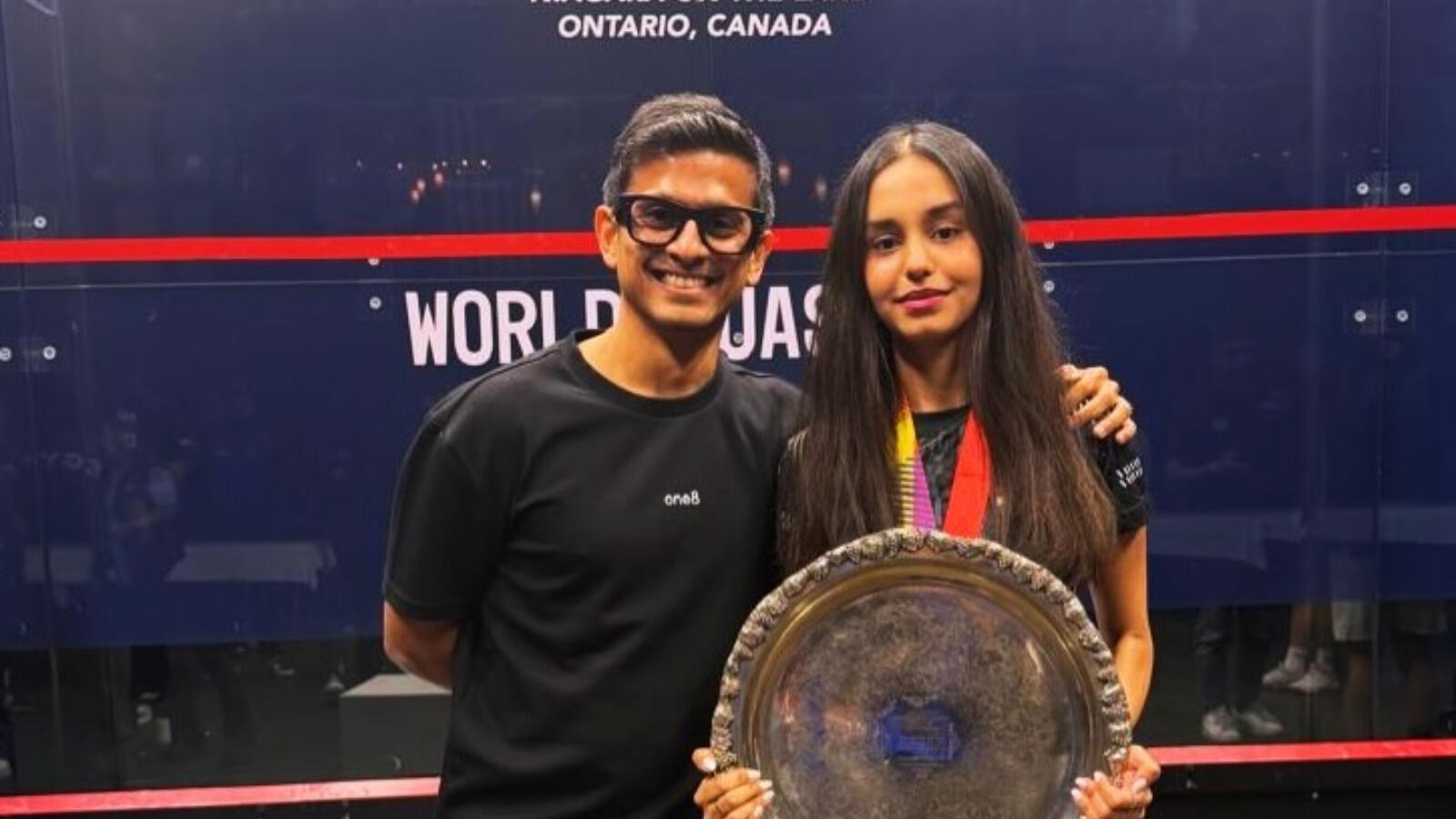
“And I think just the fact that they’ve experienced it all is just something that helps me out for the future as well, because, you know, I’m prepared for it,” she said.The difference is also showing up in her results against senior players.“I’d say mainly just the amount I’ve learned playing with the seniors. As I mentioned before, I’d have maybe 3-1s or like close games with the senior players in the top 10 and top 20. But, you know, just being able to play against them and being able to win those matches is something that I’ve learned, especially from Greg and Saurav, because they’ve played a huge role in just making me learn, you know, the psychological part of it, the mental part of it and even the physical part.”The physical side is now one of her priorities.“Yeah, I’d say my physical aspect, I’ve not, I’m still only 18 and my parents always said that stay away from the gym as much as you can because you’re still young.”“So you have a lot of time to work and go into the gym. And I think, yeah, now I’ve realized that now that I’m going into the seniors as well, it’s very, very important for me to, you know, go and improve my physical aspect, the fitness part of it.”She has been working on that for the past year, although travelling makes it difficult to maintain.“I’ve started working on it in the last one year, but it does get really hard to, you know, be, to maintain it when I’m traveling a lot.”A recent visit to the Red Bull Athlete Performance Center gave her a clearer idea of what needed work.“I mean, it was a very new experience for me. It was, I got to do so many different testing. And like I said, I need to need to work a bit more on my physicality aspect.”
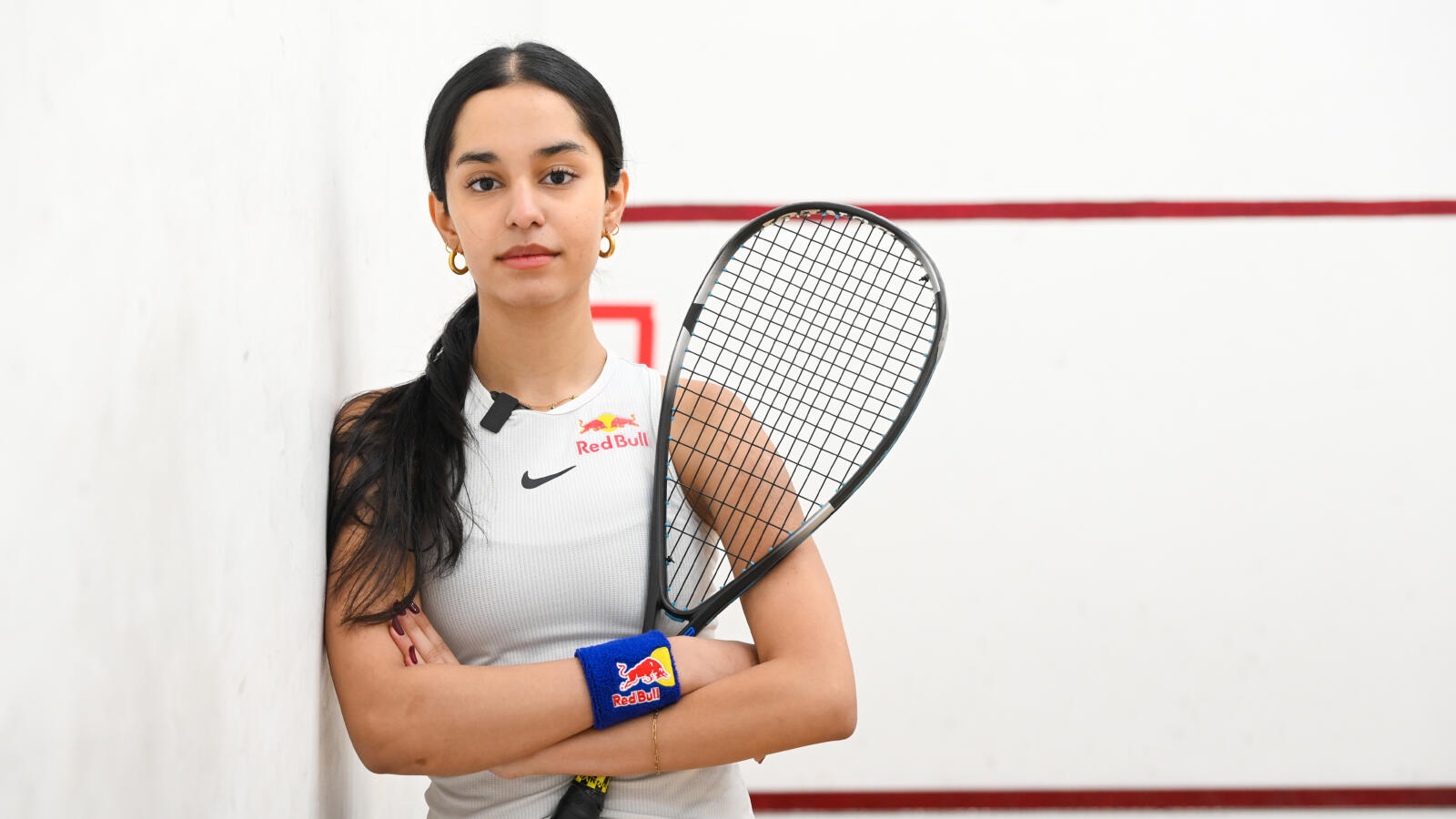
“So I think just the testing helps me see, you know, the details of what I really need to work towards. And it’s not just an overview of everything. I can see exactly what I need to work and what I need to do.”
PV Sindhu , her sister and the family behind her
The changes have not been confined to training. Anahat has been watching athletes around her and learning from people she followed long before she was playing squash at this level.PV Sindhu was one of them. While training at Siri Fort in Delhi, Anahat remembers watching Sindhu play there from around the age of five.“I think one of my first memories from sport and from badminton is of her and watching her matches.”She has since seen Sindhu at the Commonwealth Games Village and Asian Games Village.“So I think just getting to see her from so early on and I’ve also seen her a few times, you know, at the Commonwealth Games Village and the Asian Games Village and just learning and seeing what she’s like off the court and, you know, I think she’s an inspiration to so many people.”“She’s achieved so many great things for Indian sport and, you know, she’s someone who’s inspired me in so many ways and, I mean, hopefully I can take on some of the things that she’s done for the country and, you know, try to somehow reach the same level as her in squash as well.”There was also someone closer to home. Anahat’s older sister had played squash, so the sport was already part of the family when Anahat started playing.Her parents then took on much of what came with that career – the coaching, the travel and everything around the tournaments that Anahat herself did not have to worry about.“I wouldn’t be where I am without my parents.They’ve done everything for me to get me to the stage. I’m still only 18. So everything that happens behind the scenes regarding the coaching, the traveling, there’s nothing to do with me. It’s all them handling it.”
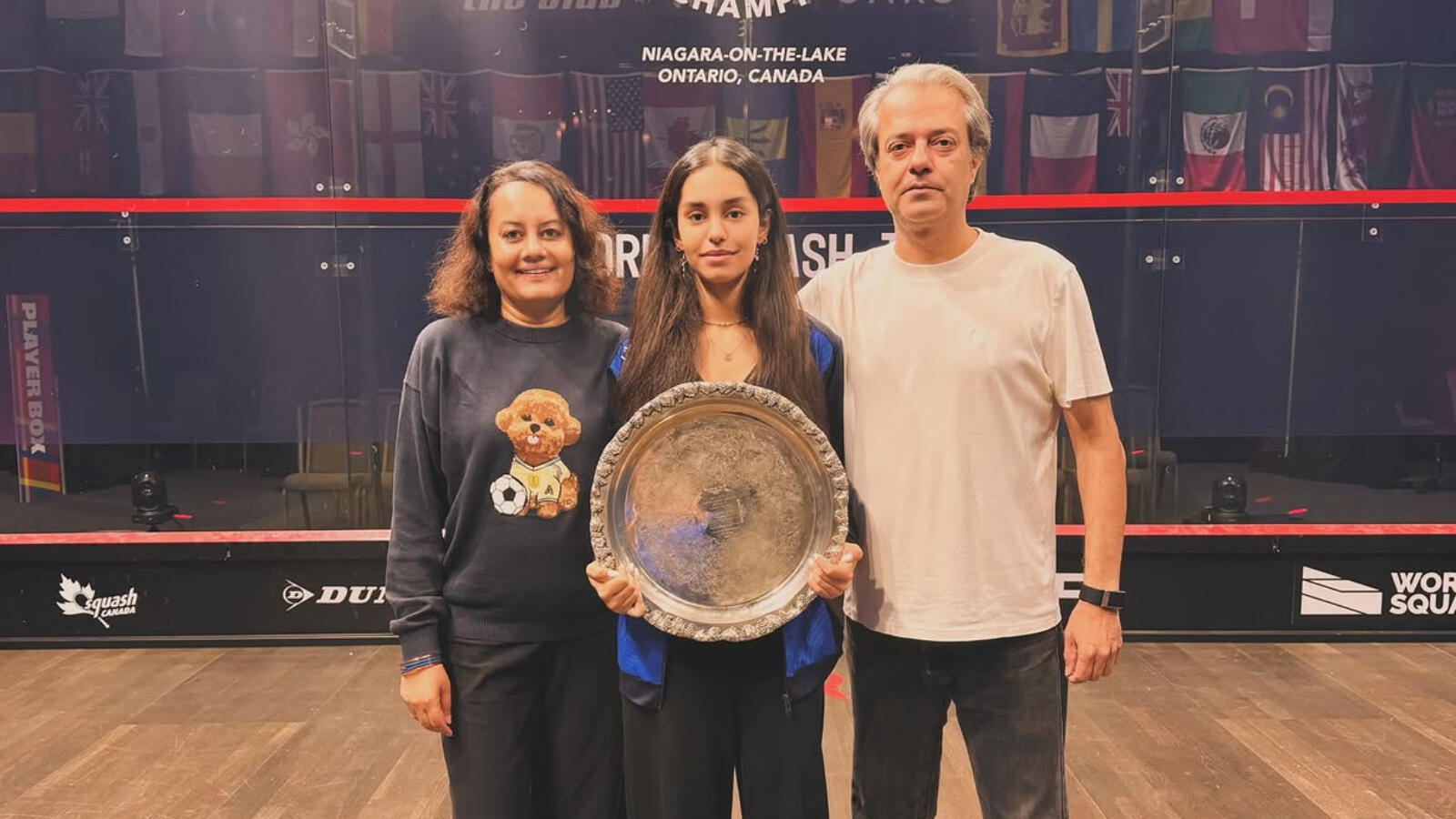
“They travel with me for all of my events. They’re there for some of my practice sessions. They’re watching me play.” So I think just having that kind of support is just something that’s brought me to this level and I wouldn’t, I would definitely not be where I am if it wasn’t for them.”
India’s history, Anahat’s singles opportunity
India’s squash record at the Asian Games has been built largely through team events and a handful of individual medal runs.The country has won 18 squash medals at the Games so far – three gold, four silver and 11 bronze. Five of those came in Hangzhou, including two golds. Joshna Chinappa, competing at her seventh Asian Games in Aichi-Nagoya, has five Games medals, including an individual women’s singles bronze from Jakarta-Palembang in 2018.For Anahat, the next few years will bring more tournaments, bigger opponents and, potentially, more medals. But her own definition of how those years will go is a little different.
“For me, I’d say if I’m satisfied with the way I’m playing and what I’m producing, I think that would be successful for me, whether it’s winning 100 medals or winning one very important medal.“And if I’m happy with what I’ve done and if I’m satisfied with what I’ve done for myself, for my family, for my coaches, my country, and if I’ve done enough for them, I think that is what success would mean. And if it’s through medals, then yeah, great.”“But if it’s also through what you’ve achieved and what you’ve worked on and how much you’ve improved in the last few years, that is also considered the same thing.”For now, Anahat is sticking to the method she described herself.“…focusing on one thing at a time, and not focusing on what’s there in two years and just taking it step by step.”