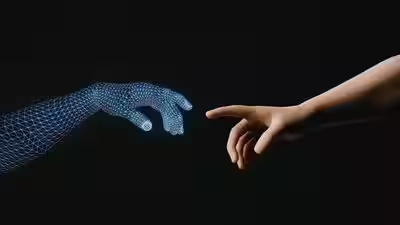
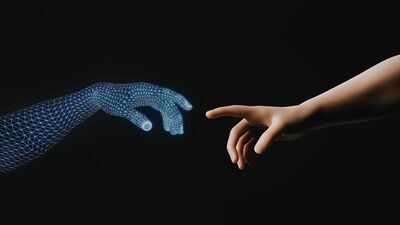
The Cambridge Dictionary has named ‘human’ its Word of the Year for 2026, reflecting a growing debate over what distinguishes people from artificial intelligence (AI) as machines become increasingly capable of performing tasks once considered uniquely human.The choice highlights how the rapid spread of AI has prompted people to reconsider the value of human creativity, judgement, emotion and connection. It also points to a change in the way the word is being used, with expressions such as ‘human-written’, ‘human-generated’ and ‘human-made’ increasingly distinguishing work produced by people from content created by AI.Cambridge Dictionary defines ‘human’ as having the qualities, faults and feelings that people have, as opposed to gods, animals or machines.
Why ‘human’
Cambridge Dictionary said the growing presence of AI in everyday life had led to a renewed appreciation of the human element in what people consume and experience.Colin McIntosh, chief editor of Cambridge Dictionary, said: “Artificial intelligence has been a growing presence in society for years now, but this year it seemed to be everywhere. In many areas of life this has led to a re-evaluation of what it means to be human, as a counterbalance to AI.”He added that 2026 had been marked by a renewed appreciation of the human factor and a greater value being placed on human involvement in everyday life. The dictionary said its analysis of language data, internet trends and search habits supported the selection.One of the clearest signs of this shift is the growing use of the word ‘human’ to identify the origin of creative work. As AI-generated writing, images, music and videos become more common, businesses and creators are increasingly highlighting when something has been made by a person.Cambridge described this as a ‘human premium’, the added value people may attach to a product or experience because they know it involved human effort, judgement and craftsmanship. In a marketplace increasingly filled with AI-generated material, the imperfections and personal involvement associated with human work can become part of its appeal.‘Human’ was selected from a shortlist that included ‘agent’, ‘analogue’, ‘wholesome’ and ‘chic’.