

By Archit GuptaEvery ITR filing season, when an email from the Income Tax Department lands in someone’s inbox, the immediate reaction is panic. People instinctively view a tax notice as a challenge to their honesty, assuming they have made a major error or landed in legal trouble. In reality, a notice is rarely the problem you think it is. It is almost never an accusation of wrongdoing; it is simply an automated query generated by a system comparing data points.The Income Tax Department now receives automatic, continuous data feeds directly from banks, stockbrokers, mutual fund registries, and property offices. When central algorithms spot even a minor formatting difference or missing line item between your filed return and these external feeds, a notice is issued automatically. Understanding that these communications are routine administrative verifications rather than legal red flags is the first step toward handling them with total clarity.
The Five Common Types of Notices and Why They Arrive
While the tax system uses various section numbers, almost every notice a taxpayer receives falls into one of five common categories.Type 1: Processing Intimation [Section 143(1)] This is essentially a digital receipt sent after your return is processed by the Centralized Processing Centre. It compares the numbers you filed directly against the department’s calculations, indicating whether your filing is accepted as is, if a refund is approved, or if there is a difference in tax payable or interest.Type 2: Defective Return Notice [Section 139(9)] The system flags a return as defective when required information is missing or entered in the wrong section. This often happens when someone claims credit for tax deducted at source without reporting the matching income, or when they select the wrong tax form for their specific income sources.
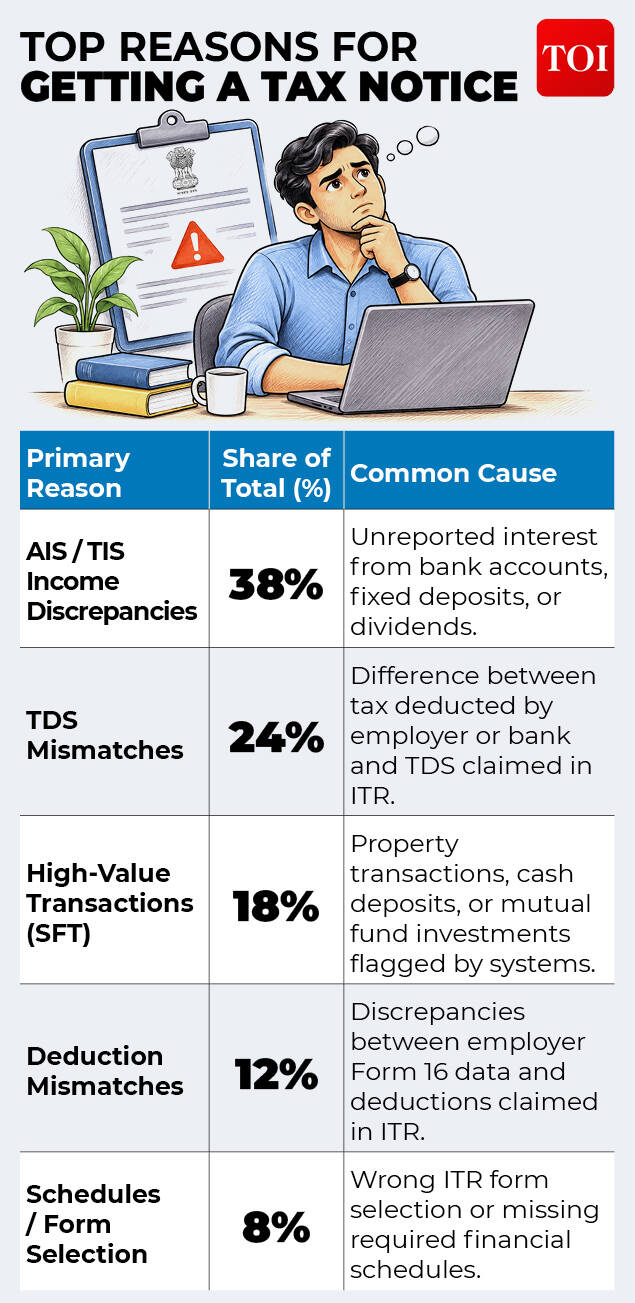
Top reasons for getting a tax notice
Type 3: Inquiry and Scrutiny Notices [Section 142(1) and Section 143(2)] A notice under Section 142(1) asks for specific supporting documents or bank statements, while a notice under Section 143(2) indicates that the return was chosen for detailed verification under the faceless assessment system. These are usually triggered by large bank deposits, high-value property deals, or major differences when cross-referenced against the Annual Information Statement.Type 4: Reassessment Notice [Section 148] This is issued when the assessing officer receives specific information indicating that taxable income from a previous year was left out of assessment. It typically happens when unreported property sales, unrecorded investments, or past capital gains show up in official data feeds.Type 5: Notice of Demand [Section 156] This is an official statement that an outstanding tax amount, interest, or penalty is due after an assessment or adjustment is finalized. It sets a standard 30-day window to clear the balance.
Why Tax Errors Actually Happen
When evaluating why notices are so common today, the root cause extends beyond simple math mistakes. It stems from the growing gap between evolving tax laws and everyday filing behavior.First, tax laws and disclosure requirements change almost every year. New schedules for cryptocurrency, foreign assets, dividend breakdowns, and revised tax regimes mean that rules citizens followed last year might no longer apply today. Most citizens only file taxes once a year and rely on memory, which leads them to miss newly added rules and line items.Additionally, statutory tax forms are simply too complex for everyday taxpayers. Expecting a working professional to figure out short-term versus long-term gains, indexation rules, or tax regimes without expert help is unrealistic. When people try to navigate these forms on their own, minor mistakes are bound to happen.
How to Handle a Notice Without Getting Overwhelmed
When a tax notice arrives, dealing with it effectively comes down to four straight steps.First, always verify that the notice is genuine. Every official document issued by the department carries a unique Document Identification Number. Logging into the official tax portal and verifying this number ensures that the communication is real before taking any action.Second, pinpoint the exact discrepancy. The easiest way to do this is to compare the filed tax return against Form 26AS, the Annual Information Statement, and the Taxpayer Information Summary. In my experience, most discrepancies come down to basic oversights, such as forgetting to declare savings account interest or dividend income from stocks.Third, decide whether you agree with the department’s calculation. If an income item was genuinely missed, accepting the adjustment and paying any remaining tax settles the matter quickly. If the system made a calculation error or missed a valid deduction you already claimed, you can choose to disagree and submit your proof.Fourth, submit the response directly through the portal. Almost all notice resolutions are handled online under the e-Proceedings tab. Uploading legible documents and saving the official acknowledgement receipt completes the process. Monitoring the portal dashboard periodically keeps you updated until the department marks the matter closed.
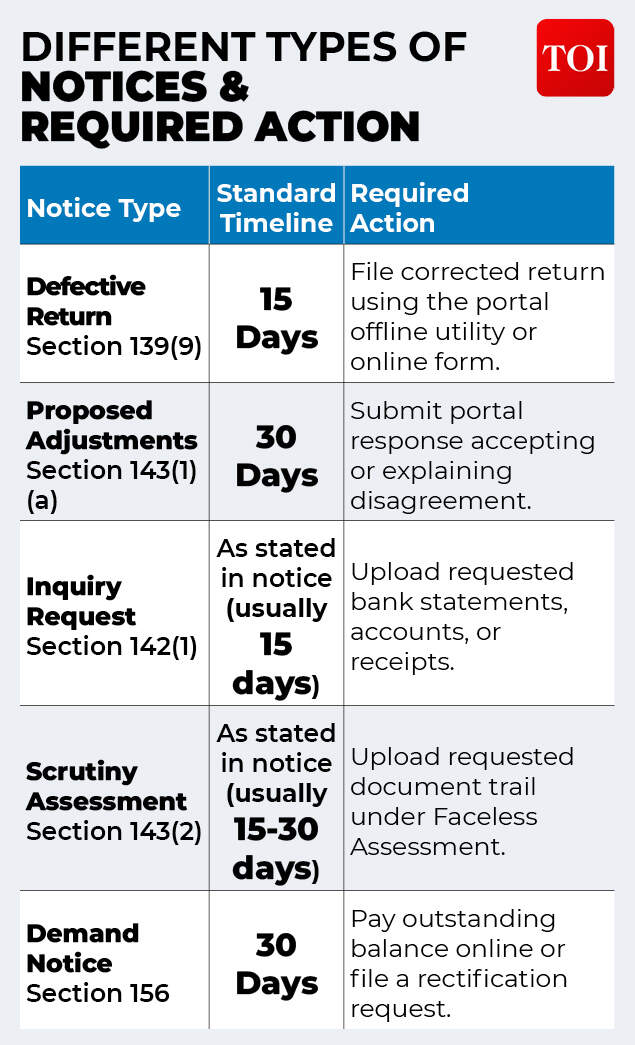
Different Types of Tax Notices & Required Action
Document Checklists by Notice Type
Having the right records organized makes responding straightforward across every category.For defective return notices under Section 139(9), required documents include a copy of the original ITR filing acknowledgement, updated Form 16 or Form 16A certificates, corrected Profit and Loss statements or Balance Sheet schedules, and a computation sheet showing revised data matching portal categories.For scrutiny and inquiry notices under Section 142(1) and Section 143(2), necessary records include complete bank account statements for the financial year, a reconciliation sheet comparing ITR data with the Annual Information Statement and Form 26AS, receipts for deductions claimed under Chapter VI-A, and purchase or sale agreements with cost records for any assets sold.For reassessment notices under Section 148, documentation requires bank statements covering the flagged transactions, proof of advance tax or foreign tax credits, purchase and sale deeds for real estate or securities, and statements verifying sources of funds for large deposits or transfers.For demand notices under Section 156, the file should contain a copy of the assessment order or Section 143(1) intimation, challan receipts with BSR codes and CIN for tax payments made, and bank statements verifying tax deductions at source.(The author Founder and CEO, ClearTax)