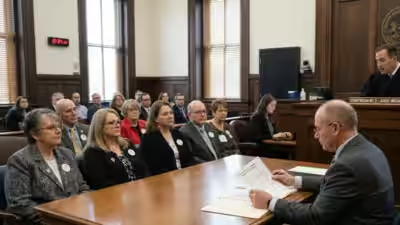
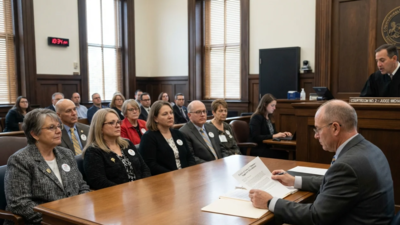
A Pennsylvania inheritance fight that started after a man died in 2014 has reached another milestone. An appeals court upheld a $598,686 payment to the lawyer who helped eight relatives overturn a disputed will. The case involved a second cousin named as the sole heir, claims that the will was forged, and a long battle over how much the family’s lawyer should be paid. The Pennsylvania Superior Court backed an October 2025 order granting lawyer Richard P. Joseph $598,686.34 in legal fees and costs. The ruling, released on 24 November 2026, turned down Joseph’s challenge to the payout amount and his claim that the judge handling the fee dispute was biased and should have stepped aside.The decision means the legal-fee payment stands, ending another chapter of this long estate battle. The original court fight over the will had already declared the disputed paper invalid, letting the dead man’s eight nieces and nephews inherit his money under Pennsylvania laws for people who die without a valid will. According to the court’s memorandum, the fight began after John J. Thomas died on 12 October 2014. His second cousin, Timothy Ungarean, showed a paper dated 7 July 2014 that named him as the sole heir to Thomas’s estate. The eight surviving nieces and nephews fought the paper in court, claiming it was forged.
Second cousin named sole beneficiary in disputed will
Thomas died leaving eight nieces and nephews: Theresa A. Thomas, Carol L. Thomas, Norman J. Thomas, Anna Marie Rheingrover, David J. George, Alex C. George, Charles T. George, and James H. George Jr. On 23 October 2014, the Beaver County Register of Wills accepted the paper as valid and gave Ungarean official permission to manage the estate under that will. The eight relatives, represented by Joseph, appealed that decision. They challenged the paper’s validity and asked the court to take away Ungarean’s power to run the estate.A trial without a jury started in October 2018 and lasted until January 2019. Judge Paul F. Lutty ruled that the will dated 7 July 2014 was invalid. He also found that other papers said to be signed by Thomas on that same day were invalid. Because of this, the court cancelled Ungarean’s authority to manage the estate and ruled that Thomas died without a valid will. His money and property would go to his legal heirs instead of Ungarean. Ungarean appealed, but the Pennsylvania Superior Court backed the trial ruling on 6 March 2020. According to the court’s account, Joseph also represented the eight relatives during that appeal.
Lawyer seeks 40% of estate under fee agreement
Once the fight over the will ended, Joseph asked to be paid for his legal work based on a deal signed with the relatives in December 2014. That paper, called a Power of Attorney, set up a payment plan based on winning the case. Under the deal, Joseph would get 33⅓% of any settlement reached. That share would rise to 40% of a court award or settlement after evidence gathering ended and the court ruled on early motions that did not close the case. The deal also required the relatives to pay court costs and expenses ahead of time. The relatives were asked to put $15,000 into Joseph’s holding account, with more money needed if that ran out. The agreement also covered appeal costs if the relatives lost at trial and chose to fight the ruling. Joseph later argued that he should get 40% of the entire estate, including money recovered later on. This sparked a new fight over what the fee deal meant and how much money he could claim. In September 2023, the Orphans’ Court first awarded Joseph $851,505, plus a 40% share in other estate assets. The people managing the estate challenged that order, saying the payout was about 55% of the cash held in the account and that the wording might let Joseph demand even more.
Appeals court sends fee dispute back for review
The estate appealed the first fee award, and the Superior Court issued a new ruling on 24 October 2024. It agreed Joseph earned a 40% share, but found the contract did not clearly explain how to calculate that percentage. The court ruled the fee had to be based on the net cash left in the holding account to be shared among the heirs. It also decided Joseph could not charge extra fees for defending the relatives during Ungarean’s appeal, because the contract only covered appeal costs if the family lost at trial and Joseph appealed for them. The judges also ordered that money the relatives had already paid up front for expenses must be subtracted when figuring out his fee. They cancelled the earlier orders and sent the case back to the Orphans’ Court for a new hearing. The case then went to Judge Michael F. Marmo after Judge Lutty retired. A hearing to review evidence was set for 21 March 2025.
Lawyer’s absence leads to another court dispute
Joseph skipped the March 2025 hearing. According to the court’s memorandum, he had asked Judge Marmo’s office for a 120-day delay due to health issues tied to long COVID-19. The judge’s staff turned down the delay because the case had dragged on so long, though they let Joseph join by video. Court secretary Mindy Frohlich later testified that she emailed him on 14 March 2025 to say the hearing would happen as planned and gave him call-in details. Joseph insisted he was too sick to take part and questioned whether the judge was fair. He also complained about how settlement talks were handled and claimed lawyers for the estate had conflicts of interest. During a phone call with the court on 21 March, Joseph and Judge Marmo had a heated argument. Joseph then filed a formal request on 5 May 2025 asking the judge to step down from the case.That request was denied after a hearing on 16 July. A second hearing to review evidence on the legal fees happened on 15 August 2025. On 30 October 2025, the Orphans’ Court awarded Joseph $598,686.34. That sum included 40% of the $1,478,001.94 net holding balance, plus $42,972.65 for expenses, minus $35,487.09 the relatives had already paid up front. The court did not give him a legal claim against the estate’s assets to guarantee payment. Joseph appealed on 10 November 2025, fighting the fee math and arguing Judge Marmo should have stepped aside.
Superior Court rejects appeal and upholds payment
The Pennsylvania Superior Court found that Joseph failed to turn in a key record needed to review the fee math. The written record of the 15 August 2025 hearing was missing from the official court file. The judges explained it was Joseph’s job to make sure the needed hearing records were included. Without that transcript, they could not review the facts used to figure out his pay, so his challenge to the amount was dropped. The court also rejected his claims that the judge was biased. It noted Judge Marmo let Joseph share his side, kept the hearing record open, and set up another chance for him to question witnesses and show evidence.The appeals court said the judge’s stern words during the hearings did not prove bias or stop Joseph from getting a fair hearing. It found no misuse of power in the decision to turn down his request for a new judge. In its memorandum filed on 24 November 2026, the Superior Court upheld the Orphans’ Court order. The ruling in In Re: Estate of John J. Thomas, docket number 1457 WDA 2025, keeps the $598,686.34 legal-fee payout in place. The ruling does not reopen the original fight over the will. The earlier order declaring Thomas’s 2014 paper invalid stays in effect, and his eight nieces and nephews remain the rightful heirs under the estate’s intestacy ruling.