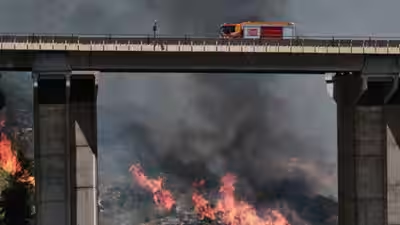
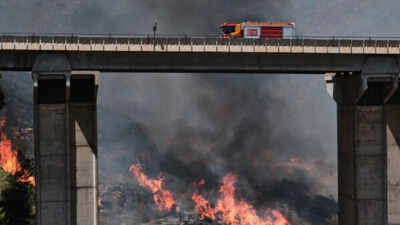
A British couple on holiday in Spain were found alive in a ravine, badly burned and semi-conscious, after being caught in the devastating wildfire that has killed at least 12 people in the southeastern province of Almeria.The couple, believed to have been hiking when the blaze spread rapidly on Thursday, were rescued after Civil Guard officers heard faint cries for help while searching for survivors near the worst-hit village of Bedar. Both were airlifted to hospital and remain in intensive care with severe burns covering around 40% of their bodies.The wildfire has scorched more than 6,000 hectares and is among the deadliest in Spain’s recent history. Authorities are yet to officially identify the victims, though several of those killed are believed to be British and Belgian nationals.‘Look again’ instinct led to rescueThe dramatic rescue unfolded in the early hours of Friday after officers searching the charred hillside heard what they initially dismissed as an echo.“As you gain more experience, something inside you tells you, ‘Look again, try one more time,'” Sergeant Pedro Barre told Spain’s state broadcaster TVE.Following the sound, the three-member team climbed down a steep hillside and found the couple critically injured but still alive. The rescue operation took nearly two hours.“Being able to call out in the condition they were in was a titanic effort,” said fellow officer Rafael Zea.“We’ll never forget the look of surprise and emotion on their faces,” Barre added.The couple are among eight people hospitalised with serious burn injuries.Firefighters make progressFirefighters said calmer winds and rising humidity on Saturday helped them gain ground against the blaze, although officials warned the fire remained difficult to contain.More than 500 firefighters and emergency personnel, supported by military units and firefighting aircraft, continued battling the flames. Around 1,400 people were evacuated from affected areas, with hundreds allowed to return to their homes after conditions improved.Antonio Sanz, Andalusia’s regional emergency chief, said crews had so far focused on preventing the fire from reaching densely populated coastal towns.“So far we have been engaged in defence work to prevent advances. Today is the first day we will be able to work on attacking the fire,” he said.Residents return to uncertaintyDozens of residents gathered outside Bedar on Sunday, waiting anxiously for permission to inspect their homes.Among them were Mike and Belinda Lithgoe from Cornwall, who own a holiday home near the village and have spent the past few days sleeping in their camper van with their dog.“We’re waiting to see if our house is still there,” Belinda said, adding she remained hopeful because the smoke had appeared to move away from their property as they fled.Others criticised the authorities’ handling of the emergency. Resident Emma Mitchell questioned why officials did not issue a mobile phone emergency alert, arguing it could have warned more people in time.Local authorities have defended the decision, saying a mass alert might have reached people outside the danger zone and complicated evacuation efforts.Arrests over evacuation violationsThe Civil Guard said two people had been arrested on charges of serious disobedience after allegedly ignoring police orders and returning to evacuated areas.Officials urged residents to comply with evacuation instructions, warning that entering restricted zones endangered both civilians and emergency responders.Meanwhile, forensic experts in Madrid are using DNA samples from victims and relatives of missing people to identify those who died in the blaze.One of Spain’s deadliest wildfiresWith at least 12 confirmed deaths, the Almeria wildfire is already among Spain’s deadliest on record.The disaster comes amid an intense summer heatwave that has pushed temperatures close to 40°C across southern Europe, fuelling destructive wildfires in Spain, France and Portugal.Scientists say rising global temperatures linked to climate change are increasing the frequency and intensity of extreme heatwaves and wildfires across Europe, the world’s fastest-warming continent.