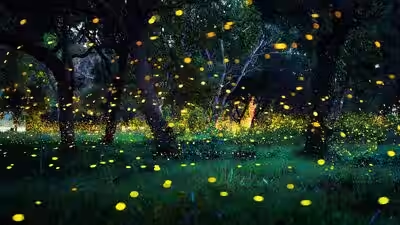
Fireflies are magical beings that emit natural flashes of light. A few hundred of them in the night sky looks like stars have come down to the Earth, little twinkles for just enough time to see them and disappears before you can follow them. Yet, it took just one unusual string of amber flashes for an entomologist to recognise a firefly that scientists had not documented since 1983. Its rediscovery in Virginia and Delaware is bringing fresh hope to researchers searching for 28 other missing firefly species across North America.Recently, a firefly species known as the similar firefly (Pyractomena similis) has been rediscovered in the United States. The sighting is special because it was not sighted for the past 43 years, and was last seen in 1983. The species was spotted in Virginia and Delaware in 2026, giving researchers a reason to celebrate their comeback.
A familiar summer light with an unfamiliar rhythm
The discovery in Delaware happened during a field survey in June 2026 when Christopher Heckscher, was observing fireflies at Brandywine Creek State Park. He is an entomologist and ecologist at Delaware State University and he noticed an unusual flicker among the familiar flashes. It was a quick, rhythmic sequence of amber lights. Being a keen local observer of fireflies, Heckscher immediately suspected that he had encountered the similar firefly. Its males are known for producing short amber pulses in quick succession, followed by a brief pause before the sequence begins again. The unusual rhythm was enough for him to observe the unexpected in just a few moments.He subsequently examined a specimen under a microscope. The physical characteristics helped him distinguish it from other fireflies. The identification was finally confirmed in July.But Delaware was not the only place where this mystic insect had made an appearance. Earlier, on May 15, an observer named Aljoscha Nern had spotted a similar firefly in Virginia and uploaded the observation to iNaturalist, a platform where nature enthusiasts and researchers document wildlife sightings. A second population was spotted nearby about two weeks later.In all, the species was recorded three times in the eastern United States during spring 2026. The Delaware sighting was particularly important because it was the first confirmed record of the species in the state.
Why did it disappear for so long?
The similar firefly was historically known from parts of the eastern and southern United States, including areas around Washington, D.C., Maryland, Virginia, South Carolina, Alabama and Mississippi. However, scientists had never studied it extensively, even before its last recorded appearance in 1983. This means there are still plenty of unanswered questions about its behaviour, population size and preferred habitat.
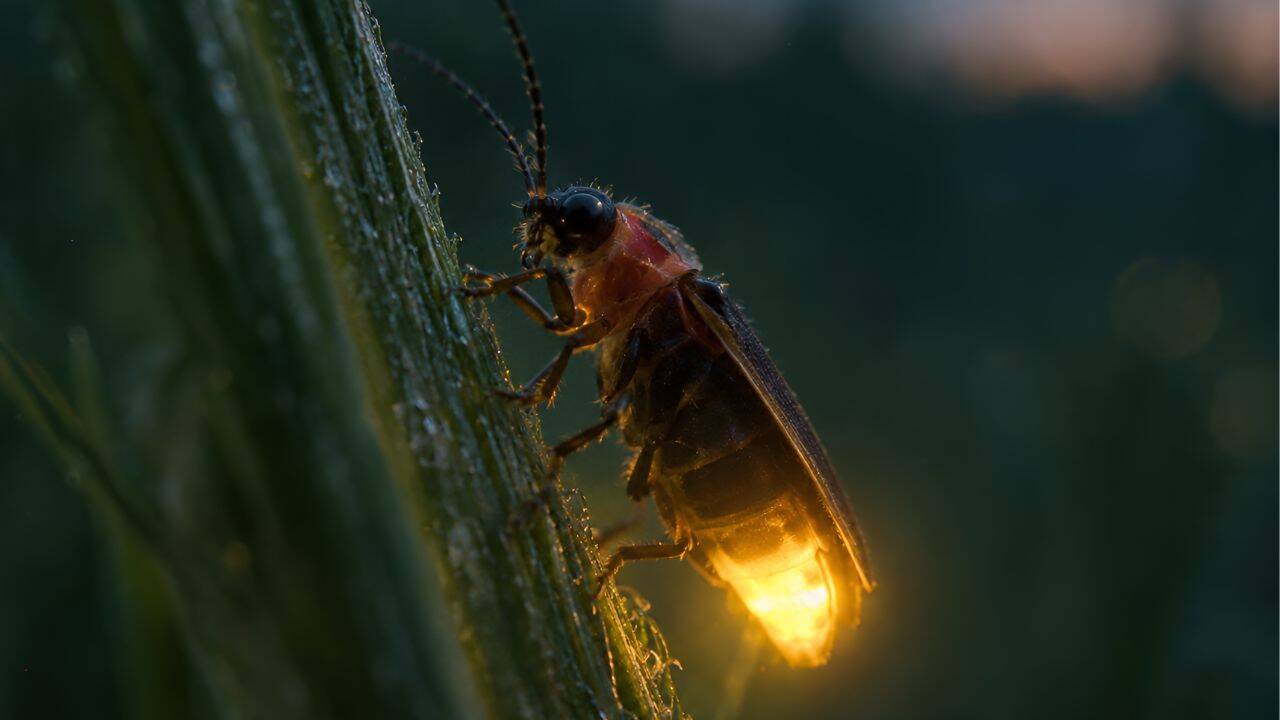
Representative Image (Image Credit: Canva)
Heckscher found the fireflies in a mature meadow filled with shrubs, brush and low-growing vegetation. The area had been allowed to grow naturally rather than being regularly mowed or managed for livestock. The species is believed to favour open fields and meadows close to water. Such habitats may seem fairly common, but naturally growing meadows are becoming less frequent in many landscapes because of regular mowing, agricultural activity and other forms of land management.The discovery suggests that protecting seemingly ordinary patches of nature could be more important than we realise. A meadow that might look untidy to someone maintaining a manicured landscape could actually be providing the perfect home for an insect that scientists have struggled to find for decades.
28 other firefly species are still missing
A new study published in the Journal of Lost Species, titled Extinguished or overlooked? An examination of lost firefly species of the US and Canada, identifies 28 firefly species that have not been documented in the United States and Canada for at least a decade. That represents approximately 16% of the region’s 178 known native firefly species.The researchers, who include scientists from conservation organisations and academic institutions, are trying to understand whether these insects have genuinely disappeared or have simply escaped scientific observations. According to the research, nine species from a list of missing fireflies compiled in 2024 have been rediscovered. Targeted scientific surveys were condudcted to spot the fireflies in this list. This was complimented by people exploring nature and sharing their observations online.
The little lights need darker nights
Fireflies are sensitive tiny creatures whose survival depends on a surprisingly specific combination of environmental conditions. They are not really flies, rather, they belong to the family of beetles known as Lampyridae. The emission of light is because of a chemical reaction between oxygen, a molecule called luciferin and an enzyme known as luciferase. For many species of fireflies, these flashes become the way to find a mate. Their patterns of light become signals for males and females to find one another in the darkness.Unfortunately, modern landscapes are filled with artificial lighting, making it difficult for the natural light of the fireflies to show. Moreover, habitat destruction, pesticides, water pollution, invasive species and climate change all threaten firefly populations.