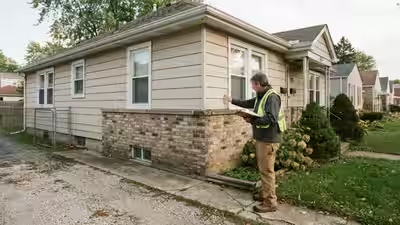
A Michigan man who bought a house without taking a loan lost his homeowner’s insurance after giving incorrect information about the purchase in his insurance application. An appeals court has upheld the insurer’s decision to cancel his policy, finding that the company would have followed a different procedure if it had known how he paid for the property.The dispute involving Amer Araj began after he purchased a house on Amboy Street in Dearborn Heights, Michigan. The property had been occupied by tenants who were involved in an eviction dispute with the previous owner. Araj became part of the legal proceedings and eventually reached a settlement with the tenants, establishing himself as the property’s legal owner.According to the ruling, after buying the house, Araj decided to get homeowner’s insurance on his cousin’s advice. He contacted insurance agent Tehseen Mirza, who helped him arrange coverage through Auto Club Insurance Association. During their discussions, Araj told the agent that he had purchased the property directly and had not taken a mortgage.However, the application submitted to the insurer gave a different account. It recorded his answer as ‘no’ when asked whether the house had been purchased without a mortgage. Araj signed the application, and the policy was issued on January 1, 2024.The matter came to light after Araj filed an insurance claim on January 22. He alleged that the previous tenants had vandalised several parts of the house, including its walls, ceilings, floors, windows, bathroom and basement. During discussions with the insurance company, he acknowledged that he had bought the property without a mortgage.The insurer subsequently cancelled his policy. Araj challenged the decision, arguing that the incorrect answer had been entered by his insurance agent and did not affect the company’s decision to provide coverage. However, the Michigan Court of Appeals found that the information was important to the insurer’s assessment and upheld the cancellation.
Why the mortgage details mattered
The main issue was not simply whether Araj had answered the question incorrectly. The court examined whether the information could have changed the way the insurance company assessed the property before issuing coverage.Auto Club Insurance Association had specific rules for houses bought without a mortgage. Its underwriting guidelines required such properties to undergo an inspection before the insurer agreed to provide coverage. The requirement also applied to houses purchased within the previous 12 months.Araj argued that the company’s rules did not say that properties bought without mortgages would automatically be denied insurance or charged higher premiums. He therefore maintained that his answer could not be treated as an important misrepresentation.The court disagreed. It found that the absence of a mortgage triggered a mandatory inspection under the insurer’s rules. Had the company received the correct information, it would have made the policy conditional on completing that inspection.The insurer said the incorrect answer meant it issued coverage without carrying out the required checks. The court accepted this explanation and concluded that the information had directly affected its decision.
Court says signing application made him responsible
Araj also argued that he should not be held responsible for the incorrect answer because Mirza had prepared the insurance application. According to him, he had only signed the document and had not been asked to read it carefully.The court examined their messages and found evidence that Mirza had prepared the application. However, the exchanges also showed that the agent had asked Araj to review the document before signing it.More importantly, the application contained a declaration in which Araj confirmed that the information provided was accurate and complete. It also warned that incorrect or concealed details could lead to cancellation of the policy or rejection of insurance claims.The judges said Araj could not avoid responsibility simply by claiming that someone else had filled in the answers. By signing the document, he had accepted the information recorded in it as correct.The court also considered his argument that the insurer could not have relied on the application because the policy had been approved before he signed it.However, the exchanges between Araj and Mirza showed that they had discussed the proposed coverage, its terms and the date on which it would begin. The court found that an insurance agreement could be established through their communications even before the formal paperwork was signed.The insurer’s underwriting manager, Jackie Strasser, also submitted an affidavit explaining why the mortgage information mattered. She said the company would have required an inspection before issuing coverage if Araj had disclosed that he bought the house without a loan.The court accepted the insurer’s explanation that the incorrect information had prevented it from carrying out the inspection at the required stage.
Appeals court rejects claim that insurer acted unfairly
Araj further argued that the insurance company itself had failed to follow its rules. He pointed out that the insurer had inspected the exterior of the property on January 2, 2024, after the policy had already been approved.He questioned why the company had issued coverage before completing the inspection if its guidelines required one for properties purchased without mortgages.However, the court found that the insurer had acted on the information recorded in Araj’s application. Since the application indicated that the house had been purchased with a mortgage, the company had no reason to apply the additional inspection requirement.The judges also noted that the insurer had returned the premium after cancelling the policy. They found no evidence that the company had deliberately issued the coverage to collect the payment and then cancel it.Araj had also sought relief from the court on the grounds that the insurer had acted unfairly. But the appeals court found that the company had relied on incorrect information supplied in the application and had suffered a loss because the required inspection was not completed before coverage was issued.The Michigan Court of Appeals therefore upheld the lower court’s decision in favour of Auto Club Insurance Association.