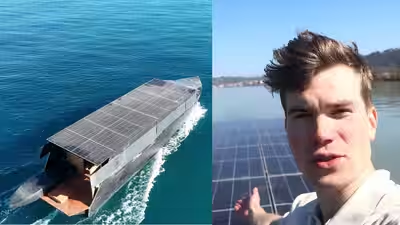
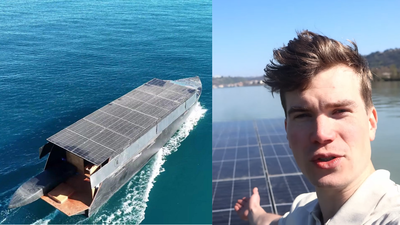
A Finnish boat builder has demonstrated what solar-powered sailing could look like by building an 11-metre yacht from scratch and taking it on a voyage of more than 3,000 nautical miles using electricity generated from the sun. The yacht, designed and built by Lukas Sjöman, relies on solar panels and batteries instead of conventional diesel or petrol propulsion. The project reportedly cost about $20,000 and was developed as a practical experiment in low-cost, renewable-powered boating. During its voyage, the vessel travelled long distances while relying on sunlight to recharge its batteries, highlighting how solar energy and efficient electric systems could potentially reduce the need for fossil fuels in small boats.
How a Finnish man built an 11-metre solar-powered yacht from scratch
Lukas Sjöman designed and built the 11-metre yacht himself, focusing on keeping the vessel lightweight and energy efficient. Solar panels were incorporated into the boat to generate electricity, while batteries stored the power for propulsion and other onboard systems.The project was built with affordability in mind, reportedly costing around $20,000. By constructing the yacht himself and using a relatively simple design, Sjöman showed that a solar-electric boat could be developed without the multimillion-dollar budgets often associated with advanced electric vessels.The yacht’s main energy system consists of solar panels connected to onboard batteries. During daylight, the panels generate electricity that can either be used immediately or stored for later use.The batteries provide energy when sunlight is limited, including at night or during cloudy conditions. This arrangement allows the yacht to operate without carrying conventional diesel or petrol as its primary propulsion fuel.
Sailing more than 3,000 nautical miles
The yacht’s journey of more than 3,000 nautical miles put the solar-electric system through a substantial real-world test. Long-distance voyages require careful management of available energy, particularly when propulsion, navigation and other electrical equipment all draw power from the same battery system.The voyage demonstrated that a relatively small vessel can cover considerable distances when its energy consumption is kept low and its batteries are continually replenished by renewable power.
Why the yacht can run on solar power
Solar-powered boats depend heavily on efficiency because solar panels generate electricity at a much slower rate than conventional engines consume fuel. A lightweight hull and efficient electric propulsion therefore become crucial.Instead of producing large amounts of power for short periods, the yacht is designed around using relatively small amounts of electricity continuously. Solar generation during the day can replenish the batteries, allowing stored energy to be used when required.
A low-cost experiment in clean boating
The reported $20,000 cost makes Sjöman’s project particularly notable. Commercial electric and solar-powered boats can cost substantially more because of their specialised components, construction methods and battery systems.By building the yacht himself, Sjöman was able to experiment with the design and keep expenses comparatively low. The project demonstrates how individual builders can explore renewable propulsion using readily available technologies.
What the project shows about the future of boating
The yacht does not mean solar power can replace conventional propulsion for every type of boat. Solar generation remains dependent on available sunlight, while batteries add weight and have finite storage capacity.However, the voyage demonstrates the potential of combining solar panels, battery storage, lightweight construction and efficient electric propulsion. For smaller vessels designed around low energy consumption, these technologies could provide an alternative to conventional fuel and reduce the amount of fossil fuel required for long-distance travel.