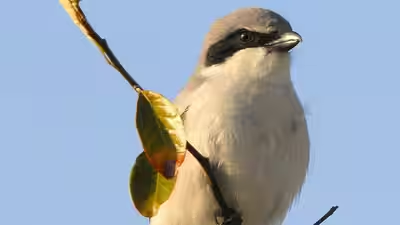
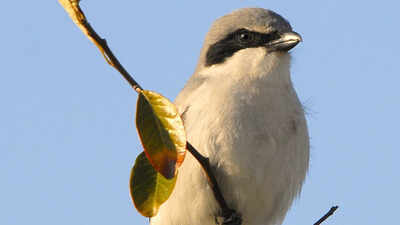
A routine drive along a county road in Ontario turned into an unexpected wildlife encounter for Canadian birdwatcher Paul Jones, who spotted a rather peculiar bird perched on an electrical wire in September. Initially thinking it might be a kingbird, Jones stopped his car and reached for his binoculars, hoping to get a closer look. What he found, however, was incredibly rarer. A loggerhead shrike (Lanius ludovicianus migrans), an endangered songbird in Ontario, had appeared in an area where the species had not been recorded for over five years.According to the Smithsonian’s National Zoo, in a report dated November 10, 2026, Jones first noticed the bird’s white wings, distinctive black facial mask and short, hooked bill. Recognising that it was not the bird he had initially suspected, he photographed it and recorded the coloured bands on its legs, which were orange over white on one leg and blue over metal on the other.
A journey from Virginia to Ontario
The coloured bands proved to be an important clue in understanding where the bird had come from. Its history was already documented by the Smithsonian team, particularly animal keeper DJ Washington, who leads the institution’s eastern loggerhead shrike breeding programme at its conservation campus in Front Royal, Virginia.The young bird had hatched on April 27, 2026, alongside 30 other chicks at the facility. A few months later, in mid-August, she was released at a field site operated by Wildlife Preservation Canada near Newburgh, Ontario. By the time Jones spotted her in September, the bird had travelled almost 30 miles south of the release location.This movement was an encouraging development, as the young shrike appeared to be beginning her autumn migration towards the United States.Washington described such public sightings as both amazing and validating, explaining that they offer confirmation that conservation work carried out within the facility can have an impact beyond its immediate surroundings.
The little bird with an unusual hunting technique
At first glance, the loggerhead shrike might not look particularly intimidating. A small grey-and-white songbird, it is perhaps an unlikely candidate for the rather unusual nickname it has acquired: the butcherbird.The name comes from its distinctive way of catching and storing food. Unlike hawks and eagles, shrikes do not possess the powerful talons and sharp bills needed to tear apart their prey. Instead, they have developed an unusual hunting technique, impaling insects and small animals on sharp branches, thorns and even barbed wire fences.These makeshift food stores allow them to return to their prey later. The behaviour also has a role in territorial displays, with males sometimes using impaled prey to demonstrate their hunting abilities to potential mates and discourage competing birds from entering their territory. The Smithsonian’s Washington has also ensured that birds raised in captivity have opportunities to practise these natural behaviours. Their surroundings include different perching options, including thorny branches and barbed wire, helping them develop the skills they will need after release.This subspecies, which extends from Canada into the southeastern United States, has witnessed a population decline of more than 70 per cent over the last 50 years.The conversion of grasslands and shrublands for intensive agriculture and urban development has affected the landscapes these birds depend on, both during breeding and while spending the winter. High mortality during migration and the widespread use of pesticides, which reduces the availability of their prey, have added to the pressures.To help reverse this decline, the Smithsonian joined Wildlife Preservation Canada’s recovery programme in 2011. Since 2014, its staff have raised nearly 300 chicks, releasing more than 75 per cent of them into the wild. Wildlife Preservation Canada’s biologist Helmi Hess estimates that conservation-bred birds have accounted for over 13 per cent of the wild shrike population over the past two decades. The organisation also reports that approximately 30 per cent of wild-hatched birds have at least one conservation-bred parent.
When birdwatchers become part of conservation
Perhaps one of the most encouraging aspects of this sighting is that it demonstrates how members of the public can contribute to wildlife research without necessarily being scientists themselves.Birdwatchers such as Jones help fill important gaps in the monitoring of migratory species, whose movements can be difficult to track. By photographing birds, recording their sightings and sharing observations through platforms such as eBird, they provide researchers with information that can help establish where particular species are appearing and how their populations are changing.