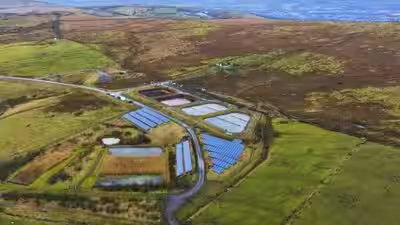
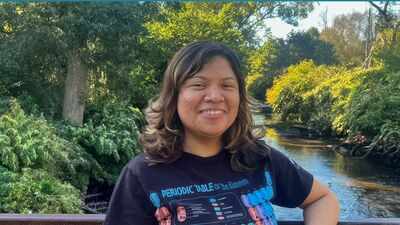
Growing up in Cuautlancingo, a town in Mexico’s Puebla state, Maritza Sanchez saw pollution close to home. Now 21, she is developing microbial fuel cells that use materials recovered from local waste to generate electricity and help improve polluted water. Her project, Aquayac Energy, is focused on the Atoyac River, one of the waterways affected by serious contamination. The goal is ambitious but specific: refine her prototypes and produce 50 functional fuel cells by 2027. Earth Island Institute announced Sanchez as one of the 2026 Brower Youth Award winners, recognising her work alongside five other young environmental leaders. The award highlights not a finished technology, but a young innovator testing whether a small-scale, locally designed system can address two urgent needs at once: cleaner water and access to energy.
A problem close to home
Sanchez’s interest in pollution grew from what she observed around her. Earth Island Institute’s announcement says Cuautlancingo is surrounded by pollution, and that this experience helped shape her idea as a high school student. She began exploring whether discarded materials could be repurposed into a system that might both produce electricity and improve water quality.The project centres on the Atoyac River, which is heavily contaminated. Water pollution can affect communities in many ways, from the health of the river ecosystem to the quality of water people encounter in their daily lives. Sanchez’s idea is to test whether microbial fuel cells could offer a local tool for treating some wastewater while generating useful energy.Her project is called Aquayac Energy. The name reflects its connection to the Atoyac and the effort to turn an environmental challenge into a practical experiment. Rather than approaching pollution only as a problem to document, Sanchez is building and testing a technology that could make use of materials already available in the community, as per the report.
How microbial fuel cells work
Microbial fuel cells use microorganisms to break down organic matter. As microbes consume that material, they release electrons, which can be captured by electrodes and used to generate a small electrical current. In Sanchez’s concept, the system uses discarded local materials and wastewater as part of the process. The technology is being researched in different settings, but Sanchez’s work is at the prototype stage. She designs and constructs the cells, tests their performance and measures how much energy they produce. She also examines water quality after treatment, assessing whether the process changes the condition of the water, it further shared.Those measurements matter because producing electricity alone would not make a system useful if it did not also treat water effectively. Similarly, a treatment process would need to be assessed for safety, consistency and suitability before anyone could rely on it. Sanchez’s work therefore involves testing more than one outcome, with the design still being refined.The technology is not a substitute for large-scale wastewater infrastructure or comprehensive river clean-up. Instead, it is an early-stage effort to see whether a compact, locally built system can contribute to solutions in places facing pollution and limited access to energy.
Building and testing prototypes
Through Aquayac Energy, Sanchez has been designing, constructing and testing microbial fuel cell prototypes. The work includes checking the quality of water after treatment and measuring the amount of electricity the cells generate. These tests help her understand what is working, where the design needs improvement and whether the results can be repeated.The challenge is partly technical and partly practical. A successful prototype must function reliably, use materials that can be sourced and maintained, and produce results that can be measured. If the system is eventually used in communities, it would also need to be safe and suited to local conditions.That is why Sanchez’s 2027 target is framed around working units. She expects to scale the project over the coming year and produce 50 functional fuel cells. The goal provides a concrete measure of progress, moving beyond a concept towards a larger group of prototypes that can be evaluated.The award announcement does not claim that the cells are already supplying electricity to households or that they have solved pollution in the Atoyac. Instead, it describes an ongoing effort to refine the design and test its environmental and energy outcomes.
Recognition and a next phase
Earth Island Institute selected Sanchez as one of six 2026 Brower Youth Award recipients. The annual award recognises young leaders whose work is contributing to environmental change in North America and beyond. The institute said the projects recognised this year ranged from habitat restoration and pollinator protection to school climate action and technologies for wastewater.The award also offers more than public recognition. Earth Island Institute says recipients receive leadership training, networking opportunities and a platform to amplify their work. For a project still developing its prototypes, those connections may help Sanchez share results, find collaborators and build support for the next stage.Sanchez’s work stands out because it brings together environmental concerns that are often handled separately. Waste, water quality and energy access each demand their own solutions, but her project asks whether one process might help with more than one of them. Whether microbial fuel cells can make a lasting contribution will depend on what further testing shows.
A local idea with a measurable goal
The most immediate milestone is the planned production of 50 functional fuel cells by 2027. Reaching that target would allow Sanchez to work with more units, gather additional data and better understand how the technology performs. It would not, by itself, establish that the system is ready for widespread use, but it could take the project from early experimentation to a more substantial stage of evaluation.Sanchez’s approach begins with the conditions around her. She is responding to pollution in her community by designing a technology that draws on local discarded materials and targets wastewater. The work combines invention with careful measurement, checking both energy generation and water quality rather than relying on promises.For now, Aquayac Energy remains a project in development. Its significance lies in the questions it is testing and the commitment to build, measure and refine the technology. At 21, Sanchez is turning a concern rooted in her home region into an engineering challenge with a clear next step: 50 working units, and better evidence about what they can do.