

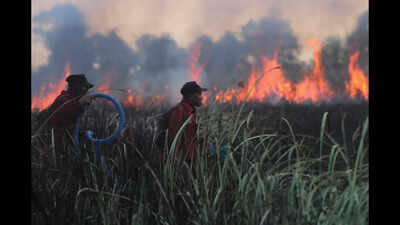
Orangutans rescued from wildlife traffickers face a new threat from the record number of fires that have broken out in Indonesia in recent weeks. According to a report by The Guardian, flames have come within metres of an animal rehabilitation centre in West Kalimantan as hot, dry and windy conditions have been amplified by a powerful El Niño and the human-driven climate crisis. In the first 13 days of August, Indonesia registered more than three times more forest fire hotspots than in the whole of the same month last year. This followed a record number of blazes between January and July. West Kalimantan has been at the epicentre. After 40 days without rain, there have been dozens of severe outbreaks of fire in the region.A race against the flamesFlames threatened the Yiari orangutan rehabilitation centre this week. The fire moved rapidly from 1km away to within 100 metres of the perimeter within days, prompting staff to relocate the 60 resident orangutans to enclosures in the middle of the centre.Indonesia authorities have water-bombed the forest to try to control the blaze, and teams from the centre joined the firefighting efforts as the air quality worsened, posing a threat to animals and the wider ecosystem.The centre’s director, Dr Karmele Llano Sánchez, said in her latest update that battling the fire had been relentless. “We were fighting it until 3am, but this morning it has reignited. The teams are working round the clock but they are exhausted.”The situation had reportedly stabilised as of Thursday evening, with all the animals safe, but the meteorological agency has said the hot, dry conditions are likely to continue and could lead to more outbreaks.Indonesian authorities have urged people to avoid setting fires and to remain vigilant because the peak of the fire season is usually in September and October.A growing threatYiari is seeking funds for more firefighting equipment. It warned of the growing threat earlier this year after a fire started for land clearing spread into one of its ecosystem restoration sites.The fires are not just a threat to the orangutans in captivity. They also endanger the wild populations that the centre is working to protect and reintroduce. Bornean orangutans are critically endangered, with habitat loss and the illegal wildlife trade already pushing them towards extinction. The added pressure of wildfires could undo years of conservation work.Human costThe fires are impacting local communities, too. Smoke from the fires has blanketed the region causing respiratory problems and disrupting daily life. Schools have been closed, and flights have been cancelled due to poor visibility.For the staff at the Yiari centre, the fires are a personal as well as professional crisis. Many of them live in the surrounding villages and have family members affected by the smoke and the destruction of farmland.A call to actionConservationists want to see urgent action to tackle the root causes of the fires, as per the report. These include land clearance for agriculture, mainly particularly for palm oil and pulpwood plantations; and the impact of climate change, which is making the region hotter and drier.They want the Indonesian government to do more to enforce existing laws against illegal land clearing. They also want their government to invest in fire prevention and fighting.For now, the staff at the Yiari centre are doing everything they can to protect the orangutans in their care. But they know that without broader action, the threat will only grow.As Dr Sánchez said, as per the report, “We are fighting not just for these 60 orangutans, but for the future of their species. Every fire that burns is a step closer to extinction.”