
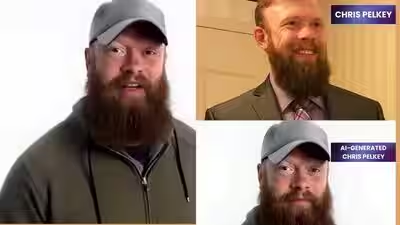

An Arizona man convicted of fatally shooting a motorist during a road-rage confrontation will be resentenced after an appeals court ruled that an AI-generated video of the victim addressing him should not have been shown in court.Gabriel Paul Horcasitas, 55, was convicted of killing 37-year-old Christopher Pelkey during a confrontation at a traffic light in 2021. He was sentenced to about 10 years in prison, but challenged the sentence after the trial judge allowed Pelkey’s family to present an AI-generated video of the dead victim during the sentencing hearing. The BBC and Reuters reported that the Arizona Court of Appeals upheld Horcasitas’ conviction but ordered a fresh sentencing hearing.The three-judge appeals panel said the AI video went beyond a conventional victim-impact statement because it presented thoughts attributed to Pelkey that he had never actually expressed. The court said the use of the video made the sentencing procedure “fundamentally unfair”.
What did the AI video show?
Pelkey’s family created the video using his photographs, videos and voice recordings. It showed an AI-generated version of Pelkey wearing a grey baseball cap and speaking directly to Horcasitas.“To Gabriel Horcasitas, the man who shot me, it is a shame we encountered each other that day in those circumstances. In another life, we probably could have been friends,” the AI version of Pelkey said.“I believe in forgiveness, and a God who forgives. I always have and I still do,” it added.Pelkey’s sister Stacey Wales had earlier told the BBC that the family created the video to portray her brother and communicate the impact his death had on those around him.
Why did court reject AI video?
The appeals court said the video was different from an actual recording of Pelkey or a reconstruction of something he had said while alive. Instead, it depicted his imagined thoughts, based on material created by his sister.“Rather than document an event or recording a particular moment, the AI video presents a depiction of the victim and his thoughts created from the imaginings of the victim’s sister,” the court said.The trial judge, Todd Lang, had appeared to respond positively to the video during the sentencing. “I loved that AI, thank you for that,” Lang said, adding that he heard forgiveness in the message.The appeals ruling does not overturn Horcasitas’ manslaughter conviction. His sentence will now be determined again by a lower court without the disputed AI video.