
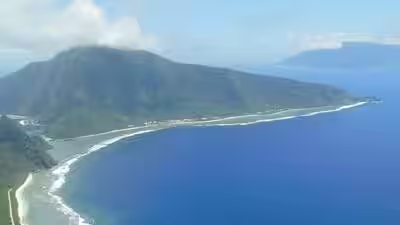
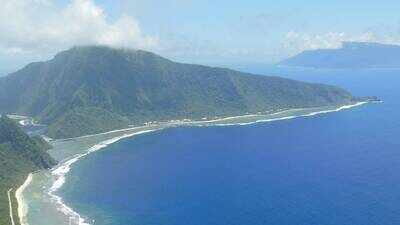
The United States has moved a step closer to deep-sea mining after the Bureau of Ocean Energy Management (BOEM) proposed auctioning two massive seabed lease areas near American Samoa for mineral exploration. The proposal marks a significant milestone in the country’s efforts to secure critical mineral supplies for clean energy, electronics and national security.The proposed lease blocks together span approximately 31.5 million acres within a broader 33 million-acre study area, making it one of the largest offshore mineral leasing initiatives undertaken by the U.S. If approved, the lease sale is scheduled for November 19, 2026.However, the proposed auction would not authorize companies to begin commercial mining. Instead, successful bidders would only be allowed to conduct preliminary exploration activities, including geological surveys, seabed sampling and oceanographic measurements. Any future extraction of minerals would require separate federal approvals, detailed mining plans and additional environmental reviews.
Two lease blocks identified for exploration
According to BOEM, the proposed lease areas cover 16.3 million acres and 15.2 million acres, respectively. The agency said the sale is still subject to legal procedures and public consultation, meaning the auction could be modified or cancelled before it takes place.The seabed in the proposed leasing area lies at depths ranging from about 4,600 feet to 20,000 feet. Portions of the zone are located roughly 57 miles from Rose Atoll, although BOEM said the lease blocks do not overlap the Rose Atoll National Wildlife Refuge or the surrounding marine national monument.
Why the US is interested in deep-sea minerals
Deep-sea deposits are believed to contain valuable minerals such as copper, nickel, cobalt and manganese, which are essential for manufacturing electric vehicle batteries, renewable energy technologies, consumer electronics and defence equipment.“Critical minerals have become a strategic asset in global competition,” said Matt Giacona, acting director of the Marine Minerals Administration.The proposed leasing programme aligns with the Trump administration’s strategy to reduce U.S. dependence on overseas mineral supply chains, particularly those linked to China.An executive order signed in April 2025 directed federal agencies to accelerate seabed mineral development. In January 2026, the National Oceanic and Atmospheric Administration (NOAA) streamlined its permitting process by allowing companies to apply simultaneously for exploration licences and commercial recovery permits through a consolidated application.
What companies would be allowed to do
If the leases are awarded, companies will initially be permitted to conduct geophysical mapping of the seabed, limited geological and biological sampling, oceanographic measurements, and studies of marine habitats, ocean currents and biodiversity.Industrial-scale mineral extraction would not be permitted under the initial leases.Officials say the surveys are intended to gather scientific data and assess mineral resources before any mining proposals are considered.
Environmental concerns remain
The proposal has sparked criticism from scientists, environmental organisations and community groups, who argue that even preliminary leasing could pave the way for future commercial mining in one of Earth’s least understood ecosystems.Researchers warn that large-scale deep-sea mining could generate underwater noise, artificial light and sediment plumes capable of disturbing fragile marine habitats that have evolved in darkness for millions of years.Although BOEM’s environmental assessment concluded that the proposed exploration activities are unlikely to cause significant adverse impacts, it also acknowledged that biodiversity and ecological conditions in the region remain poorly understood.Critics argue that commercial leasing should not move forward until more scientific data is available.
American Samoa groups oppose the proposal
Community organisations in American Samoa have also voiced opposition, saying the surrounding ocean is deeply connected to the territory’s culture, food security and traditional way of life.Seumalu Elora Raymond of Fa’asao Amerika Samoa accused the federal government of “ignoring the voices of the very people whose waters, traditions and livelihoods are on the line.”The territorial government has banned deep-sea mining within its own waters, although the proposed BOEM lease blocks are located in federally managed waters farther offshore.Earthjustice attorney J.V. Langkilde described the industry as largely untested and warned that American Samoa could become an early proving ground for commercial deep-sea mining.
What happens next?
The governor of American Samoa has 60 days after publication of the proposed leasing notice to submit comments.If BOEM proceeds, it must publish a final leasing notice at least 30 days before the auction, outlining the final lease boundaries, bidding process and conditions.The agency has also considered dividing the proposed area into five leases of nearly 7 million acres each, though the final configuration has yet to be determined.While commercial mining is not imminent, the proposal marks one of the most significant advances in U.S. efforts to develop deep-sea mineral resources. The outcome could shape future policy on seabed mining at a time when more than 43 countries have called for a moratorium, precautionary pause or outright ban on commercial deep-sea mining until stronger international rules are in place.