
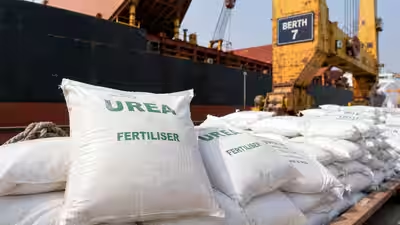
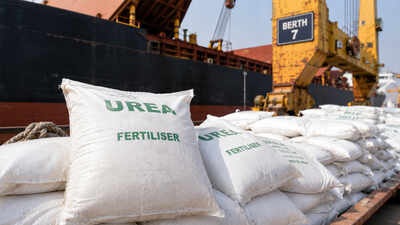
Congestion at Indian ports has left several fertiliser-carrying vessels stranded, which has slowed the unloading and onward movement of these essential crop nutrients. This comes at a time when the kharif sowing season is gaining momentum after the revival of rainfall in early July. The delays have raised concerns over the timely availability of fertilisers for farmers.The timing of the disruption is particularly critical. Improved rainfall during the first half of July has led to a sharp acceleration in kharif sowing. By July 17, the sown area had reached nearly 60% of the normal level, compared with 48% on July 10 and 32% on July 5. Although the acreage remains about 6% below the level recorded a year earlier, the recent improvement has strengthened expectations of a recovery after an uneven start to the monsoon season.
Why are fertiliser vessels stuck?
Congestion has affected several major ports, including Kandla, Mundra, Jawaharlal Nehru Port (Nhava Sheva) and Chennai. Industry officials told ET that the situation has been aggravated by the rerouting of vessels due to geopolitical tensions, while monsoon-related disruptions, heavy cargo movement in the hinterland and shortages of trailers have further slowed logistics operations.“Sowing has picked up over the past week, and any delay in fertiliser dispatch could disrupt distribution,” said a senior executive at a fertiliser company told the financial daily. “DAP (di-ammonium phosphate) needs to be applied at the time of sowing.”The executive said one vessel carrying about 60,000 tonnes of DAP/NPK and another transporting 7,000 tonnes of urea have been awaiting berthing at Kandla Port since reaching the harbour on July 14.“We are losing valuable time needed for timely distribution of key fertilisers,” said another executive at a large fertiliser company. He said the delays were being driven by port congestion, a shortage of railway rakes and broader supply-chain disruptions linked to the West Asia crisis.“We must not allow inland logistics bottlenecks to worsen an already challenging situation,” said a third industry executive.The supply-chain disruptions were triggered after the outbreak of the Iran war, which severely affected shipping through the Strait of Hormuz, one of the world’s busiest routes for commodity trade. The waterway is particularly important for India as West Asia is the country’s largest supplier of fertilisers and essential raw materials such as ammonia and sulphur, making uninterrupted traffic through the strait crucial ahead of the kharif cropping season.The disruption also impacted imports of liquefied natural gas (LNG), leading to a slowdown in domestic urea production during March and April, the period when India usually builds fertiliser inventories before the onset of the monsoon. To avoid supply shortages, the government arranged additional LNG cargoes and issued three global tenders for urea imports.Although shipping through the Strait of Hormuz resumed briefly after the announcement of a US-Iran ceasefire, renewed disruptions have once again created uncertainty over cargo movements.Industry executives said urea availability remains adequate for the current kharif season. However, supplies of DAP continue to be constrained because of limited global availability of ammonia and sulphur. They added that phosphatic fertilisers are likely to remain under pressure until supply chains across West Asia return to normal.