
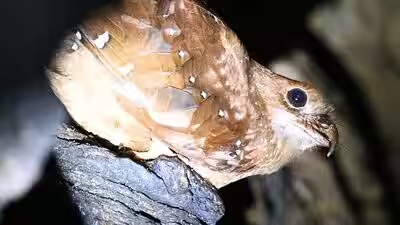
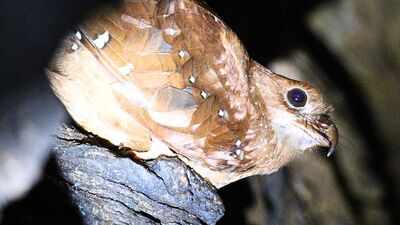
Oilbirds spend their nights flying through tropical forests in search of fruit, but some of them take an unexpected approach to reach their feeding grounds. Some birds regularly returned to the same main cave after feeding. Others made long-distance trips but returned to the cave within three days. A third group stayed away from the cave for weeks at a time and appeared to have rested near feeding areas. According to research published in Movement Ecology titled ‘Oilbirds performing non-seasonal intra-tropical migrations reduce flight effort compared to individuals that frequently return to the colony roost’, these long-distance travellers spent less time flying each night than birds that regularly returned to the cave. By resting closer to their feeding areas, they likely avoided making long flights between the cave and food sources every night.
How oilbirds from a cave in Venezuela travelled far from their usual roost
Five of the tracked oilbirds moved far from their main cave and stayed in new areas for several weeks. The researchers described this as non-seasonal, partial nomadic movement rather than a regular yearly migration. These birds changed their daytime resting places and stayed away from the main cave for 17 to 73 continuous days.Instead of flying back to the main cave after feeding, they appear to have rested closer to the areas where they found food. This likely reduced the need for long flights between the cave and feeding grounds every night. The migrants spent an average of 2.26 hours flying each night.Roost-faithful birds spent 3.28 hours flying, while venturers spent 3.03 hours. Despite making long-distance trips, the migratory birds spent less time flying. The researchers attribute this to the birds staying closer to their feeding areas, possibly roosting in trees. Only five birds were migrants; the difference in flight time was statistically modest, and flight time is a proxy for effort rather than a direct measure of energy use.

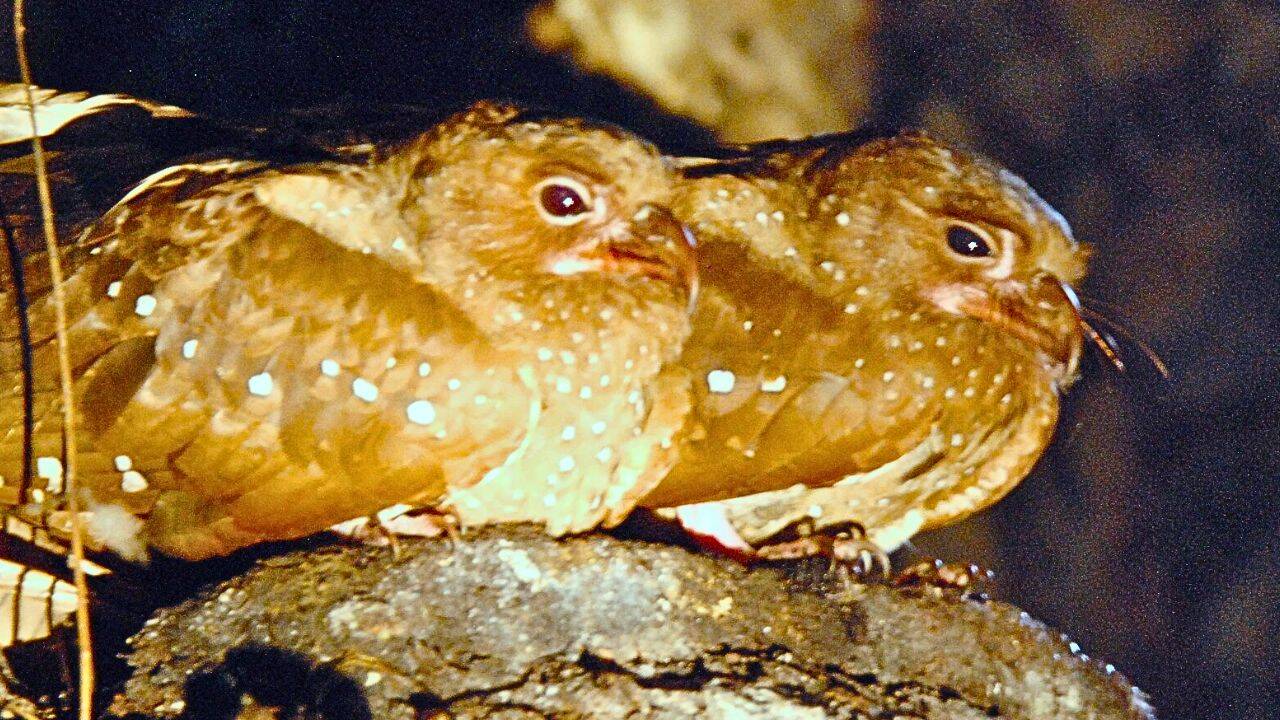
PC: Lilac Breasted Roller/ Wikipedia
How did researchers study the oilbirds’ activity at night
The study followed 21 adult oilbirds at Cueva del Guácharo from August 22, 2008, to February 14, 2009. The paper’s data come from an earlier oilbird tracking study archived on Movebank, so this appears to be a new analysis of older data. Each bird carried a 22-gram device that recorded its location and movements.The researchers collected GPS data on one night each week and used accelerometers to record short bursts of movement. This helped them tell whether the birds were flying or resting and calculate how long they flew each night. The birds were active only at night. They left their resting places after dark and flew to feeding areas. While feeding, they also made shorter flights before returning to a resting place before sunrise.
Oilbirds followed three distinct movement strategies
The researchers sorted the oilbirds into three movement strategies based on how they travelled and where they rested. Two birds were roost-faithful as they made no excursions and never switched roosts, though they spent about 5% of days roosting away from the cave. Fourteen birds were classified as venturers as they made excursions but returned to the main cave within three days. The remaining five birds were intra-tropical migrants. They travelled to distant areas and stayed at alternative resting places for 17 to 73 days.These different movement patterns affected how often the birds made long flights between their resting and feeding areas. The migrant group spent more time resting during the day away from the main cave. The authors suggest this flexibility may help birds share the same wider area, though their data can’t show whether these strategies persist or affect survival.
What did the study find about the oilbirds’ feeding areas
The tracking data demonstrated that oilbirds repeatedly returned to several small feeding areas. Individual birds used between one and five such areas. Some of these sites were as far as 297 kilometres from the main cave. The researchers found no spatial overlap between the feeding areas used by different birds. Only two pairs of birds came within 10 metres of each other, about the tags’ margin of error. The average minimum distance between two individuals was about 4.6 kilometres.The feeding locations used by different birds were also generally separated from one another, with 95% of bird pairs more than 100 metres apart. This means that different birds generally used separate areas while searching for food. Such separation may help reduce competition for food among the birds.