
Nearly 400 years ago, people living in Osaka had no refrigerators, supermarkets or modern food supply chains. Yet an unusual scientific discovery suggests that their diets were far more varied than expected. Researchers analysing hardened dental plaque from eight people buried at the Umeda cemetery in Osaka identified 38 dietary proteins from 17 types of food, offering a rare glimpse into what ordinary people ate during Japan’s Edo period. The study, published in Anthropological Science, was conducted by researchers from the Graduate University for Advanced Studies (SOKENDAI), Aomori Public University, Kyushu University and other institutions.
Their teeth became a food record
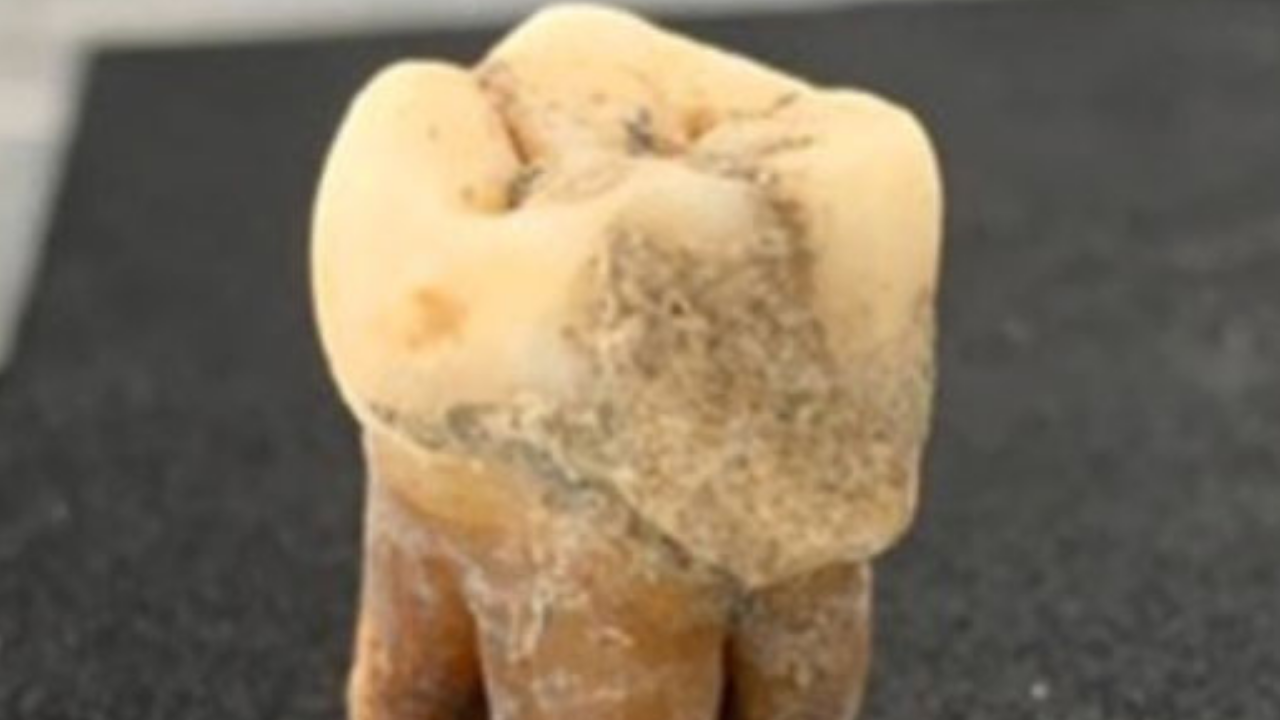
The researchers examined dental calculus, hardened plaque that can preserve microscopic traces of what people consumed.They combined palaeoproteomic analysis of the calculus with carbon and nitrogen isotope analysis of bone collagen. The isotope results indicated diets based largely on terrestrial plants and marine resources, while the proteins trapped in dental calculus provided much more specific clues about individual foods.Across the eight individuals, scientists identified proteins belonging to nine fish taxa, as well as terrestrial and marine mammals and several plants.

One of the most striking discoveries was red sea bream (Pagrus major), whose muscle proteins were detected in six of the eight individuals. Historical records describe the fish as a high-grade or luxury food during the period. That does not mean these people were wealthy. In fact, the remains are thought to belong to relatively poor urban commoners.
Luxury fish was reaching ordinary people
The finding becomes particularly interesting when viewed against Osaka’s role in the Edo-period food economy. Osaka was known as the “Kitchen of the Realm”, a major centre for collecting, distributing and trading food from different parts of Japan. Historical evidence indicates that red sea bream was transported to Osaka from western Japan.Researchers say the presence of its proteins in the teeth of commoners suggests that the city’s developing markets and distribution networks may have made foods once regarded as luxury items accessible beyond the wealthy. The dental calculus also contained proteins from flatfish, including members of the tonguefish family, fish that were available in Osaka and the Seto Inland Sea region.
Some fish travelled a long way
The researchers also detected proteins from salmonids, despite the fact that salmon do not naturally live in Osaka Bay. That finding is significant because it points towards the movement of food over considerable distances. During the Edo period, Osaka was connected to other parts of Japan through extensive coastal shipping networks, allowing food produced far away to reach the city’s markets. In other words, the remains provide evidence not only of what people ate, but also of how Japan’s premodern food distribution system could shape an urban diet.
Even cotton may have been on the menu
One of the more unexpected findings was cottonseed protein. Researchers suggest that cottonseed may have been consumed in the form of cottonseed oil, although the evidence does not establish exactly how the material was eaten.Proteins from terrestrial animals were also detected. The researchers note that meat from such animals was subject to social and cultural restrictions during the period, making its presence another intriguing aspect of the findings.
A glimpse into everyday Edo life
The study does not provide a complete menu for Edo-period Osaka. Protein preservation varies between foods, and the researchers examined only eight individuals, so the findings cannot automatically be applied to everyone living in the city.But they do challenge a simple picture of the diet of ordinary people in premodern Japan. The evidence suggests that even relatively poor urban residents could access foods originating from different environments and regions, from locally available fish to expensive sea bream and fish transported from distant waters. More broadly, the study shows how something as ordinary as hardened plaque can preserve evidence of ancient food habits long after the meal itself has disappeared.