
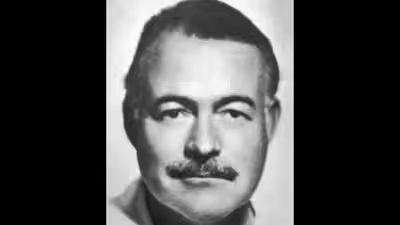
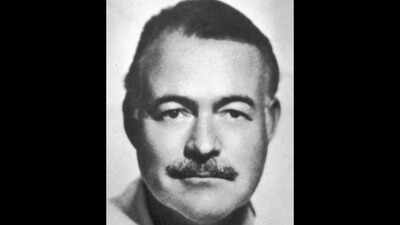
American writer Ernest Hemingway was a man famous for living a life of intense action, bold words, and heavy drinking. He spent his years fighting in wars, hunting big game, fishing in open seas, and writing classic novels. Along the way, he developed a reputation for being a tough guy who held himself and others to a strict personal code. One of his most famous quotes captures his attitude toward honesty, personal accountability, and alcohol: “Always do sober what you said you’d do drunk. That will teach you to keep your mouth shut.”When Charles Scribner (IV) succeeded his late father as head of the country’s most venerable publishing firm in 1952, Ernest Hemingway wrote him a long personal letter, which concluded with a list of his “rules for life.” This quote was one of them.
Funny take on drunken boasting
This quote sounds like a funny piece of practical advice for anyone who has ever consumed one too many drinks at a party. Drinking alcohol lowers a person’s inhibitions. It melts away fear, self-doubt, and caution. Under the influence, people often feel bolder, richer, smarter, and stronger than they actually are. In that relaxed state, it is easy to make wild promises, pick fights, volunteer for hard tasks, or boast about things you intend to do. A person might promise to help a friend move across the country, pledge a huge sum of money, or agree to run a marathon, all while sipping a glass of whiskey in a room full of cheering friends.The problem comes the next morning. When the alcohol wears off, reality sets in. The false confidence disappears, leaving behind a headache and a sense of dread. The standard human response in that situation is to make excuses. Most people will call their friend, laugh off the promise as a silly joke, and apologize for having too much to drink. They try to escape the commitment by using alcohol as an excuse for their foolishness.Hemingway utterly rejected that easy exit. His advice demands that you force yourself to fulfill every single promise you made, no matter how uncomfortable, expensive, or painful it might be. If you promised while drunk that you would climb a mountain, you must wake up, put on your boots, and go climb that mountain. If you promised to give someone money, you hand over the cash. If you promised to take on a difficult task, you show up and do the work.The second part of the quote explains why this harsh rule is necessary: “That will teach you to keep your mouth shut.” Forcing yourself to suffer through the consequences of your own loose talk is a form of painful discipline. Once you have to spend a miserable weekend following through on a foolish commitment you made during a late night at the bar, you learn a hard lesson. The sheer misery of paying for your big mouth cures you of the habit of making empty promises. Next time you hold a glass in your hand and feel the urge to brag or make a grand pledge, the memory of that pain will stop you in your tracks. You will choose to stay quiet instead.
Man of his word
This philosophy fits perfectly with Hemingway’s life and his personal view of manhood and honor. Hemingway lived through severe injuries in World War I, survived plane crashes, and dealt with constant physical pain. He believed deeply that a person’s character is defined by how they act when things get hard. He had zero respect for people who talked big but shrank away when it came time to act. To Hemingway, a man’s word had to mean something. If your word only counts when it is convenient for you, then your word is completely worthless. Using alcohol as an excuse to break a promise was, in his eyes, a form of cowardice.Hemingway’s rule is not just about drinking alcohol. It is really a universal lesson about self-control and personal accountability. Alcohol simply acts as a magnifying glass for a common human weakness, which is speaking before thinking. People make silly commitments sober all the time out of a desire to impress others, to avoid saying no, or to feel important in the moment. They promise favours they do not have time to deliver, or they take on extra work just to look good in front of a boss.When you hold yourself to a strict standard of carrying out every single commitment you speak aloud, you quickly realize how dangerous loose words can be. You learn that words carry real weight and real consequences. The ultimate goal of Hemingway’s rule is to teach us self-restraint. It forces us to slow down, control our impulses, and protect our personal integrity. Silence is usually better than a foolish promise. By learning to keep your mouth shut until you actually mean what you say, you save yourself from useless regret and build a reputation as someone whose word can truly be trusted.