
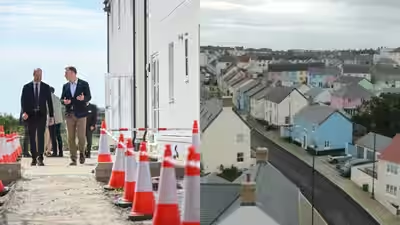
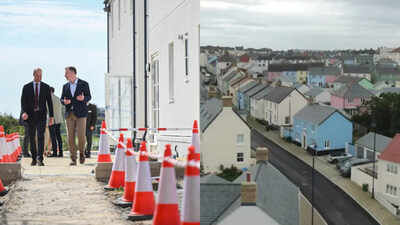
A new housing project in Cornwall is putting a different face on the fight against homelessness. Rather than treating shelter as a temporary stopgap, the development in Nansledan, Newquay, combines carefully designed homes with practical support, creating a more secure route towards independent living for people who have experienced homelessness. Scroll down to read the details.
A new beginning in Nansledan
According to the Nansledan website, on August 4, 2026, St Petrocs received the keys to the first phase of the development from the Duchy of Cornwall. Funded by The Duke of Cornwall’s Charitable Foundation and built on Duchy-owned land, the scheme will provide accommodation for 16 people across two four-bedroom homes and eight one-bedroom apartments.Built by CG Fry & Son, the development was designed around more than simply providing a roof. On-site counselling space will allow St Petrocs to offer residents support alongside their accommodation, helping them establish greater stability as they work towards securing permanent housing, adds the report. The handover marks the completion of the construction phase and the beginning of the homes’ next chapter, with residents set to move into fully equipped properties, the report adds.
Housing with support at its core
The project forms part of Homewards, The Royal Foundation’s five-year programme established by The Duke of Cornwall with the ambition of demonstrating that homelessness can be prevented and made rare, brief and unrepeated. The programme brought the Duchy together with homelessness prevention specialists and people with lived experience, helping shape the design and approach to the development. The result is a model that places housing, wellbeing and community connection on the same footing.For St Petrocs, which supports people experiencing homelessness in Cornwall, the homes offer a chance to provide continuity rather than short-term intervention. Residents will have access to personalised support while becoming part of the wider Nansledan community.
Designed for a lower-carbon future
As per the report, sustainability is another defining feature of the project. The all-electric homes have been constructed with a focus on reducing both embodied carbon and the emissions associated with everyday use. Ultra-low-carbon cement and blockwork, super-insulated hemp-filled wall panels and solar panels form part of the environmental strategy. The approach is intended not only to reduce the development’s impact but also to keep future running costs lower for St Petrocs.The homes have also been furnished through the Homewards Furniture Project, with support from retailers and partners including Howdens, IKEA, DFS, B&Q, Bosch Home Appliances and Gordon Brown’s The Multibank charity. Sofas, tables, chairs, white goods and fitted kitchens mean residents can move into spaces that are ready to live in from day one.
A wider community taking shape
Nansledan itself reflects the Duchy’s broader approach to sustainable development. The urban extension to Newquay combines homes with shops, businesses, community facilities, green spaces and walkable neighbourhoods. The supported housing scheme adds another dimension to that vision: ensuring that those at risk of being left on the margins can also find a place within a growing community.As the first residents prepare to move in, the project represents the Duchy of Cornwall’s first housing development specifically designed to address homelessness. Its significance lies not just in the number of homes created, but in the idea behind them: that secure accommodation, meaningful support and a sense of belonging can work together to help people rebuild their lives.Images Courtesy: BBC and Royal Foundation