
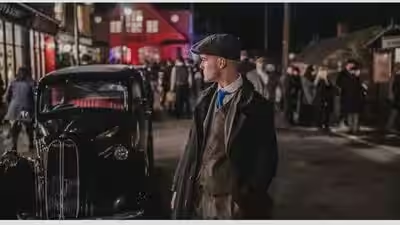
The popularity of Peaky Blinders has helped introduce Birmingham and the wider West Midlands to audiences around the world, turning filming locations into attractions for fans of the drama. A new study by creative industries consultancy OlsbergSPI estimates that connections to film and television could generate £66.97 million in visitor spending across the region. The research suggests that screen productions can influence travel decisions, encourage additional visits and bring financial benefits to local attractions, accommodation providers and other tourism businesses.
Peaky Blinders helped put Birmingham on the global tourism map
The BBC drama Peaky Blinders, which ran from 2013 to 2022, has become one of the most recognisable television productions associated with Birmingham. Created by Birmingham-born writer Steven Knight and starring Cillian Murphy as Tommy Shelby, the series follows a fictional criminal gang operating in the city during the period of industrial change following the First World War.Although the story is rooted in Birmingham, the programme has attracted viewers from across the world, particularly in the United States. Its popularity has also brought attention to locations across the West Midlands, including the Black Country Living Museum in Dudley, where some of the show’s most recognisable scenes were filmed.According to BirminghamWorld, the series has played an important role in raising the city’s international profile. Birmingham has also hosted world premieres for successive seasons, while the 2018 Peaky Blinders Festival brought together hundreds of actors from the production and featured a performance by Liam Gallagher.The programme’s influence has extended beyond television. A dance production based on the series was created by Rambert, adding another cultural attraction connected to the story.
What the new study found about screen tourism
The potential economic contribution of film and television tourism has now been examined through a pilot study conducted by OlsbergSPI in partnership with the Black Country Living Museum.The research involved a virtual survey of more than 5,000 national and international visitors who had visited the museum since the first release of Peaky Blinders in 2013. The survey was distributed through the attraction’s mailing lists and social media channels to understand what encouraged people to visit and how much screen-related interest contributed to their spending.The findings showed that around 4% of museum visitors came mainly because of Peaky Blinders. While this represented a relatively small share of overall attendance, the group had a notable economic impact. Visitors motivated by the programme spent, on average, between 20% and 30% more than those who visited for other reasons.The findings suggest that screen tourism does not necessarily depend on attracting enormous numbers of additional visitors. People travelling specifically because of a film or television production may spend more during their visit, creating additional value for the attraction and the surrounding tourism economy.
How could film and television generate £66.97 million
The study also examined the wider impact of screen productions across the West Midlands rather than focusing exclusively on the museum.OlsbergSPI found that 6% of survey respondents would not have visited the region if it had no connections to film and television. The consultancy used this additional visitor interest to estimate the potential contribution of screen tourism to the area’s economy.According to its findings, the West Midlands recorded 1.99 million inbound visits in 2024, based on figures from VisitBritain. Assuming that the survey’s 6% proportion applied to all those visits, the consultancy estimated that film and television connections could support approximately 126,600 inbound visits. Those visits could generate an estimated £66.97 million in visitor expenditure.The figure represents projected spending associated with screen tourism rather than money already received by regional businesses. It is based on the assumption that the survey findings reflect the motivations of the wider population of inbound visitors.The Screen Tourism pamphlet published by Olsberg•SPI also highlights the importance of measuring whether screen productions genuinely encourage additional travel. Its research found that around 3% of international Black Country Living Museum visitors were motivated purely by film and television to visit the UK, while approximately 2% were specifically motivated by Peaky Blinders.
Screen tourism can benefit more than filming locations
The financial impact of screen tourism can extend well beyond the attractions featured on television. Visitors travelling to experience places connected to their favourite productions may also spend money on accommodation, restaurants, transport, entry tickets and other local experiences.OlsbergSPI explains that this wider spending can support employment and encourage further investment in destinations. Film and television productions can also introduce regional heritage, architecture and cultural attractions to international audiences who might otherwise have little reason to visit.For the West Midlands, this creates an opportunity to connect its industrial history and existing visitor attractions with the international popularity of television and film.The Black Country Living Museum has already developed experiences around this interest. The attraction regularly hosts Peaky Blinders Nights, allowing visitors to dress in period-inspired clothing and take part in themed activities.
Could Birmingham develop a permanent Peaky Blinders attraction
The possibility of creating a dedicated attraction connected to the series has also been discussed in Birmingham.In February 2023, BirminghamWorld reported that tourism officials were responding to speculation about a possible Peaky Blinders theme park. Although the reports of a theme park had not been confirmed, the West Midlands Growth Company indicated that a more permanent visitor experience was worth exploring.Its chief executive, Neil Rami, said the organisation had launched a feasibility study to investigate whether a new attraction or experience celebrating the series could be viable.Birmingham City Council leader Ian Ward also highlighted the city’s importance to the programme, noting that Birmingham and the Black Country had been presented to millions of viewers in Britain and internationally.He also pointed to the region’s growing appeal as a filming destination, with major productions involving filmmakers such as Steven Spielberg and Tom Cruise having used the city.