
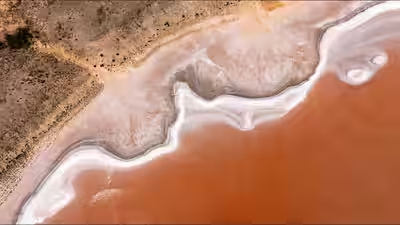
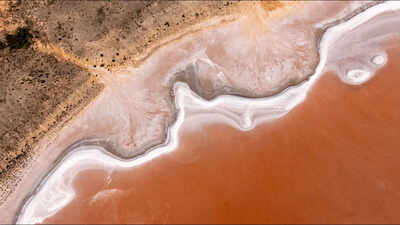
Pink lakes within the New South Wales national parks estate will be protected for the first time after the NSW and Australian governments jointly purchased Pulgamurtie Station, a 74,000-hectare property about 235 kilometres north-east of Broken Hill. This landscape is home to more than 70 threatened species, including the iconic brolga, pink cockatoo and slender darling pea.
Two lakes, plenty of sky

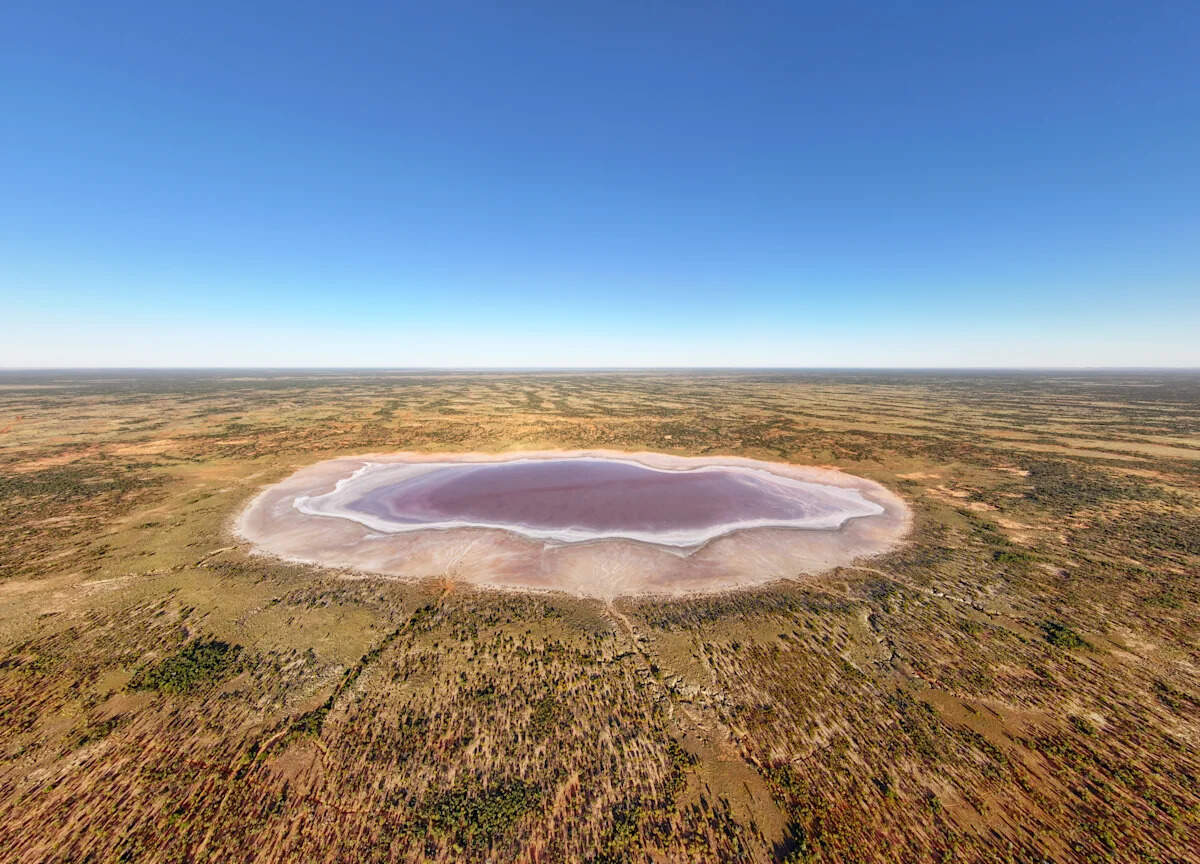
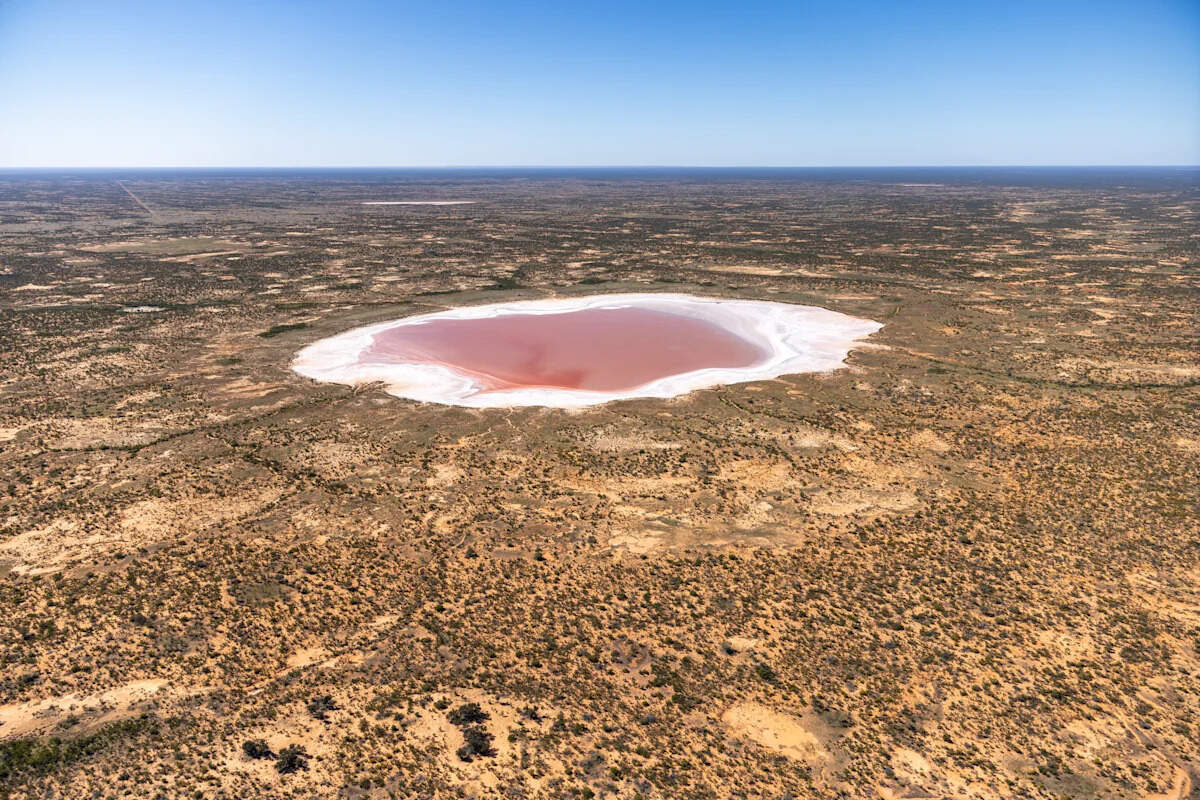
Pink lakes are rare in NSW, and many appear only in certain seasons. The two on Pulgamurtie are among the state’s most spectacular natural wonders. Their peculiar hues occur naturally due to the presence of certain microorganisms, including algae and bacteria, that thrive in highly salty water and produce pink pigments.The station covers more than 74,000 hectares. Beyond the lakes, it has sweeping outback plains, rolling sand dunes and thriving wetlands. The larger lakes and wetlands are critical feeding and breeding grounds for thousands of waterbirds, including some migratory species that travel between Australia, Russia, China and Japan.NSW Environment Minister Penny Sharpe said the purchase is a rare chance to protect the natural environment and its threatened biodiversity. “These will be the first pink lakes protected by the NSW national park estate. This is a once-in-a-generation conservation and tourism opportunity that will protect these spectacular landscapes and allow more people to experience them,” the minister said. “Few places capture the scale and diversity of the NSW outback quite like Pulgamurtie, where a mosaic of wetlands, lakes and rolling arid plains exists side by side. This is a critical investment in conservation that will help safeguard this unique landscape, its wildlife and its rich cultural heritage for generations to come.”
Brolga and the pink cockatoo call this home

This property is home to more than 70 threatened species, including the brolga, the pink cockatoo and the slender darling pea. This effort is part of a push to protect landscapes that are under-represented in the reserve system. The two governments are jointly buying high-priority conservation properties through the Australian Bushland Program. The federal government says such purchases have helped it protect more than 25% of Australia’s land mass.Federal Environment Minister Murray Watt said protecting the habitat is the current focus. “Australians love spending time in the bush and this purchase will protect more of it for future generations. With our natural environment under significant pressure, the Albanese Government is committed to protecting and restoring more land across Australia,” the minister said. “Through our partnership with the NSW Government, we’re helping secure important habitat and expand the network of protected areas in places that deliver the greatest conservation benefits. By protecting and conserving diverse areas of NSW, we’re supporting many threatened species and the habitats they call home.”
Aboriginal cultural heritage
Pulgamurtie is not only known for its natural environment but also for its Aboriginal cultural heritage. The property is a significant part of Dreaming songlines and has historic stone artefacts, hearths and grinding stones.Moving ahead, the NSW National Parks and Wildlife Service (NPWS) will work closely with the Malyangapa Aboriginal Community, neighbouring landholders and other stakeholders.Mark Sutton, a representative member of the Malyangapa Native Title Board, also expressed hope about the purchase. “The Malyangapa people are supportive of the continued expansion of protected areas in Far West NSW. The acquisition of Pulgamurtie ensures that representative landscape types and Aboriginal cultural heritage will be protected,” he said. “We look forward to engaging with National Parks and Wildlife Services to create another recreational destination for locals and visitors alike.”Pulgamurtie was on the market for around two years. It was acquired after it failed to meet its reserve at a public auction. NPWS has bought five of the 60 properties sold in Far Western NSW in 2024 and 2025.Meanwhile, the NPWS will eventually consider the possibility of welcoming visitors. The station sits along the Silver City Highway, and NPWS will explore campsites near the larger lakes, day-use areas, walking trails and scenic drives. Birdwatching is on the list, along with views towards the Koonenberry Range. No opening date has been given. According to the government, national parks contribute $433 million a year to Western NSW and support nearly 9,000 jobs.