
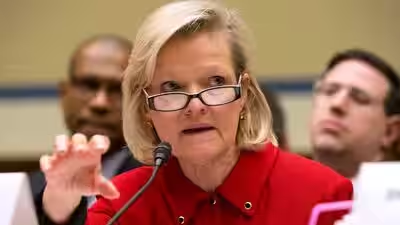
Newly released emails have revealed how Cleta Mitchell, a lawyer involved in Donald Trump‘s efforts to overturn the 2020 presidential election, urged the Justice Department to quickly pardon people accused of participating in the fake-elector scheme before their cases went to trial.In an email sent to then pardon attorney Ed Martin in the fall of 2025, Mitchell argued that delaying the pardons would increase the financial and emotional burden on Trump supporters facing criminal cases in Georgia, Michigan, Arizona, Nevada and Wisconsin.“Time is of the essence,” Mitchell wrote, urging the department to act before trials were scheduled. The email exchange was obtained by watchdog group American Oversight through a Freedom of Information Act request and shared with The Guardian.Martin responded briefly, thanking Mitchell and describing her message as “very helpful”.Trump eventually issued a blanket pardon to the fake electors on November 10, 2025. However, the move was largely symbolic because presidential pardons apply to federal offences and cannot clear state-level criminal charges.
Mitchell argued pardons could help end pending cases
The emails offer a glimpse into how Trump allies sought to influence the administration’s efforts to revisit the 2020 election, which he lost to Joe Biden, and protect supporters accused of trying to overturn its result.In several states, Republican electors had met privately and signed certificates falsely declaring Trump the winner. They hoped the documents would be recognised during the counting of electoral votes on January 6, 2021, but the effort failed.Mitchell particularly focused on the Georgia case, where criminal proceedings involving Trump and the fake electors were pending before a prosecuting attorneys council after Fulton County District Attorney Fani Willis was disqualified.She suggested that a federal pardon could help bring the remaining charges against Trump to an end if issued before a new prosecutor was appointed. However, the prosecutor who eventually took over dismissed the case for reasons unrelated to the pardons.Mitchell had been involved in Trump’s efforts in Georgia and was on the phone call in which he pressured then secretary of state Brad Raffensperger to find enough votes to overturn the election. A special grand jury had recommended that she face criminal charges over her role, but she was never charged.
Federal pardons could not erase state-level charges
Mitchell also pressed for pardons in Arizona, Michigan and Wisconsin, arguing that defendants had faced years of legal expenses and emotional hardship. She said some had exhausted retirement savings and mortgaged their homes to pay legal fees.In her correspondence about the Arizona case, she urged action before a grand jury could file charges, describing the proceedings as persecution. She also highlighted the involvement of two senior figures from Turning Point USA, whose founder Charlie Kirk had been killed weeks earlier.The US Constitution gives the president broad authority to pardon people convicted of federal crimes, but that power does not extend to state offences. Mitchell nevertheless advanced the argument that the fake-elector scheme involved federal responsibilities and that the charges should therefore be treated as federal rather than state matters.She made a similar case in a November 2025 opinion article in The Federalist and publicly advocated for the pardons on social media.Despite Trump’s blanket pardons, state-level cases continued to face separate legal proceedings. The Wisconsin case against three key architects of the fake-elector scheme remained pending, while proceedings in Arizona, Michigan and Nevada stalled for reasons unrelated to the pardons.On the day Trump issued the blanket pardons, Martin received an email congratulating him on the move. “It was a long project,” he wrote. “But I am glad we stuck the landing.”