
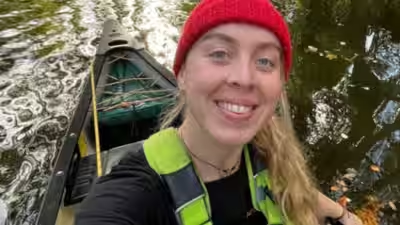
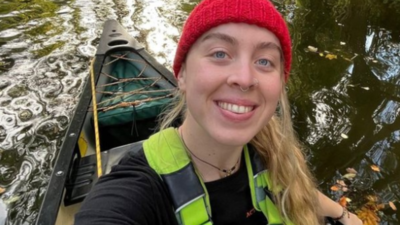
Meet Eva Outram, UK woman who quit her $58,000 NHS job after surviving 23 days in the wilderness; now lives in a caravan, teaches outdoor skills and saves $3,200 a monthFor 23 days, Eva Outram lived in the Canadian wilderness, where finding food, surviving without modern comforts and dealing with isolation became part of her daily routine. But when the 28-year-old British woman returned home from the survival reality show ‘Alone’, it was not the wilderness she wanted to leave behind. Instead, she began questioning the life she had built around a steady job, a mortgage and the expectation that success meant settling into a conventional routine. She eventually quit her $58,000-a-year job with the UK’s National Health Service (NHS), moved into a caravan with her partner and embraced a life centred on outdoor adventures. Today, the couple say they save around $3,200 every month.According to reports by PEOPLE, Outram had been working as an NHS project manager and living in a two-bedroom flat in Leeds, England. Her annual salary was about $58,000, but mortgage payments, bills and other living expenses left her feeling as though she was working primarily to maintain her lifestyle.Her experience on ‘Alone’, a Channel 4 survival series in which contestants attempt to survive in a remote part of Canada, became a turning point. After spending 23 days in the wilderness, she returned with a different perspective on what she wanted from life.
From an NHS career to a life outdoors
Outram had followed a familiar path: getting an education, finding a stable job and buying a home. She purchased her Leeds flat in October 2022, but the financial commitments associated with it soon began to feel restrictive. “I had always had an inkling that the traditional way of living wasn’t for me, but I was on the conveyor belt of going to university and getting a good job,” she told PEOPLE. She described spending a year in the flat feeling as though she was on a “hamster wheel” of working to pay the mortgage. Her appearance on ‘Alone’ gave her an opportunity to step away from that routine and examine the choices she had made. The experience also brought her closer to the outdoors, where everyday comforts were no longer guaranteed and survival depended on resourcefulness.In a 2024 interview with outdoor retailer Valley and Peak, Outram described her time on the show as an exceptionally difficult experience. She said she had little survival experience before participating, beyond spending a couple of years in the Scouts as a child. Foraging for food, dealing with isolation and living without running water or proper shelter tested her in ways that ordinary city life had not. She recalled going days with little more than handfuls of berries to eat.After returning to the UK, she felt a strong desire to change almost every aspect of her life. She left her NHS job and began pursuing her interest in outdoor activities and wilderness skills.
A £4,800 caravan becomes her new home
Outram’s transition to caravan living was not entirely unfamiliar. Her partner, Tom Park, 33, a stonemason, had already been living in a caravan when they met. She often spent weekends with him and gradually became attracted to the freedom his lifestyle offered. In August 2024, Outram began renting out her Leeds flat, and the couple bought a caravan together for £4,800, approximately $6,100 according to AS USA.The caravan became their full-time home, allowing them to move away from the substantial accommodation expenses associated with conventional housing. Instead of paying rent, they stay on farmland in exchange for helping with work around the properties. Their responsibilities vary according to where they are staying. At one farm, they helped with general maintenance and looked after chickens, while Park also undertook construction work. At their current location, which welcomes children and visitors, Outram spent two weeks doing face painting.The arrangement means the couple can receive accommodation, electricity and water in exchange for a few hours of work each week. Outram told PEOPLE that the work generally involves just a handful of hours, while reports put their weekly commitment at around three to six hours. They have not abandoned work altogether. Outram earns money through content creation and outdoor-related ventures, while Park continues to undertake paid work.
How they save around $3,200 every month
The financial difference between their former and current lifestyles is substantial, according to Outram’s account. Before moving into the caravan, their reported monthly expenses included a mortgage of about £800, ground rent of £150, bills of £315 and food expenses of approximately £40. Together, these amounted to around £1,305 a month.Under their current arrangement, they have no accommodation costs, and the farm provides electricity and water. Their reported regular expenses include gas costing about £40 every few months and a weekly food shop of approximately £85. Outram and Park estimate that they can save around £2,500 each month, equivalent to roughly $3,200 at the exchange rate used in AS USA’s report. The figure represents their combined savings rather than Outram’s individual earnings.“We have a total sense of freedom,” Outram said, according to a report by the Yorkshire Post. She added that the arrangement gives them higher disposable income and allows them to decide how to use their money without being tied to a single location.Their reduced expenses have also given Outram greater flexibility to pursue her interests in the outdoors. Through The Grim Adventure Club, she has explored opportunities to offer bushcraft and wilderness workshops, hiking and canoeing expeditions, with the aim of helping other people develop a closer connection with nature.
Saving for a home while choosing freedom
Despite moving away from conventional homeownership, Outram and Park have not abandoned the idea of having a permanent place of their own. They hope to save enough money to purchase a plot of land and build a home, or buy a rundown property they can renovate. For now, however, they have no immediate plans to return to the housing arrangements they left behind. Their lower living costs have allowed them to save while continuing to explore different places and outdoor experiences.In an interview with the Yorkshire Post, Outram said the assumption that people living this way must be struggling financially was misleading in their case. She said she had earned more than ever before and had no intention of returning to her previous lifestyle. “I genuinely feel like I am living my dream life,” she said, according to AS USA.