
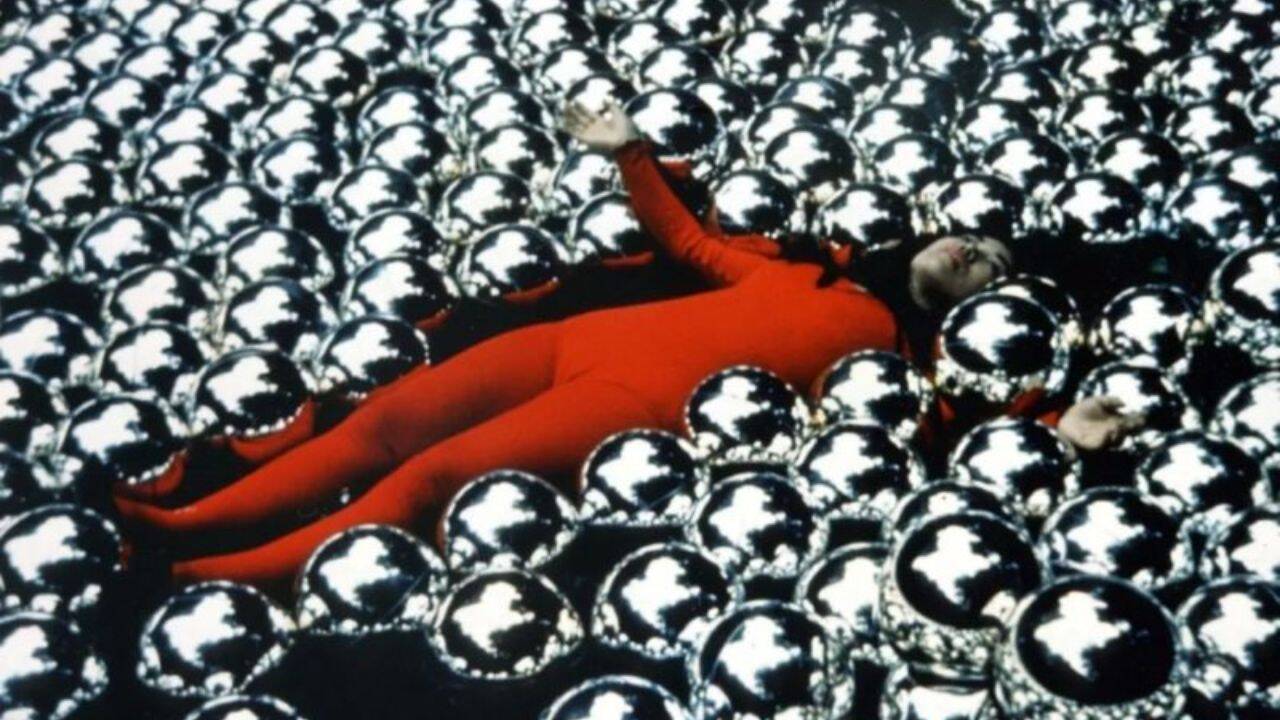
In 1966, visitors arriving at the Venice Biennale were confronted by an unusual sight. Spread across the lawn outside the Italian Pavilion were 1,500 shimmering silver spheres, each catching fragments of the surrounding architecture, the sky and anyone who stopped to look.Reportedly, among them stood Japanese artist Yayoi Kusama, dressed in a gold kimono. She had not been formally invited to exhibit at the Biennale, yet she had found a way to put her work in front of its international audience. The installation was called Narcissus Garden, and Kusama did something even more unexpected with it. She began offering the mirrored balls to visitors for about $2 each.It was part artwork, part performance and part provocation aimed directly at the art market. Decades later, Kusama would become one of the world’s most recognisable contemporary artists. Her polka dots, pumpkins and Infinity Mirror Rooms would turn her into a global cultural figure, while her paintings and sculptures began selling for millions.According to Reuters, her 1959 painting Untitled (Nets) eventually sold for $10.5 million at Phillips in New York in 2022, setting her auction record.
Kusama turned 1,500 mirrored spheres into a giant field of reflections
Narcissus Garden was not a conventional garden at all. Kusama arranged 1,500 mass-produced mirrored plastic spheres into a field of reflections outside the Italian Pavilion. Each polished surface returned a distorted image of the person standing nearby. Visitors could see themselves, the landscape and the surrounding buildings repeated across the installation. The title came from the ancient story of Narcissus, who became captivated by his own reflection. Kusama used that idea to turn the audience into part of the work. Instead of simply looking at a sculpture, visitors were repeatedly confronted with their own image.
Kusama turned her Venice artwork into a $2-a-piece spectacle
As reported by Forbes, standing among the spheres in her gold kimono, Kusama invited visitors to buy them for 1,200 Italian lire, roughly $2 at the time.A sign associated with the installation described the sale as “Your Narcissism for Sale”, turning the mirrored objects into inexpensive pieces that visitors could actually take away. At a prestigious international art exhibition, Kusama was effectively saying that anyone could own a piece of the spectacle. Instead of allowing the work to remain something reserved for galleries, collectors or institutions, she broke it apart and offered individual spheres directly to the public.The act also questioned the way art acquires value. If a work displayed at one of the world’s major exhibitions could be divided into hundreds of identical objects and sold cheaply, what exactly made one object ‘art’ and another merely a commodity?
Kusama used 1,500 mirrored balls to claim her own space in Venice
Kusama’s position at Venice was unusual. She was not officially part of the exhibition, although sources note that she had support from Italian artist Lucio Fontana and permission from the Biennale committee’s chairman to stage the installation outside the Italian Pavilion.The reality was more complicated. She was not an official exhibitor, but she did have support and permission to install the work. Her decision to turn the installation into a direct sale, however, was what created the controversy.The mirrored balls therefore did more than fill a patch of lawn. They gave Kusama a way to enter a major art event on her own terms. At the time, there was little indication that the artist would eventually become a household name.

PC: Public Delivery
From $2 spheres to a $10.5 million auction record
The original Narcissus Garden was made from plastic, but later versions used stainless steel spheres. The installation has since been recreated in different locations, allowing new audiences to encounter the same basic idea of a landscape transformed by hundreds or thousands of reflections.The work’s longevity is partly down to its simplicity. A mirrored ball is not complicated. Put 1,500 of them together, however, and the effect becomes overwhelming. The viewer sees the environment multiplied across the surface of the installation, while their own reflection becomes impossible to ignore.
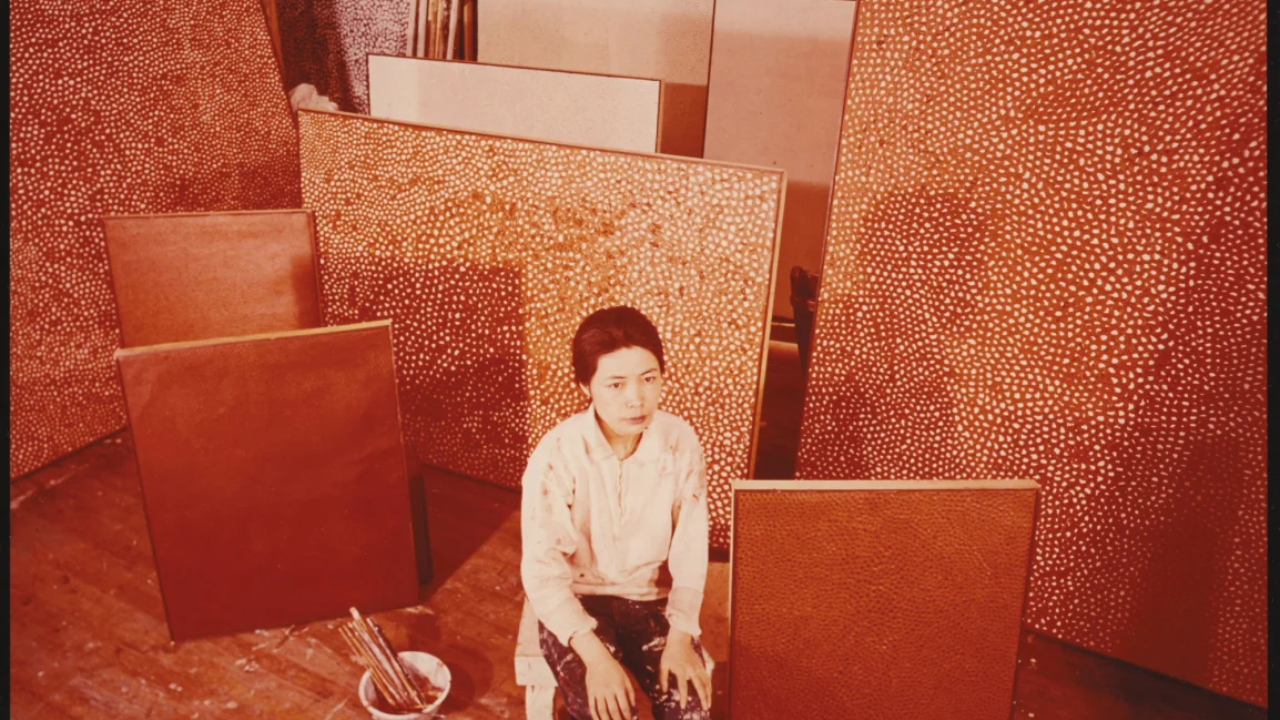
Kusama’s financial rise was far slower than the fame of her imagery might suggest. Her early career involved years of experimentation and periods in which her work was overshadowed by better-connected male artists. She moved to New York in 1957 and became involved in the city’s avant-garde scene, developing the obsessive net paintings that would later become central to her reputation.One of those early paintings, Untitled (Nets) from 1959, eventually became her auction record and was on May 18, 2022, for $10.5 million.That figure is almost impossible to reconcile with the scene in Venice six decades earlier. There, Kusama was offering individual mirrored spheres for roughly $2. At auction, one of her paintings would later command millions.