

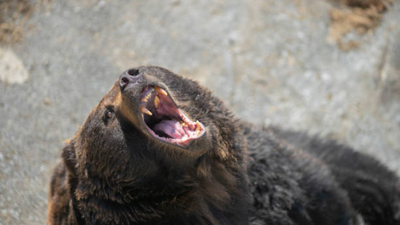
Japan killed more than 14,000 bears between April 2025 and January 2026 after record attacks on people; despite the cull, 6 people have been killed this year and the government plans to remove another 8,800 bearsAs Tokyo heats up, every year thousands in Japan head to Karuizawa in the Nagano prefecture. Located at the foot of Mount Asama, its bamboo-lined pathways and canopied forests make for the perfect tranquil escape. But along with humans even bears move to the area in search of food including mulberries, ants, leaves and cherry blossoms. Unlike most years, this time it has become a war, according to a report by The Guardian.Since the 1990s, Picchio, a small Japanese conservation and education group has been working to improve the coexistence between people and bears in the region. Staff respond to reported bear sightings with one of their three Karelians – a dog breed trained in the western US to chase away bears. When dogs aren’t enough, the Picchio team tranquilises and relocates bears deep in the forest.But as bear-human conflict increases in the country, not many are following this cue. Last year, bears attacked more than 230 people in the country, with 13 people killed, making it the deadliest year on record. Most attacks were in the mountainous northern prefectures of Akita and Iwate, where record-breaking heat affected the growth of beech nuts and acorns that bears rely on to fatten up for hibernation.Foreign governments – including the UK – issued travel advice warning of heightened bear risk. Insurance companies began offering specialised “bear insurance” to cover repairs to ransacked properties. Farmers installed animatronic wolves with glowing red eyes to frighten off the animals. Warning posters adorned lamp-posts.In Karuizawa, Hiroo Tamatani, the leader of Picchio’s bear team, says it has already captured 19 bears this year and responded to more than 130 sightings and incidents – up about 20% since this time last year. But there has been no rise in the actual number of bear damage incidents.According to the national government, a rise in bear attacks can be credited to the lack of skilled hunters in helping manage the population. Local associations have struggled to attract new members, with the number of licensed hunters falling by more than half since 1975. Left with few options, last year, the government relaxed the rules for shooting bears in populated areas, as officials laid traps across the country.As a result, from April 2025 through January 2026, Japan culled more than 14,000 bears, government data shows. That included about 12,000 Asiatic black bears (Ursus thibetanus)and 2,000 brown bears (Ursus arctos).
Too many deaths?
The high death toll has raised concerns among conservationists. Asiatic black bears are deemed vulnerable to extinction by the International Union for the Conservation of Nature (IUCN), with fewer than 60,000 remaining worldwide. “If this level of trapping continues, we believe regional extinctions are a real possibility. We feel a profound sense of crisis,” said Yuko Muroya, chair of the Japan Bear and Forest Society (Kumamori), which focuses on conservation and coexistence.Japan is one of the Asiatic black bear’s last strongholds, with an estimated 42,000 bears. Still, removing what could amount to a quarter of the country’s population has seemingly done little to end conflict. Since April, six people have been killed and more than 35 attacked across at least nine prefectures – including some close to Tokyo – according to government statistics. In June, one Japanese city suspended nearly 100 schools after a bear was spotted in the area for the first time.Muroya added it is clear Japan’s heavy-handed approach to stopping the assaults is not working. Yet the government has announced a target of culling another 8,800 bears this fiscal year. “A government strategy focused solely on reducing bear numbers will not solve the bear problem until bears themselves are driven to extinction,” she says.“It’s a big reaction,” said biologist Dave Garshelis, co-chair of the IUCN’s bear specialist group and its Asiatic black bear expert team. “I think the [Japanese] government felt compelled to just get rid of these bears … This happened all of a sudden and they had no other alternative.”Until last year, Japan had adopted a more conservative approach. From 2008 to 2018, the country culled between 1,000 and 4,500 bears every year, alongside legal sport hunting of about 500 a year. That number, however, had been ticking up, with more than 9,000 bears killed in 2023-24 – another bad food year for the animals that led to six human fatalities.Whether or not Japan’s bear cull ultimately poses a global conservation concern, “really depends on how many they have”, said Garshelis.Shinsuike Koike, an ecologist at Tokyo University of Agriculture and Technology, leads the Japan Bear Network, a nonprofit promoting coexistence through research. He is sceptical not just of the national figures, but also of global estimates. “In many countries, even the distribution of Asiatic black bears is not well understood,” he says. “I think it is impossible to estimate the global population with high accuracy.”In 2023, Koike says that in one study area of central Japan they found the Asiatic black bear population was growing at a rate of between 11% and 12% a year. He adds that under the right environmental conditions, it is possible that population growth in some parts of western Japan may reach 15%.That would mean, without hunting or culls, the country’s bear population would double every five years. Under such a scenario, killing 15% of bears every year would keep the population stable. Anything greater would trigger a decline.Globally, the IUCN says the Asiatic black bear population is shrinking. A 2024 study in the journal Scientific Reports found that the Asiatic black bear’s worldwide range has contracted by roughly half compared with records of distribution from the 19th and 20th centuries.
A macabre outcome
The tragedy that has unfolded in Japan over the past 16 months is essentially a macabre outcome of a conservation success story. Since the 1970s, Asiatic black bears have recolonised much of their former range on Japan’s largest island of Honshu. As people have traded village life for cities, farmland has returned to woodland, connecting bear habitat across thousands of kilometres.Of the 18 countries where Asiatic black bears are still found, “Japan has done the best job of them all as far as conserving this species,” Garshelis says. “The issue is they didn’t plan ahead for conservation success.”But Japan’s booming bear population has now run up against a sharp drop in forest foods. Kumamori’s researchers are documenting how the climate crisis is altering Japan’s forests. They have witnessed widespread dieback of Mongolian oak, acorns destroyed by grey weevils, poor seed production in Japanese beech and sharp declines in pollinating insects that have led to sparse berry yields.Critics say the spate of attacks in 2023 should have been a wake-up call for the government to adopt more proactive measures to prevent bear conflicts, rather than rely on hunting to severely slash numbers. “Despite the severe degradation of natural forests caused by climate change, bear specialists and the government simply watch the bears that come down from the mountains,” Muroya said.Kumamori plants nut-bearing trees, hoping to encourage the bears to stay in the woods. “In the past, Japan successfully maintained a separation between people and bears. We should learn how our ancestors achieved that coexistence. We should also learn from other countries, many of which have moved beyond policies focused solely on culling,” Muroya added.In November 2025, Japan’s environment ministry released its plan to protect against bear damage, with individual prefectures expected to implement the policies. It includes chasing bears away, installing fences to prevent bears from entering communities, removing fruit trees around homes, and conducting training response exercises for authorities. The ministry has also hired bear management officers for regional offices in eastern Japan, a government spokesperson told the Guardian.