
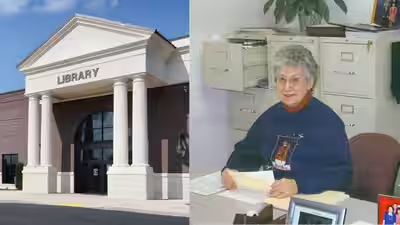
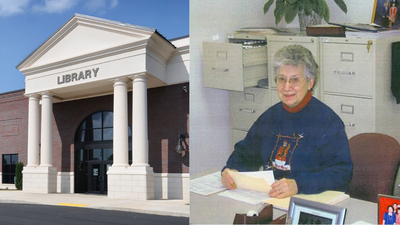
Norma Jean Warner lived a quiet life in Des Moines, Iowa, working at an optical shop, saving carefully and volunteering through church organisations. She and her husband, Waldo, had no children and lived modestly, but Warner spent years planning what would happen to her money after her death. When she died in 2023 at 85, her trust, worth just over $3 million, began a remarkable journey across Iowa. Starting in February 2026, hundreds of small-town libraries and senior community centres began receiving unexpected payments from an estate belonging to a woman many had never met. Her trust ultimately directed money towards 485 public libraries and 128 senior community centres in towns with fewer than 7,000 residents.
Iowa woman’s $3 million estate reaches 485 libraries and 128 senior centres
Warner was born in Clarke County in south-central Iowa, the youngest of seven children and the daughter of a rural farmer. She later settled in Des Moines, where she worked at an optical shop. Her husband, Waldo Warner, was a World War II and Korean War veteran who worked in sales for Pittsburgh Paints. The couple had no children and lived a relatively modest life.Waldo died in 2011 at the age of 93 after battling Alzheimer’s disease, and Norma cared for him during his final years. Warner continued volunteering through church organisations and ministries, including making blankets and crafts for charitable causes. She died in Des Moines on May 12, 2023, aged 85, from endometrial cancer. She had requested that no obituary be written for her.Her trust had been signed much earlier, in June 2010. Rather than leaving her money to one major organisation, Warner specified that her estate should benefit smaller Iowa communities. Her attorney, Ross Barnett of Abendroth Russell Barnett Law Firm, helped administer the unusual distribution.
Warner specifically targeted small Iowa towns
The trust used a population threshold to determine which communities could benefit. The qualifying towns had fewer than 7,000 residents, allowing Warner’s estate to reach institutions in smaller communities rather than concentrating the money in Iowa’s larger population centres. Her representatives used 2020 US Census data to identify eligible towns and then determine which had qualifying libraries and senior centres.According to Jefferson Public Library, 15% of Warner’s significant financial assets was directed to 485 Iowa public libraries, while another 15% went to 128 senior community centres. The library says the distributions to those two categories totalled about $500,000, with the remainder of the estate directed towards other charitable causes.The distribution was therefore not a conventional donation to a single institution. Warner had created a formula that would identify hundreds of beneficiaries after her death, meaning many of the recipients did not know they were connected to her estate until the payments arrived.
Libraries received unexpected checks in 2026
The first library payments began arriving in February 2026. In some cases, the institutions received letters and checks from Warner’s attorney’s law firm despite having no previous connection with her.Jefferson Public Library received $941.69 from the trust and said it planned to put the money towards its future expansion. Other Iowa libraries recorded the same payment in their official records. Montezuma Public Library and Madrid’s library, for example, documented receiving $941.69 from the Norma Jean Warner Trust.Oelwein Public Library records also identified a $941.69 distribution to qualifying Iowa public libraries. The payments may appear modest individually, but Warner’s plan was designed to spread the money across hundreds of institutions rather than concentrate it in one place.The surprise was part of the story. Many recipients had never met Warner and had not expected to receive anything from her estate.
Her gifts can support books and community programmes
Warner’s instructions did not require every library to spend its money on one particular project. The funds could be used according to the needs of individual institutions.Jefferson Public Library said the money could support children’s summer reading programmes, new books and other collection materials, digital resources and after-school activities. The library itself plans to use its payment towards a future expansion project.For small public libraries operating with limited budgets, an unexpected contribution can be directed towards programmes and materials that might otherwise have to compete with other spending priorities. The individual payments are relatively small, but the statewide reach of Warner’s plan gives the bequest a different scale.Instead of creating one large project bearing her name, Warner’s money is being divided among institutions that already serve their communities.
Senior centres were part of the same legacy
Warner’s trust also identified 128 senior community centres in qualifying Iowa towns. The decision placed services for older residents alongside libraries as major beneficiaries of her estate.Her attorney said Warner believed in the importance of education and in “the dignity of aging with support and connection”. That helps explain why her trust included both libraries and senior centres, two types of institutions that can serve as gathering places in smaller communities.Individual distributions to senior centres have also appeared in local government records. A July 2026 City of Slater agenda, for example, recorded a Warner bequest of $3,624.77 for its senior centre, alongside a separate $941.69 payment for its library.
Warner’s estate supports other causes too
Libraries and senior centres were only part of Warner’s charitable plan. Her estate also benefited causes connected with veterans, conservation, cancer research, Alzheimer’s research and food banks. Other medical and educational charities and West Des Moines Christian Church were also among the beneficiaries.Her support for Alzheimer’s-related causes has particular personal context because her husband lived with the disease and Warner cared for him during his final years. However, available accounts do not establish that his illness was the sole reason she chose to support Alzheimer’s research.Her broader charitable interests also fit with accounts of her life. She volunteered through church organisations and ministries and was involved in making blankets and crafts for charitable causes. Her giving therefore continued a pattern that existed during her lifetime rather than beginning only after her death.
A quiet woman leaves a statewide legacy
Warner was not a nationally known philanthropist, and there was no public campaign surrounding her estate while she was alive. She worked an ordinary job, lived modestly, saved and invested, and spent much of her life outside the public spotlight.Yet the trust she signed in 2010 eventually connected her estate with hundreds of small communities. By setting a population limit and specifying the types of institutions she wanted to support, she ensured that her money would reach places across Iowa that might otherwise receive less attention from large charitable donors.The result is a legacy spread across 485 public libraries and 128 senior community centres. In towns throughout Iowa, Warner’s name is now appearing in library records, council documents and announcements alongside checks that arrived years after she quietly made her plans.