
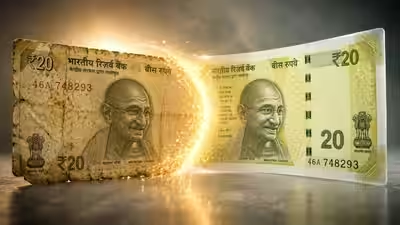
India’s first plastic or polymer notes are expected to go into circulation at the start of the next financial year, RBI governor Sanjay Malhotra has said. Sharing an update on the pilot project at the post monetary policy press conference, Sanjay Malhotra said that the project is at a pilot stage and decision to expand it will depend on the results of the testing.The government has authorised the Reserve Bank of India to print up to 2 billion polymer banknotes – 1 billion each in the Rs 10 and Rs 20 denominations for field trials. At present, there is no proposal to replace paper currency entirely, and both polymer and paper notes will continue to circulate as legal tender.“If everything goes as per plan, we are targeting that they (polymer notes) be in circulation at the beginning of the next financial year,” Sanjay Malhotra said.Also Read | India to get plastic notes soon: Why the move is important – explained
Why India is going for plastic notes
According to Malhotra, polymer notes have two purposes. “One is that it enhances the durability. This is relevant especially for lower denomination notes where the velocity is higher, and so therefore the lifespan is lower,” he said.“These notes have been in circulation for more than 30 years in various countries, and one finds that the life is much more – two to four times the life of the paper substrate,” he added.

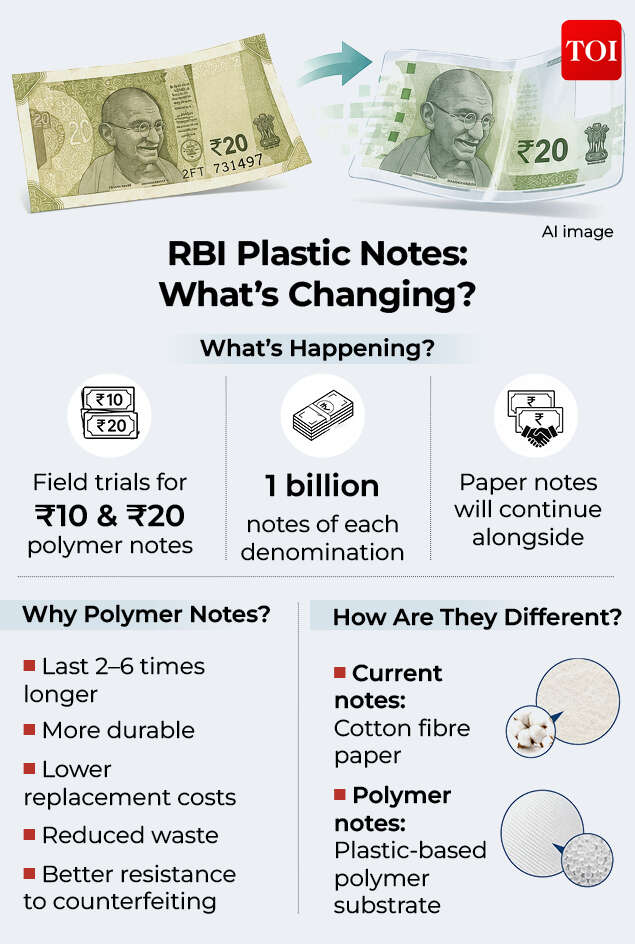
RBI Plastic Notes Project: What’s Changing?
“The second purpose is that it expands our capacity as the needs of the economy increase. It is with these purposes that we have brought in,” Malhotra explained.Calling the project a pilot, the RBI governor said, “We will test, check as to how they perform in the Indian conditions, climate, and other infrastructure that we have put in place. And it’s only after that we will see if we need to further scale it up as it is or with changes.”
RBI’s plastic notes project
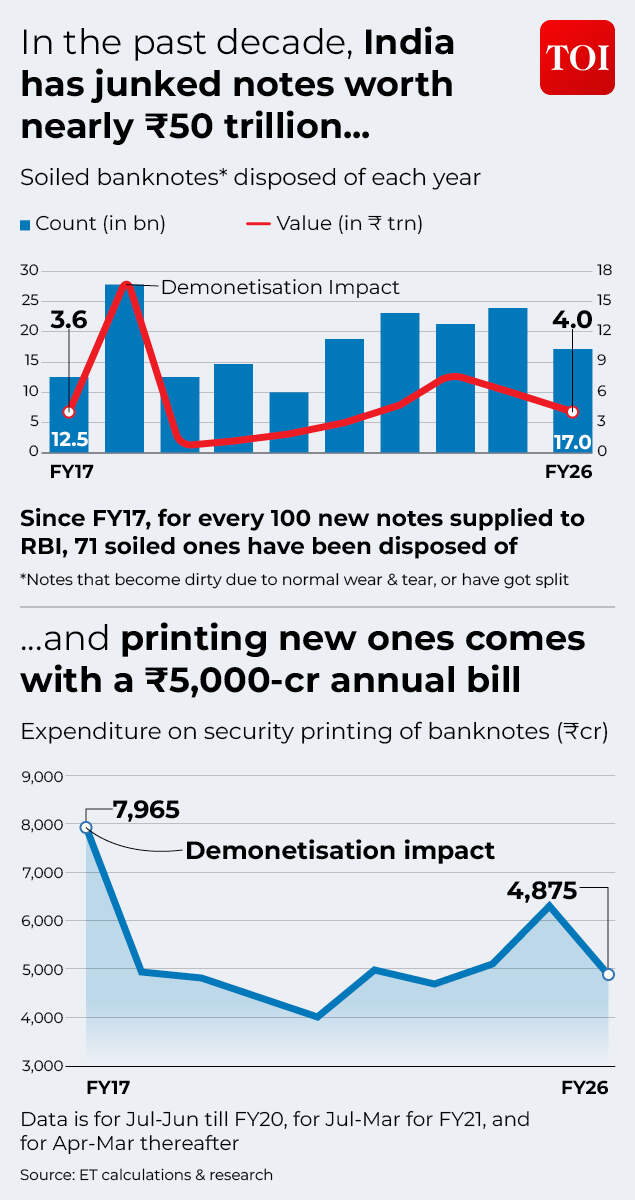
As part of the initiative, the RBI has issued a global tender through its currency-printing subsidiary, Bharatiya Reserve Bank Note Mudran Pvt Ltd (BRBNMPL), seeking suppliers for polymer substrate sheets embedded with advanced security features.The move comes as India has withdrawn nearly Rs 50 trillion worth of soiled currency over the past decade. Annual spending on currency security features is estimated at around Rs 5,000 crore. Reports indicate that since FY17, the RBI has removed 71 soiled notes from circulation for every 100 fresh notes issued. Counterfeit currency has also been increasing.Prospective suppliers will have to comply with stringent eligibility criteria, including obtaining government security clearance, adhering to restrictions related to China- and Pakistan-linked operations and raw materials, and demonstrating prior experience in supplying polymer banknote substrates to central banks.

India’s counterfeit reality- Over 2,00,000 fake notes, mostly in Rs 500
“RBI has informed that as per international studies, the life span of polymer banknotes is significantly higher than that of paper banknotes. The introduction of polymer banknotes is currently in a preliminary phase,” Minister of State for Finance Pankaj Chaudhary told the Lok Sabha.Plastic notes have several advantages, including stronger security features, a lower risk of counterfeiting, reduced lifetime costs and a smaller carbon footprint.Globally, polymer notes have been known to have a much longer lifespan than conventional paper currency, with estimates suggesting they remain in circulation about 2.5 times longer. A UK study found that the lifespan of a £5 polymer note increased from 1.9 years to 4.8 years, while Canada’s experience showed the average lifespan of banknotes quadrupled after the switch to polymer.The Bank of England has also stated in several reports and studies that the introduction of polymer banknotes has led to a significant decline in counterfeiting.