
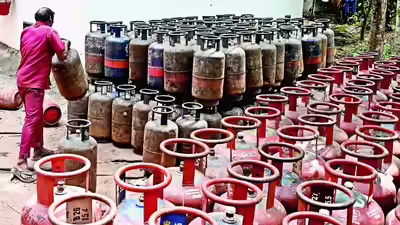
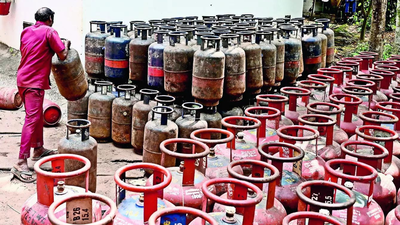
State-run oil marketing companies (OMCs) are working on a plan to build a 30-day strategic LPG reserve as the Centre looks to strengthen the country’s energy security after the Middle East conflict exposed India’s vulnerability to disruptions through the Strait of Hormuz, ET reported.As part of the exercise, Bharat Petroleum Corporation Ltd (BPCL) is preparing to invest about Rs 5,000 crore to almost double its LPG storage capacity to 340 thousand metric tonnes (TMT) from around 200 TMT, according to three OMC executives. Similar expansion plans by Indian Oil Corporation (IOC) and Hindustan Petroleum Corporation Ltd (HPCL) are still being worked out.“The Centre is broadly considering a 30-day LPG inventory requirement, but the methodology for calculating the stockpile is yet to be finalised,” a senior industry executive told ET on condition of anonymity.“The key question is whether the buffer should be based on total LPG consumption, total imports, or the country’s residual supply risk after diversification of sourcing,” the executive added.
Multiple storage options
According to The Economic Times, the proposed strategy could combine expanded onshore storage, underground caverns and floating storage in Indian waters. At the same time, OMCs are looking to diversify imports through long-term contracts with suppliers in the US, while increasing purchases from Europe and Russia.Industry executives said greater diversification of imports could reduce the amount of storage eventually required, thereby lowering capital expenditure.“We have presented three options and one of them has to be worked out before investments move forward,” another senior executive said. “If only half of imports continue to come from the Middle East after diversification, storage needs would be created only for that portion which remains exposed.”
Hormuz disruption triggers urgency
The push for larger LPG storage gained urgency after the Iran conflict highlighted India’s dependence on Middle Eastern supplies. India imports nearly 60% of its LPG, with about 90% of those imports passing through the Strait of Hormuz, one of the world’s busiest energy shipping routes.Following the outbreak of the conflict on February 28, the government directed domestic refineries to maximise LPG production and imposed booking restrictions to manage supplies. Restrictions were also placed on commercial and industrial consumers.Last week, normal LPG supplies to non-household users resumed and the caps on commercial supplies were withdrawn as availability improved.According to data from the Petroleum Planning and Analysis Cell (PPAC), India currently has 214 LPG bottling plants with a rated bottling capacity of about 23.04 million metric tonnes per annum (MMTPA). LPG storage at bottling plants provides 4-7 days of cover, with the all-India average at five days. Across all storage facilities, including import terminals and other sources, LPG stocks provide an average 18 days of cover, though this ranges between 8 and 30 days.LPG is marketed in India by state-run OMCs as well as private refiners under the Parallel Marketing System (PMS). Private players can import and sell LPG at market-determined prices, but government subsidies are not available for their domestic sales.