
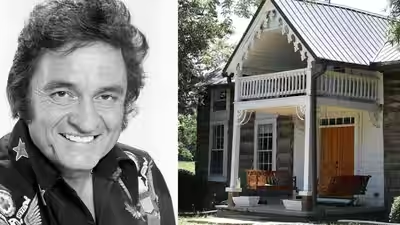
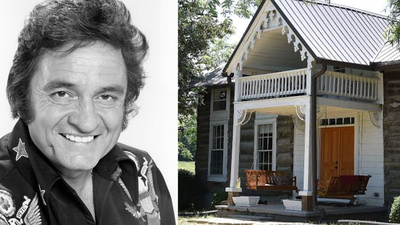
For nearly three decades, Johnny Cash had a place in Bon Aqua, Tennessee, where life moved at a quieter pace than the recording studios and stages he knew so well. The 107-acre property became a private retreat for Cash and his wife, June Carter Cash, after he found it in the early 1970s. He used the farm as a place to garden, cook, read, write and spend time away from public life. After Cash died in 2003, the property was left unused and gradually deteriorated. More than a decade later, new owners began bringing it back. Today, the former hideaway is open to visitors, with the farmhouse and surrounding property preserving a lesser-known part of Cash’s life.
How Johnny Cash turned his Bon Aqua farm into a peaceful retreat
Cash’s connection with the Tennessee countryside developed during a period when his professional life was already closely tied to the state. He performed and recorded in Nashville and Memphis, while Bon Aqua offered something considerably removed from the demands of his career.The property came into his possession during a complicated period involving his finances. Cash discovered in the 1970s that his accountant had been embezzling money and had acquired real estate in Cash’s name. After the situation was uncovered, Cash and June Carter Cash took control of the properties. Most were eventually sold, but the Bon Aqua farm remained.Cash later described the place as somewhere he could simply live at his own pace. He wrote about tending a garden, preparing his own meals, reading and walking across the land. It was also a setting where he could think and work without the constant movement associated with his music career. For Cash, the farm was more than another piece of property.
How a small Tennessee community became part of Johnny Cash’s private world
The Bon Aqua home was used by Cash and June Carter Cash for years, and the property became part of their private routine. Cash also developed a connection with the nearby community.A local general store became an unlikely part of that story. Cash would sometimes perform there for people in the area, giving informal shows rather than the large-scale concerts associated with his career. Some of those performances later became part of the material preserved at the museum.The property therefore carries two sides of Cash’s life. The farmhouse represents the private retreat, while the nearby store recalls his willingness to perform in an ordinary local setting.

PC: The Hideaway Farm
The ranch was left empty after Cash died
Cash died in 2003, and the Bon Aqua property subsequently stood unused. Without regular care, the farmhouse and other parts of the site fell into disrepair.The property eventually attracted Brian and Sally Oxley, who purchased it in 2015 for $895,000, as reported by The Tennessean.Brian Oxley had not grown up listening to Cash and was unfamiliar with much of his music when he first encountered the ranch. His interest changed after hearing Cash’s later recordings, including the American Recordings material. When the Bon Aqua property came onto the market, the couple decided to buy it.
The farmhouse preserved Cash’s most personal memories
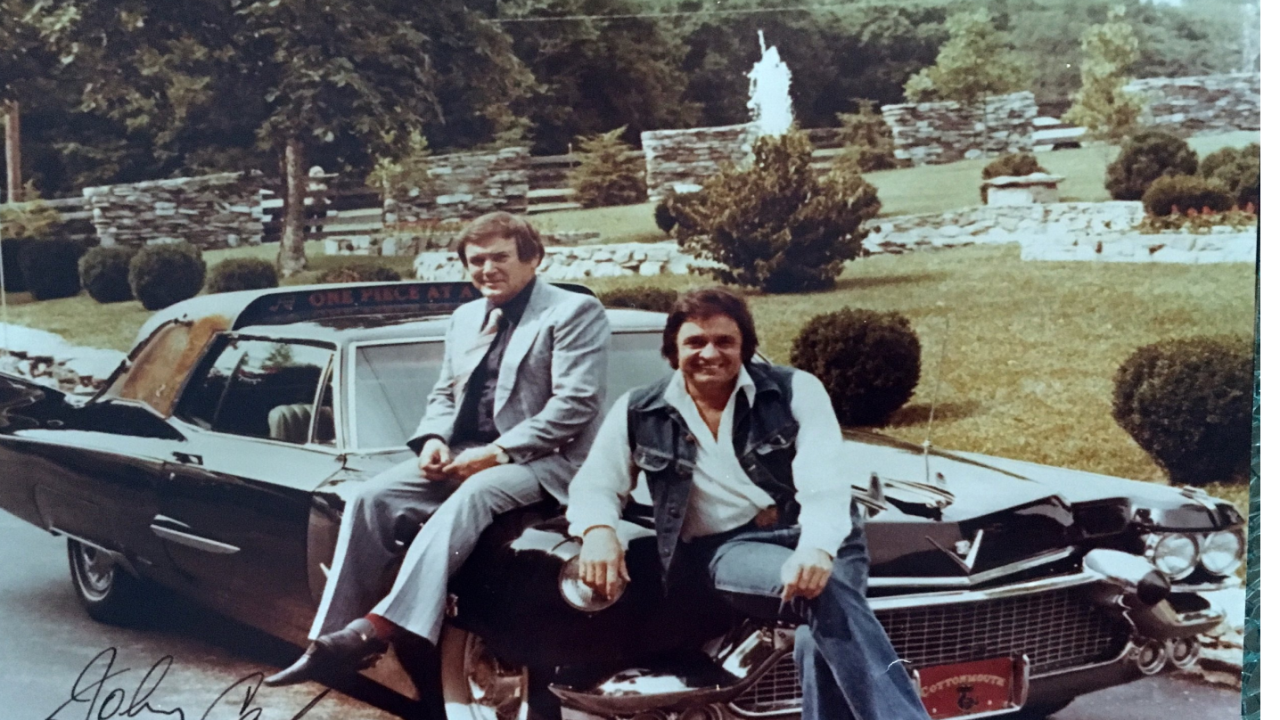
The farmhouse still contained items connected with Cash and his family. Among the discoveries were guitars, personal material and a VHS recording of one of the informal performances at the nearby convenience store.There was also a car with a connection to Cash’s song “One Piece at a Time”. The vehicle was inspired by the idea at the centre of the 1976 song, in which a worker assembles a car by gradually bringing its parts home.The farmhouse itself offered smaller reminders of family life. Bullet holes remained in one wall from an occasion when Cash taught his daughter Cindy how to shoot. Details such as these are less polished than the memorabilia normally associated with a major music star, but they provide a glimpse into how the property was actually used.The Oxleys later acquired the nearby convenience store as well, allowing another piece of Cash’s Bon Aqua story to remain connected to the farm.
Restoration turned the hideaway into a public museum
The restoration began in earnest after the Oxleys bought the property. The aim was not simply to preserve a house but to create a place where visitors could encounter Cash’s connection to Bon Aqua.The site eventually opened as the Storytellers Museum in 2016. Displays inside the farmhouse brought together period furnishings, handwritten material, letters, guitars, lyrics and other objects associated with Cash.Some of the material relates directly to his time in the area. One example is the song “Saturday Night in Hickman County”, which drew inspiration from Cash’s regular appearances at the Bon Aqua convenience store.The museum also continued the connection between the property and live music. Performances could be held at the old shop, echoing the informal shows Cash had once given there.
The site now preserves Cash’s private connection to Tennessee
The property is now known as Hideaway Farm, a name Cash used himself. Restoration added visitor facilities, while the farmhouse preserves a quieter side of his life through surviving belongings and personal spaces. The site also includes the American Garage, featuring music memorabilia linked to Elvis Presley and Colonel Tom Parker. For Cash, Bon Aqua was more than a retreat. It was a place to garden, write, cook, read and escape the demands of his career. Today, the restored farm offers a glimpse into that private side of his life.