
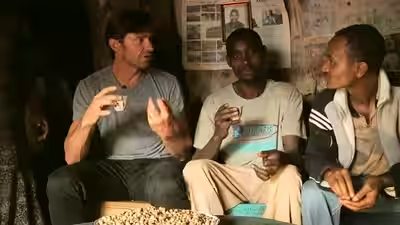
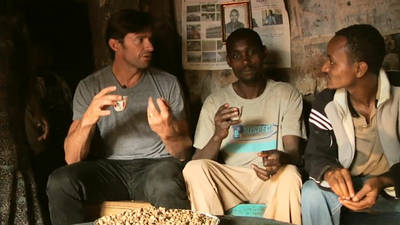
A meeting in Ethiopia in 2009 changed how actor Hugh Jackman viewed coffee, inspiring him to launch Laughing Man Coffee and support farming communities through healthcare, housing, education and livelihood programmes. In 2009, Hollywood actor Hugh Jackman travelled to Ethiopia with humanitarian organisation World Vision and met a 27-year-old coffee farmer named Dukale, whose determination to support his family despite difficult circumstances left a lasting impression on him. The encounter eventually inspired Jackman to establish Laughing Man Coffee and the Laughing Man Foundation, turning his interest in coffee into an effort to support farming communities. According to World Vision and the foundation’s official website, the initiative has since supported programmes involving healthcare, safe housing, scholarships and community development.The story began in Ethiopia’s Yirgacheffe region, widely associated with the country’s coffee-growing tradition. Jackman and his then wife, Deborra-Lee Furness, visited the area to learn about community development initiatives supported by World Vision. During the trip, they met Dukale, a young farmer working to improve his family’s circumstances through coffee cultivation.
The meeting that changed Jackman’s perspective
Jackman was already passionate about coffee, but his meeting with Dukale helped him understand the challenges faced by small-scale farmers who grow the beans consumed around the world.According to World Vision, Dukale worked long hours on his farm while facing obstacles that limited his ability to expand his business. Access to better markets and fair prices were also a major concern. His family faced everyday difficulties, including gathering firewood, which placed additional demands on their time and affected their opportunities to pursue education and other activities.Despite these challenges, Dukale remained determined to create a better future for his family. Jackman recognised a familiar ambition in the farmer’s efforts: the desire to work hard, support loved ones and provide children with opportunities that might otherwise remain out of reach.The encounter prompted Jackman to consider how consumers could support the people who produce the coffee they drink. Rather than limiting his response to a charitable donation, he began exploring whether a commercial venture could help connect farmers with customers while supporting their livelihoods.
How Laughing Man Coffee was born
Two years after the Ethiopia visit, Jackman launched Laughing Man Coffee in 2011. The venture was designed to combine speciality coffee with a social mission, giving consumers a way to support programmes benefiting farming communities.The business was built around the idea that coffee could create value beyond the product itself. By developing a market for speciality coffee, the venture sought to help farmers reach consumers and benefit from greater commercial opportunities.Jackman worked with entrepreneur David Steingard, who was developing a speciality coffee business. The partnership helped turn the idea into a commercial enterprise. According to a 2011 report by BroadwayWorld, Laughing Man Worldwide was established to support entrepreneurs and promote the idea that commerce and community development could work together. Laughing Man Coffee & Tea was the first business developed under that model.At its launch, the company said 100% of the profits from its stake in the businesses it created would go to charity. Its wider mission focused on education, community development and supporting entrepreneurs.The business later expanded its reach through retail and packaged coffee products. However, the brand’s commercial arrangements have evolved, so its original profit-sharing model should not automatically be taken to mean that every current sale or revenue stream is donated in full.
From coffee sales to safer homes and scholarships
The Laughing Man Foundation grew out of the promise Jackman made after meeting Dukale and his family. Its work focuses on helping coffee-farming communities overcome barriers that prevent families from improving their living conditions and building more secure futures.The foundation’s official website says it has provided healthcare, safe homes, scholarships, business training and emergency support in Ethiopia, Peru and Colombia.These programmes address needs that extend beyond the farm. Access to healthcare can help families deal with medical challenges, while safer housing can improve everyday living conditions. Scholarships and educational support can give young people opportunities to continue their studies, and business training can help individuals develop skills to strengthen their livelihoods.The foundation’s approach reflects the lesson Jackman drew from his meeting with Dukale: a farmer’s ability to improve his family’s circumstances depends on more than the quality of the coffee he produces. Access to markets, education, healthcare and basic infrastructure can also influence whether a family has a realistic opportunity to move beyond poverty.The organisation says it is expanding its support through partnerships with other foundations, non-governmental organisations and companies, including initiatives in New York City and elsewhere.Coffee is one of the world’s most widely traded agricultural products, but the people who grow it do not always have equal access to the value generated along the supply chain. Small-scale farmers can face challenges involving production costs, market access, fluctuating prices and limited resources.Fair-trade initiatives seek to address some of these concerns by improving trading conditions and supporting more sustainable livelihoods. Their impact depends on how programmes are structured and implemented, and a single business cannot resolve every challenge facing coffee-producing communities.