
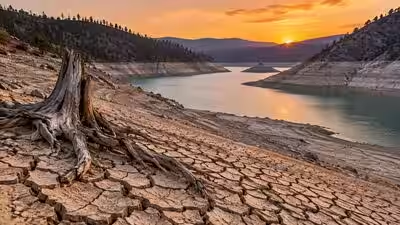
The American West did not suddenly run out of water, the crisis built slowly. Around 2000, a prolonged drought began spreading across the region, with dry conditions returning year after year and leaving less moisture in the ground. Reservoirs fell, vegetation struggled and the effects of each dry season began adding to the losses of the one before it. As reported in the World Economic Forum, by 2021, what had started as a long dry spell had become the driest 22-year period in at least 1,200 years, according to climate records reconstructed from tree rings. But there was another factor making the drought harder to escape.Temperatures were rising, causing water to evaporate faster from soil and plants. Reportedly, research estimated that human-caused warming accounted for about 42% of the soil-moisture deficit between 2000 and 2021, turning an already serious drought into a much deeper water crisis across the West.
Western US drought reaches a 1,200-year low, tree rings reveal
The current dry period began around 2000, according to climate reconstructions based partly on tree rings. Trees record changes in the amount of moisture available to them through the width and density of their annual growth rings. By examining these records across parts of the western US, scientists have been able to extend the picture of drought well beyond the period covered by modern weather instruments.The evidence placed the early 2000s within an unusually dry stretch. When the years from 2000 to 2018 were assessed, the period ranked as the second-driest comparable interval in the reconstructed record, behind a severe megadrought during the late 1500s.Rainfall briefly improved in 2019, raising the possibility that the prolonged dry spell was easing. It did not last. Drier conditions returned, and the following years added to the accumulated moisture deficit. By 2021, the drought had developed into the driest 22-year period recorded in the reconstructed history of the region, reaching back at least 1,200 years.

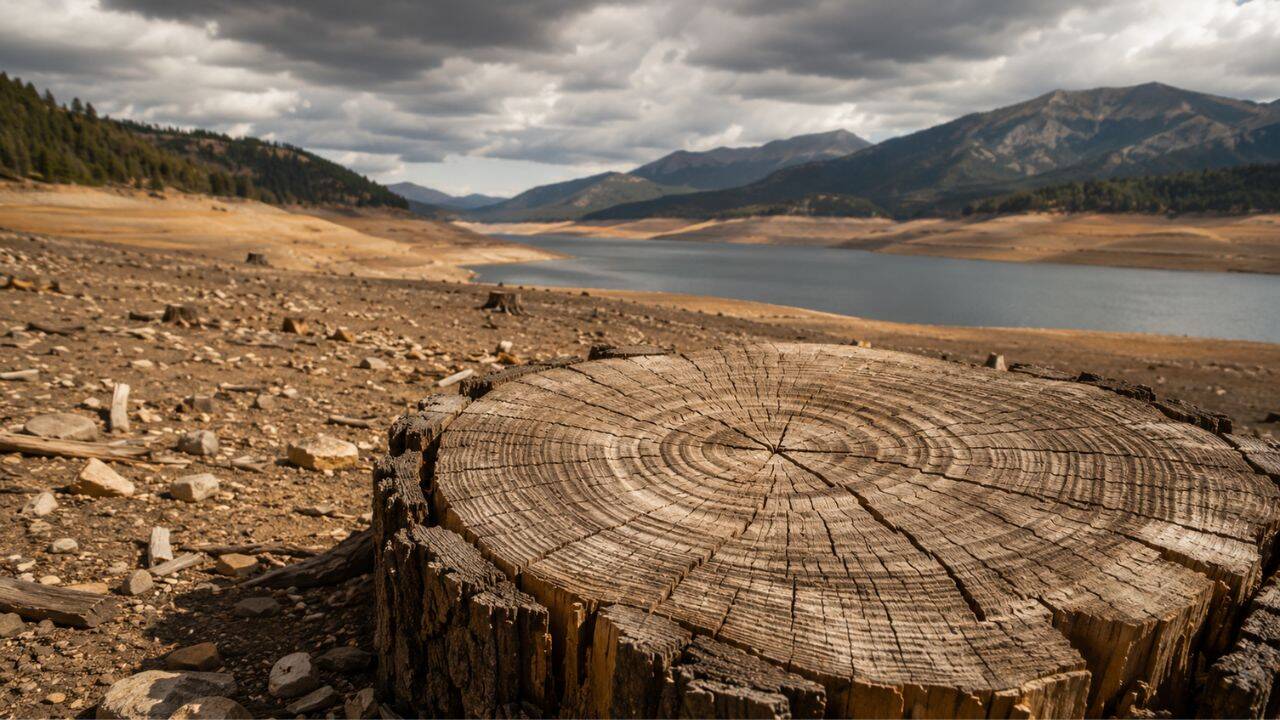
Heat and climate change deepened the western US drought
A prolonged shortage of precipitation might appear to be the obvious explanation, but the western US megadrought has another important component: heat.Higher temperatures increase evaporation from soil, lakes and reservoirs. Plants also lose water more rapidly through transpiration. When this happens across a large region, moisture can disappear faster even when rainfall is not dramatically different from previous dry periods.That helped turn a naturally occurring drought pattern into something more severe. World Economic Forum reports climate modelling used in the research indicated that human-caused warming accounted for about 42% of the soil-moisture deficit between 2000 and 2021. For 2021 alone, the estimated contribution was about 19%.The figures do not mean climate change created the drought from nothing. Natural variations in rainfall and atmospheric circulation remained important. The warming trend instead shifted the conditions in which the drought unfolded, making the same lack of precipitation more damaging.
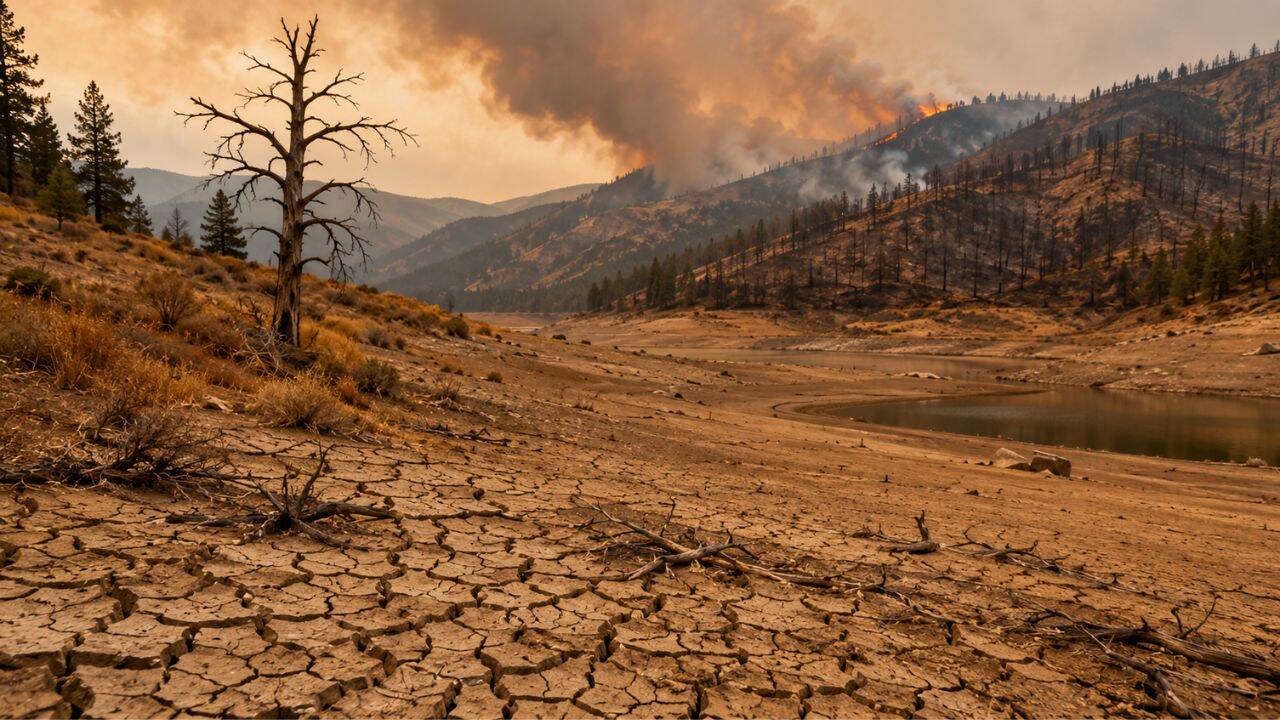
Western US drought raises wildfire risks as landscapes dry out
The effects have been spread across a broad section of the American West, including states such as California, Arizona and Nevada. By February 2022, drought monitoring showed that almost the entire region was experiencing at least some degree of abnormal dryness or drought.Reportedly, about 4% of the western US was classified in the most severe category, exceptional drought. Nearly one-fifth was experiencing extreme drought, while roughly two-fifths faced severe drought conditions. Only a small share of the region was outside abnormal dryness or drought classifications.Those categories reflect more than a dry-looking landscape. Prolonged soil moisture losses affect agriculture, ecosystems, water supplies and the availability of moisture for vegetation. They can also leave forests and other plant communities more vulnerable during periods of extreme heat.Wildfire risk is another part of the picture. Dry vegetation provides fuel, while hotter conditions can make it easier for fires to spread and burn with greater intensity.
How climate change is reshaping drought and other weather extremes
The World Meteorological Organization reported that the number of disasters associated with weather, climate and water hazards had increased fivefold over the previous 50 years. Improvements in forecasting, early-warning systems and disaster management have helped reduce deaths from such events, but the physical hazards themselves have become a growing concern.Drought sits alongside floods, storms and extreme heat within that broader picture. These events do not all become more severe in exactly the same way, and local conditions still matter. But a warmer atmosphere can change the amount of water available in different parts of the climate system, affecting both unusually wet and unusually dry periods.For the western US, the megadrought illustrates how those changes can interact with natural climate variability.
What comes next for the West
The 2022 assessment suggested that dry conditions could persist beyond another year, although the exact course of a drought cannot be predicted simply from its previous duration. Natural rainfall patterns can still bring periods of recovery.The longer-term issue is harder to dismiss. If temperatures continue to rise, future droughts may begin with less soil moisture and lose water more quickly. That raises the possibility that conditions once considered exceptionally dry could become more familiar features of the region’s climate.