
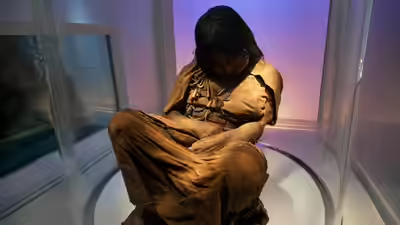
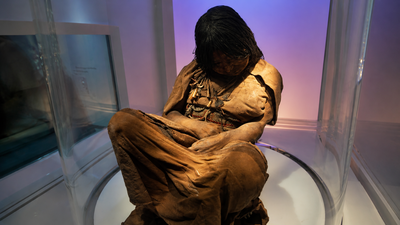
In March 1999, archaeologists climbing one of the highest volcanoes in the Andes discovered something never seen before. Near the 6,739-metre summit of Mount Llullaillaco, on the border of Argentina and Chile, they uncovered the remarkably preserved body of a teenage Inca girl who had remained frozen for more than 500 years. Nicknamed “La Doncella” (The Maiden), she appeared so well preserved that her hair, skin, facial features and even the contents of her stomach were largely intact. Scientists believe she was one of three children selected for an important Inca ritual known as capacocha, offering an unprecedented glimpse into the religious beliefs, daily life and final days of one of South America’s greatest civilisations.
Who was the Inca girl discovered frozen on Mount Llullaillaco
La Doncella is believed to have been around 13 to 15 years old when she died during the late 15th or early 16th century, at the height of the Inca Empire. Her body was discovered alongside two younger children, a young girl, later nicknamed the Lightning Girl, and a boy, buried in separate ceremonial chambers near the volcano’s summit.The extraordinary preservation resulted from the extreme conditions on Mount Llullaillaco. At more than 6,700 metres above sea level, temperatures remain well below freezing for much of the year, while the dry mountain air naturally freeze-dries the bodies, preventing decomposition.Archaeologists also found an extraordinary collection of ceremonial offerings buried with the children, including finely woven textiles, feathered headdresses, silver and gold figurines, pottery and bags containing coca leaves, reflecting the importance of the ritual within Inca society.
Why was the Inca girl taken to the top of a volcano
Researchers believe La Doncella participated in the capacocha ceremony, one of the most significant state rituals performed by the Inca Empire.Historical Spanish accounts and archaeological evidence suggest children chosen for capacocha were often selected because they were considered physically perfect or came from noble families. Rather than being viewed as sacrifices in the modern sense, they were believed to become honoured messengers to the gods, helping ensure fertility, good harvests, political stability or divine favour after important events such as the death of an emperor or natural disasters.Scientific studies of La Doncella’s hair have revealed remarkable details about her final year. Researchers found that her diet changed dramatically in the months before her death, shifting from ordinary foods to a richer diet that included more maize and animal protein, foods typically reserved for higher-ranking members of society.The analysis also showed increasing consumption of coca leaves and alcohol made from maize (chicha) during the final weeks of her life. Scientists believe these substances may have helped calm the children before they were left inside the mountain shrine, where they likely died from a combination of extreme cold, low oxygen and exposure.
What scientists discovered from the frozen Inca girl
The exceptional preservation of La Doncella has allowed scientists to investigate her final days in extraordinary detail using modern imaging, DNA analysis and protein studies. CT scans showed that many of her internal organs, including her brain, lungs and other soft tissues, remained remarkably intact after more than 500 years in the freezing conditions atop Mount Llullaillaco.

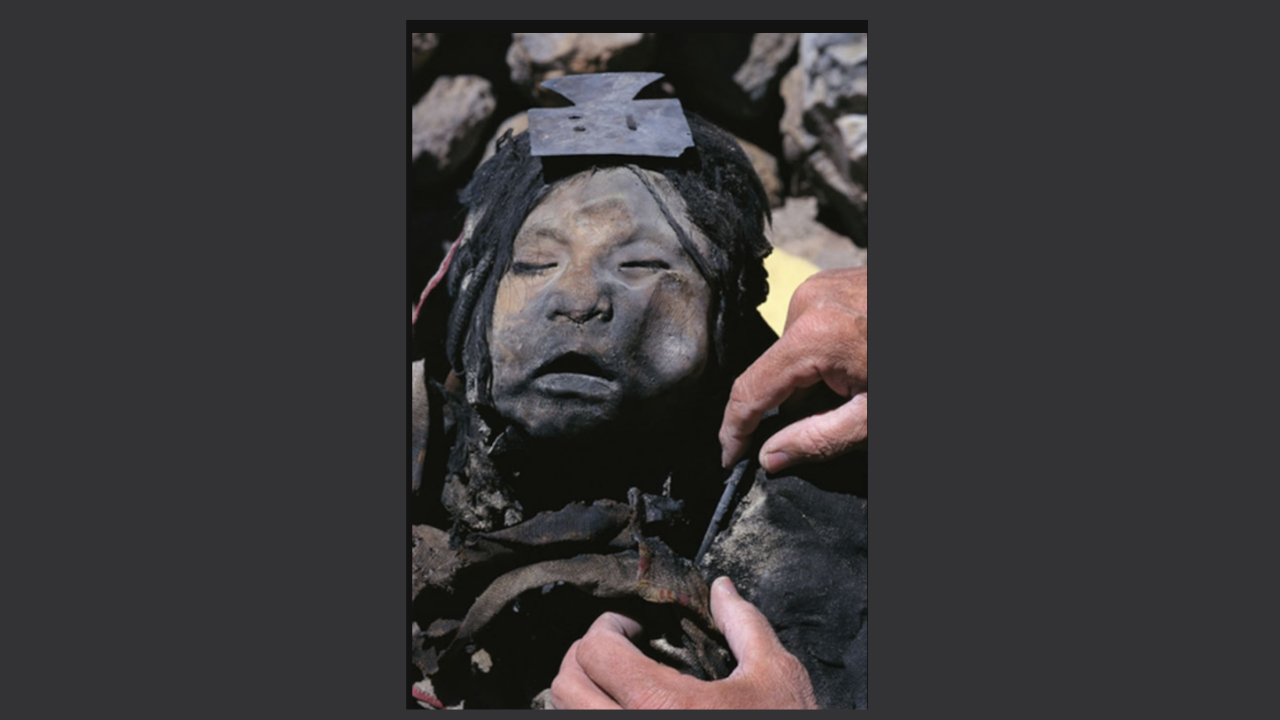
Image: National Geographic
One of the most significant discoveries came in a 2012 study, ‘Detecting the Immune System Response of a 500-Year-Old Inca Mummy ’, led by Angelique Corthals of the New York City Office of Chief Medical Examiner and colleagues, published in PLOS ONE. Using shotgun proteomics, a technique that analyses proteins rather than relying solely on ancient DNA, the researchers found evidence that LaDoncella’s immune system had been actively responding to a serious bacterial lung infection shortly before her death. They also identified DNA belonging to a Mycobacterium species, suggesting she may have been suffering from an illness related to tuberculosis or another pathogenic mycobacterial infection when she was taken up the mountain. The authors described it as the first direct evidence of an active immune response detected in an ancient human mummy, demonstrating that proteins preserved in archaeological remains can reveal diseases that were affecting people at the time they died.The study also detected Bifidobacterium bacteria in samples collected from the Maiden’s lips. Because her body never decomposed, the researchers concluded that the bacteria were unlikely to be contaminated after burial. Instead, they suggested it may indicate she vomited shortly before her death, providing another rare glimpse into her final hours.Combined with earlier studies analysing her hair, diet and CT scans, these findings have transformed La Doncella into one of the most intensively studied archaeological discoveries in the world. More than 500 years after her death, scientists continue to uncover new details about her health, daily life and the final journey that led her to the summit of one of the highest volcanoes in the Andes.
Why the discovery of La Doncella still fascinates scientists today
More than two decades after her discovery, La Doncella remains one of the most important archaeological finds in South America.Unlike Egyptian mummies, whose preservation often depended on artificial embalming, the Llullaillaco children were naturally preserved by the extreme cold and dry conditions of the high Andes. This has allowed researchers to study ancient DNA, diet, health and even microscopic traces preserved in their hair and tissues.According to National Geographic, today, La Doncella is housed under carefully controlled conditions at the Museum of High Altitude Archaeology (MAAM) in Salta, Argentina, where only one of the Llullaillaco children is displayed at a time to minimise environmental stress.Her story continues to offer a rare and deeply human connection to the Inca civilisation. More than 500 years after she climbed a sacred mountain, the frozen teenager has become one of archaeology’s most extraordinary windows into the beliefs, rituals and everyday lives of an empire that once stretched across much of western South America.