
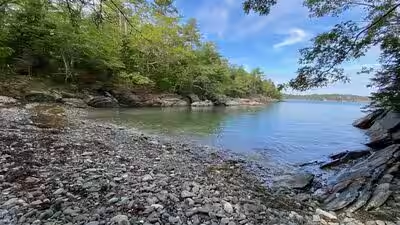
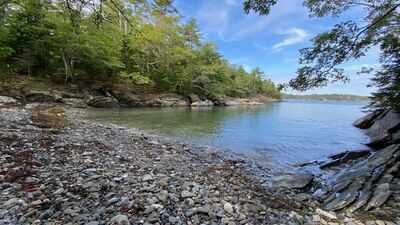
Before it was a wildlife sanctuary, it was a woman’s abode. Witch Island is an approximately 18-acre land area off the coast of South Bristol, Maine, United States. Named after the woman who used to live there, it was sold off to another who donated it to become a wildlife sanctuary, as per a report by Coastal Rivers Conservation Trust.The island’s earliest known name was Stewart’s, held by a settler whose identity dissolved into a rumour. Local lore claimed the pirate Dixey Bull once made his hideaway there in the 1630s, and a French and Indian War legend told of a corvette that ran aground nearby while fleeing a swifter British sloop. Ownership passed through the Gamage family of South Bristol before Captain Samuel H. Davis acquired it in 1830. Under his name, it became Davis Island, and the porgy boom of the 1860s brought fishermen to the surrounding waters in great numbers. When Davis died in 1884, a bitter family lawsuit over his will eventually sent the island to auction, and in 1887 it found new owners who would give it the name it carries still. Daniel and Anna Chittenden bought the island that autumn, intending to build a summer retreat. And Anna was no ordinary buyer.
The Witch of Wall Street
Born Anna Loomis in Ohio and raised amid the rough early years of Milwaukee, Anna’s life before the island was already extraordinary. Married at fifteen to a gambler who beat her and squandered every fortune he made, she turned to the stage to escape poverty, performing under the name Grace Courtland and eventually running her own theatrical company. She survived the sinking of the steamship Idaho in 1878, famously cutting a lifeboat free with an axe when she sensed the disaster coming before it struck, a vision she said she’d had the very first night at sea. Divorced, remarried, and abandoned again, she reinvented herself once more, this time as a clairvoyant and financial seer.It was on Wall Street that she found her most enduring fame. So many of her predictions about stocks came true that financier James R. Keene supposedly crowned her the “Witch of Wall Street” after she called a trading session for him with uncanny accuracy. She counted bankers, brokers, and speculators among her clients, claimed to have exposed a stock-trading scheme built on secret bulletins about President Garfield’s health, and published her own lecture excoriating the Wall Street monopolists of her day. But fame curdled into spectacle: by the 1880s she was a fixture of dime museums from Buffalo to Kansas City, billed alongside sideshow curiosities, dogged by family scandal, lawsuits, and imitators who stole her stage name outright.It was this same restless, theatrical woman who built a modest cottage among Witch Island’s birches, waving a flag to passing boats to invite strangers ashore for a reading. A Boston journalist who visited in 1890 described the place as blanketed in birch trees, its owner both hermit and hostess. The nickname stuck to the land itself, and Davis Island quietly became Witch Island.
From abode to wildlife sanctuary
The Chittendens sold the island in 1916, and it passed to novelist Henry C. Rowland, whose family used it as a summer camp for decades, complete with an Airedale terrier, two pet seals, and a tame crow. After Rowland’s widow and children eventually sold the property in 1964, it came into the hands of a woman who would decide its permanent fate, Jane Sewall.Sewall had loved the island since childhood, rowing around its shore as a seven-year-old and picnicking beneath its hardwoods with her family, who lived nearby. When the long-vacant island came up for sale, her sister later said Jane wanted it more than anything else in the world. She bought it in 1964, cleared the storm-battered old buildings, and built a small house of her own on its southern end, choosing to live there quietly, largely alone, for the better part of two decades.Sewall grew increasingly troubled by visitors who came to the island’s beaches and left campfires smouldering behind them. She posted signs, first polite, then blunt, warning against fires. In letters to Maine newspapers, she pleaded for a kind of stewardship from strangers, asking people to tread lightly, to leave the wildflowers and birds undisturbed, to understand that an island’s beauty survives only if those who visit it choose restraint over carelessness.In the late 1970s, Maine’s tax laws for forested land shifted, threatening Sewall with a choice between costly penalties or ceding a portion of her island. In 1983, she released roughly a third of Witch Island to the Maine Coast Heritage Trust. Then, with new federal tax reforms approaching at the end of 1986, she made the larger decision that would define the island’s future: she donated the entirety of Witch Island to the Maine Audubon Society, to be preserved forever as a wildlife sanctuary. She had spent years searching, she said, for an institution that would keep her island safe for good, one that would let her return to see it remain beautiful, even after it was no longer legally hers.The Maine Audubon Society managed the sanctuary for more than two decades before transferring it in 2009 to the Damariscotta River Association, which later became the Coastal Rivers Conservation Trust following a 2019 merger. Under that trust’s care, Witch Island remains uninhabited by design, its beaches open to kayakers, its half-mile of trails open to hikers, its woods used for science camps where children learn to notice what grows and lives there.