
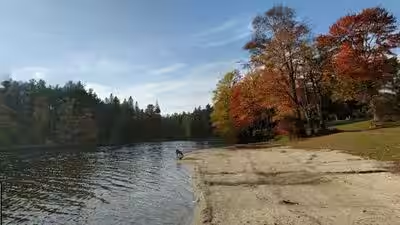
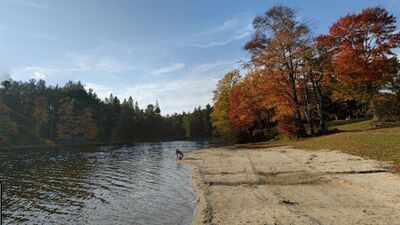
Promised Land State Park in Pennsylvania is now a forested retreat of lakes, trails and campgrounds, but little more than a century ago the land was almost bare. Between 1902 and 1904, the Commonwealth of Pennsylvania bought the fire-damaged, heavily logged property for between 18 cents and $2 per acre. Decades of replanting followed, including more than a million trees planted by the Civilian Conservation Corps, transforming a scarred landscape into one of the state’s most beloved parks. Read more about its history, as documented by the Pennsylvania Department of Conservation and Natural Resources:
Land shaped by logging
Long before it became a state park, the land was home to the Minsi Tribe of the Wolf Clan of the Lenni Lenape. In the 19th century, the area passed through private ownership and became part of extensive timber holdings, including land acquired by Dr Joseph Jones in 1869.Early European settlers and lumber operators built sawmills to process the area’s large stands of conifer and hardwood trees. The forests were repeatedly clear-cut, and by 1903 the land was almost completely without trees. The loss of forest brought serious consequences. Erosion increased, wildfires became more damaging and wildlife lost the habitat it needed to survive. What had once been a thriving woodland had become a damaged, nearly treeless landscape.
Pennsylvania buys the land
As per the website, Pennsylvania began purchasing the land from 1902 to 1904, paying between 18 cents and $2 per acre. In 1905, Promised Land became the fourth state park in Pennsylvania, marking the beginning of a long recovery effort. The state did not simply preserve the land as it found it. It began restoring the forest, planting trees across the damaged terrain and creating facilities that would allow people to experience the outdoors. Between 1902 and 1933, the Commonwealth planted more than 370,000 trees.Public recreation developed alongside the reforestation work. The first campground was established in 1905 in a pine plantation between Bear Wallow Road and the stream flowing into Lower Lake. It closed in 1925 and was replaced by a new campground in what is now the main beach picnic area.
The CCC transforms the park

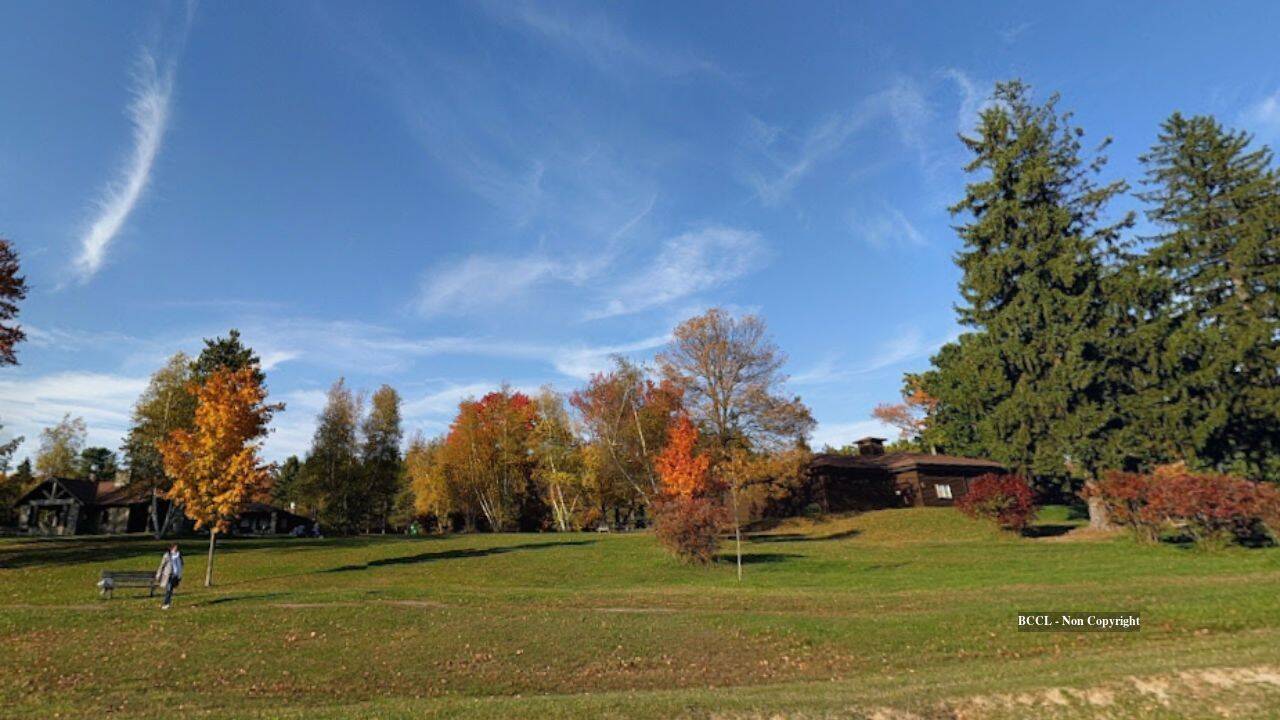
Promised Land State ParkPhoto credit: Google street view
The most dramatic phase of restoration came during the Great Depression. In 1933, President Franklin D Roosevelt created the Civilian Conservation Corps, a programme that gave young unemployed men food, clothing and a small wage in exchange for conservation work. Promised Land’s Camp S-139-PA opened in May 1933 and operated until July 1941. It was located in what are now the Deerfield and Pickerel Point campgrounds, and its members transformed both the park and the surrounding land. The CCC workers planted more than one million trees, fought forest fires and built roads, trails and recreational facilities. Their work included Pickerel Point campground, the Bear Wallow cabins, much of North Shore Road and the Egypt Meadow Dam.
A park built by restoration
Today, Promised Land State Park reflects the combined effort of early state reforestation and CCC labour. The once-barren land now supports forests, wildlife and outdoor recreation, making it difficult to imagine how bare and fire-damaged the property was in the early 1900s.The park’s history also shows how conservation can repair damage caused by unsustainable logging. Rather than abandoning the land, Pennsylvania invested in it, replanted it and gradually rebuilt an ecosystem that could support both nature and public enjoyment. Each August, the park celebrates the CCC legacy with a festival. It is a reminder that the trails, campgrounds and forest views visitors enjoy today were shaped by generations of restoration work.
Nature tests the recovery
The park’s recovery has not been without setbacks. On May 31, 1998, an F2 tornado with winds of 113 to 157 mph cut a northeasterly path through the park, crossing Lower Lake Road, PA 390 and North Shore Road near Sucker Brook.More than 500 people were trapped in the park overnight, but no one was seriously injured. The event became part of the park’s modern history and is remembered in the booklet After the Wind Died Down, held by the park office.Promised Land State Park remains a powerful example of what long-term conservation can achieve. From land bought for as little as 18 cents an acre to a forest restored with more than a million trees, its story is one of recovery, public investment and the enduring value of protecting natural landscapes.