
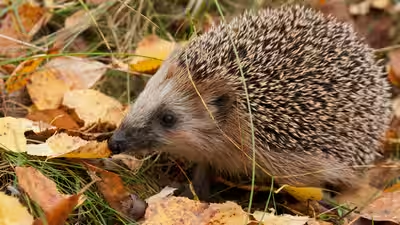
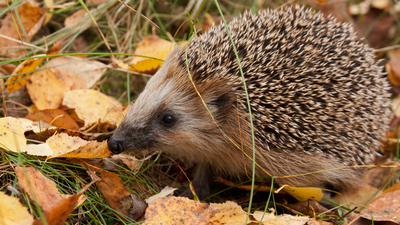
What was once seen as a useful garden helper in New Zealand has become an unexpected threat to some of the country’s most vulnerable wildlife. European hedgehogs were deliberately introduced to New Zealand in the 19th century, with acclimatisation societies releasing them in the hope that they would help control garden pests. In 1885, hedgehogs were liberated in Dunedin and Christchurch for this purpose, according to Te Ara, the Encyclopedia of New Zealand. More than 140 years later, the European hedgehog (Erinaceus europaeus) is viewed very differently. New Zealand’s Department of Conservation (DOC) describes hedgehogs as one of the major threats to the country’s unique and threatened ecosystems, particularly because they prey on eggs, chicks, lizards and native invertebrates.
From garden helper to invasive predator
When hedgehogs were introduced, the thinking was straightforward: the animals could eat creatures such as slugs and snails that damaged gardens. The 1966 edition of Te Ara records that acclimatisation societies in Dunedin and Christchurch released hedgehogs in 1885 specifically to control garden pests. Further official and unofficial releases followed, while natural spread helped the species establish itself across much of New Zealand.That introduction had consequences that were not fully understood at the time. New Zealand’s native wildlife evolved for millions of years with very few terrestrial mammalian predators. As a result, many ground-nesting birds and other native species were particularly vulnerable when introduced mammals became established. Today, hedgehogs are widespread across New Zealand, particularly in grasslands, farmland, braided riverbeds and other lowland habitats.

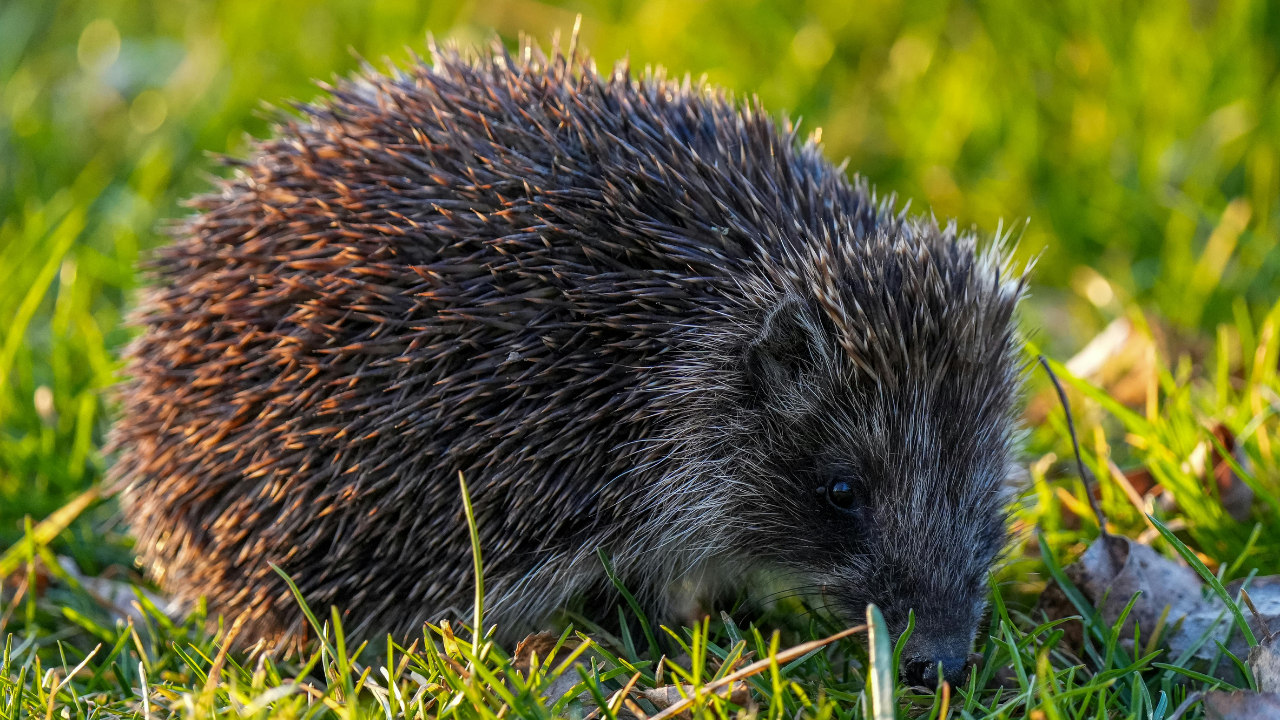
European hedgehog (Image Credit: Canva)
Why hedgehogs are dangerous
Hedgehogs may look harmless, but DOC describes them as voracious predators. They feed on a wide range of animal matter, including native insects, lizards, frogs, snails and the eggs and chicks of ground-nesting birds.Their impact can be particularly serious in braided river systems, where threatened birds build nests directly on the ground. According to DOC, hedgehogs eat the eggs and chicks of species including banded dotterels, black-fronted terns and pied oystercatchers. Their appetite extends beyond birds. DOC records hedgehogs eating wētā, native centipedes, beetles and native snails, including Wainuia urnula. They also prey on lizards, with skinks particularly vulnerable.
One hedgehog can disrupt a colony
Perhaps the most striking warning comes from DOC’s description of black-fronted terns. According to the department, one hedgehog can cause an entire colony of endangered black-fronted terns to abandon their nests. This does not necessarily mean that one animal physically kills every bird in a colony. Rather, the presence and predatory activity of a hedgehog can cause nesting birds to abandon their nests, leaving eggs or chicks vulnerable.Research compiled by DOC also shows how significant hedgehog predation can be. In the Mackenzie Basin, hedgehogs were responsible for 19% of recorded lethal events at 172 monitored nests of banded dotterels, black stilts and black-fronted terns between 1994 and 1999. In the 2000-01 season, that figure rose to 78%.
A continuing conservation problem
The problem is particularly serious because many of the animals affected are already threatened. New Zealand’s Department of Conservation classifies the black stilt, or kākī, as nationally critical, while the black-fronted tern is also among the country’s threatened native birds.DOC now uses predator-control programmes in different parts of the country to locate and remove hedgehogs where they threaten native wildlife. The department says long-term control will require hedgehogs to be removed from the environment in the same way as other introduced predators such as rats, stoats and possums.The story of New Zealand’s hedgehogs is therefore a striking example of how an animal introduced with apparently good intentions can become a conservation challenge. In 1885, hedgehogs were welcomed as garden pest killers. Today, more than a century later, the same species is being controlled to protect native birds and other wildlife that have no natural defence against this introduced predator.