
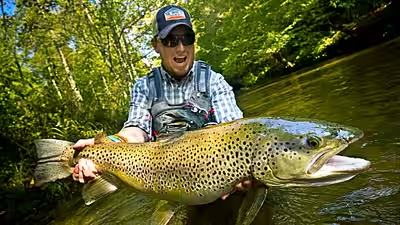
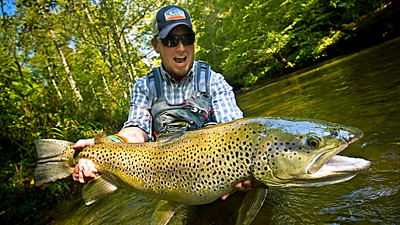
When British settlers packed thousands of brown trout ova onto ships bound for the Antipodes in 1867, they hoped to recreate the sport fishing they knew from Europe. Over the next five decades, acclimatisation societies bred and released more than 60 million brown trout into waterways across New Zealand. Today, that Victorian passion for fishing is seen as one of the most damaging biological invasions in New Zealand’s freshwater history. According to a major review published in Biological Conservation by Professor Colin R. Townsend, the spread of Salmo trutta caused severe declines in native fish, broke up their populations and led to local extinctions across both the North and South Islands. What began as a colonial project to create better fishing changed entire freshwater ecosystems.
Colonial ambition and the 60-million trout campaign
The arrival of brown trout in 1867 was celebrated as a success for acclimatisation. Early societies built hatcheries and released trout fry into the headwaters of almost every major river system, hoping to create European-style fishing grounds. Historical records show that by 1921, more than 60 million trout had been released into New Zealand’s rivers and streams. The settlers did not know that New Zealand’s native fish had evolved in isolation for millions of years without large visual predators living in their waterways. Native galaxiids, including dwarf galaxias, roundhead galaxias and flathead galaxias, were poorly prepared for the arrival of such a powerful predator.
Pushed towards local extinction
The effects of brown trout were rapid and severe. Townsend’s research in Biological Conservation shows that trout drove native galaxiid populations out of main river channels, leaving them confined to small and isolated tributaries. Where brown trout are present, native galaxiids are often almost completely absent. Trout eat both young and adult galaxiids and also compete with them for food, including mayflies and caddisflies. New Zealand’s wider freshwater biodiversity has also suffered. The Ministry for the Environment’s Our Fresh Water 2017 report found that about 76 per cent of native freshwater fish species were threatened with, or at risk of, extinction. Species including longfin eels, shortjaw kokopu and several galaxiids face pressure from both habitat loss and invasive species.
Waterways cut off from source to sea
Brown trout have also changed how native fish move through river systems. Galaxiids that once travelled freely through entire networks are now often restricted to small headwater areas where waterfalls, shallow channels or other barriers stop trout from reaching them. This has left some small galaxiid populations isolated from one another. When fish cannot move between tributaries, there is less gene flow between populations. Small groups then become more vulnerable to drought, changes in land use and sudden pollution. Research cited in Biological Conservation shows that trout can act like biological dams. Even where rivers have no physical barriers, trout in middle sections can prevent native fish from moving between high-country spawning areas and downstream habitats.
A wider effect on the stream
The impact of brown trout goes beyond native fish. Their presence can also change the behaviour of insects and other organisms living in streams. Studies described in Biological Conservation found that, in streams without trout, native grazing insects such as mayfly nymphs feed openly on algae growing on rocks during the day. When trout are present, these insects hide under rocks during daylight and feed mainly at night to avoid being eaten. This change reduces grazing on algae during the day. As a result, trout-dominated streams can develop much heavier algae growth than streams inhabited mainly by native galaxiids.
The modern conservation dilemma
Managing brown trout remains difficult because they are both an invasive species and the foundation of a major recreational fishing industry. New Zealand’s Our Fresh Water 2017 report identifies trout as an important cause of native fish declines, but recreational fishing remains protected and managed by regional Fish and Game councils. This has created an ongoing debate between fishing interests and freshwater conservationists. In important conservation areas, authorities have taken strong measures to protect surviving galaxiid populations. Conservationists have built artificial barriers to stop trout entering some pristine headwater streams and have used targeted removal methods, including electrofishing. However, brown trout are now established across thousands of kilometres of waterways, making complete eradication almost impossible. More than 150 years after the first trout were released, the legacy of the 1867 introduction remains deeply embedded in New Zealand’s rivers and streams.