
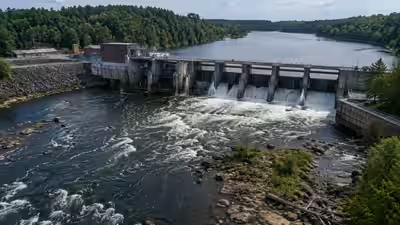
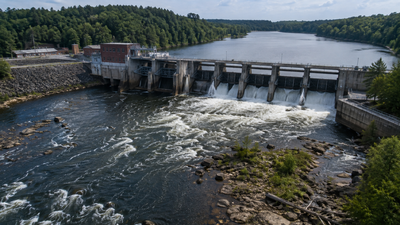
A North Carolina hydroelectric dam has spent two decades testing how much water it can hold back without harming the wildlife downstream. The Roanoke Rapids Dam, run by Dominion Energy, diverts most of the Roanoke River’s flow through a powerhouse channel to generate electricity, leaving a bypassed stretch of the original riverbed with reduced water. Since 2004, under the terms of its federal licence, operators have trialled three flow levels, low, medium and high, while researchers tracked the response of American shad, American eels and freshwater mussels living in that stretch. The results, published after monitoring in 2024 and 2025, have now given engineers a clear operational answer for the remaining 18 years of the dam’s licence, ending years of uncertainty over how to balance power output with species protection.
Why did Roanoke Rapids Dam change the river’s water flow
The Roanoke Rapids Dam has diverted the majority of the river’s downstream flow into an engineered channel since it was built, cutting off a section of the natural riverbed known as the bypassed reach. This reduced flow altered the habitat available to fish and mussels that depend on moving water to navigate, feed and spawn. When the Federal Energy Regulatory Commission renewed the dam’s operating licence in 2004, it required Dominion Energy to work with NOAA Fisheries and other state and federal resource agencies on a new, multi-staged water release pattern for this section of river.The plan called for three flow levels, tested in stages across the first 20 years of the licence, with regular surveys built into the licence terms to record how fish and mussels responded to each setting. This structure gave researchers a long runway to gather reliable data rather than relying on short-term observations, allowing conclusions to be drawn from sustained population trends instead of isolated survey results.
Why did scientists choose the medium flow level
According to NOAA Fisheries, scientists evaluated all three flow levels during the 2024 and 2025 monitoring period and found that shad, eel and mussel populations increased under both the medium and high flow patterns compared with the low flow level. Low flow settings kept the most water behind the dam for power generation, but the reduced habitat availability under this setting corresponded with limited fish movement and weaker mussel health in the bypassed reach. However, the benefits of the high flow setting were not significantly different from those recorded under the medium setting, meaning the extra water released at the high level produced no measurable additional gain for wildlife. This was the key finding that shaped the final decision, since it demonstrated that pushing more water through the bypassed reach beyond a certain point simply diverted resources away from electricity generation without improving conditions for shad, eels or mussels.According to NOAA Fisheries, this allowed more water to be diverted to the powerhouse for electricity generation without any negative impact on the fish and mussel populations being monitored. The agency notes that Dominion Energy will now use the medium flow pattern for the remaining 18 years of the dam’s hydroelectric licence, a decision reached jointly with state and federal resource agencies after reviewing the full set of survey results gathered over the monitoring period.
How will medium water flow help generate more electricity
With the medium flow confirmed as sufficient for wildlife, Dominion Energy can direct more water towards electricity production during periods of peak demand while still meeting the habitat needs of migratory species during breeding and migration windows. This arrangement removes much of the guesswork that previously surrounded flow management at the dam, replacing it with a fixed operational target supported by nearly two decades of field data. The medium flow pattern is expected to remain in place for the rest of the current licence term, giving both the utility and the surrounding ecosystem a stable baseline rather than a setting subject to ongoing review or renegotiation.
What can other hydroelectric operators learn from North Carolina’s Roanoke Rapids Dam
The Roanoke Rapids case offers a practical model for other hydroelectric operators facing similar licensing reviews, particularly those balancing energy demands with obligations to protect migratory fish and freshwater mussels. Rather than treating power output and species protection as competing priorities, the long-term monitoring programme identified the exact point at which additional water release stopped delivering ecological benefit.That threshold now forms the basis of a long-term operating plan, giving both the utility and resource agencies a stable, data-backed reference point for the remainder of the dam’s licence, and demonstrating how sustained collaboration between industry and regulators can produce outcomes that serve both energy needs and river health.