


In May 2026, amid the raging US-Iran war, PM Narendra Modi urged citizens to reduce gold buying, travel abroad and fuel consumption to preserve India’s foreign exchange reserves which had come under pressure due to rupee’s depreciation exacerbated by the Middle East conflict.Before the start of the war at the end of February, India’s forex reserves had hit a record high, but the Reserve Bank of India’s (RBI) steps to curb rupee’s slide and the drain due to rising fuel costs and gold import values strained the forex reserves.Now, months after the start of the conflict, India has reported its highest ever foreign exchange reserves of over $740 billion! Forex reserves hit a record high last week itself at $729 billion, and this week has seen a further rise. In fact, reserves have for 9 weeks now!.How has the RBI managed to secure high forex reserves in times of global economic uncertainty? What’s worked for India and why does the rise in forex cover matter? And, importantly, is it sustainable?
RBI’s FCNR(B) window bonanza
What the RBI did was simple, but with better-than-expected results: The central incentivised Indian banks to attract foreign-currency deposits from overseas Indians. This was done by absorbing the currency-hedging costs on FCNR deposits. This helped banks by reducing the exchange-rate risk and allowed them to offer more attractive returns to depositors.FCNR(B) deposits are essentially foreign-currency deposits that non-resident Indians can hold with Indian banks, with the principal and interest maintained in a foreign currency.The arrangement also allowed banks to leverage the foreign-currency deposits, with some lenders offering loans several times the original deposit. The initiative helped bring fresh dollar inflows.

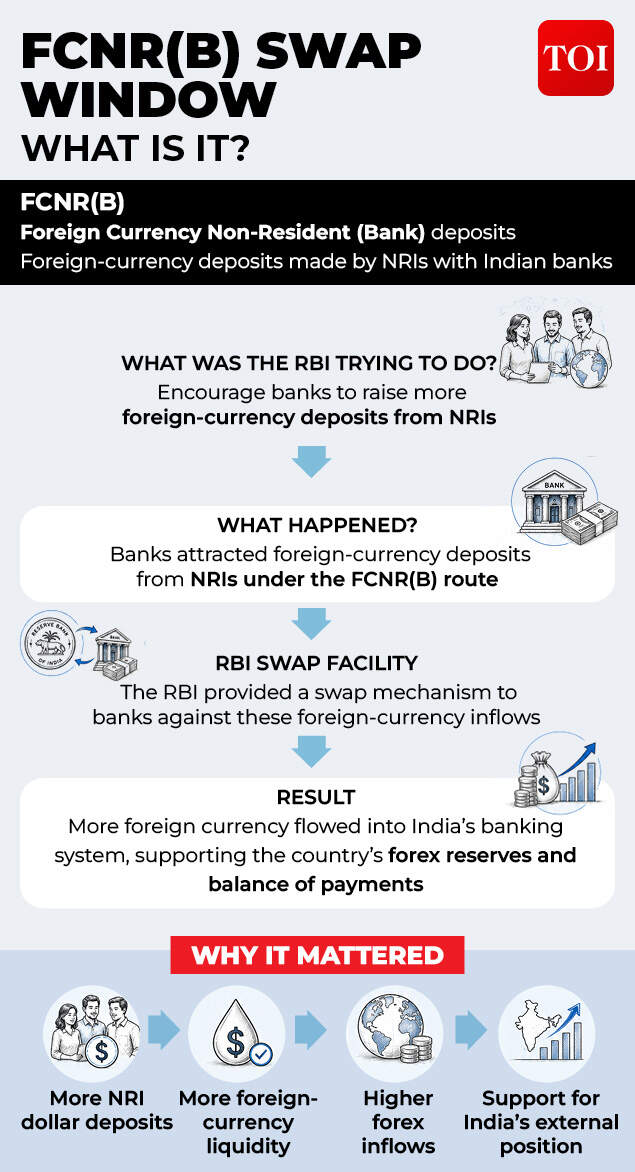
What was the FCNR(B) scheme?
And the scheme has resulted in bumper inflows!RBI has garnered $136.38 billion through the special dollar swap scheme which it launched in June to replenish foreign currency supplies and strengthen its reserves war chest.The inflows have far exceeded the RBI’s initial estimate of about $80 billion. In fact, nearly half the mobilisation came in the final 10 days before the scheme closed on August 31.FCNR(B) deposits accounted for $127.23 billion, while overseas foreign-currency bonds contributed $5.3 billion and external commercial borrowings $3.9 billion. The programme tapped India’s 35-million-strong diaspora and was designed to help support the rupee as it came under pressure.

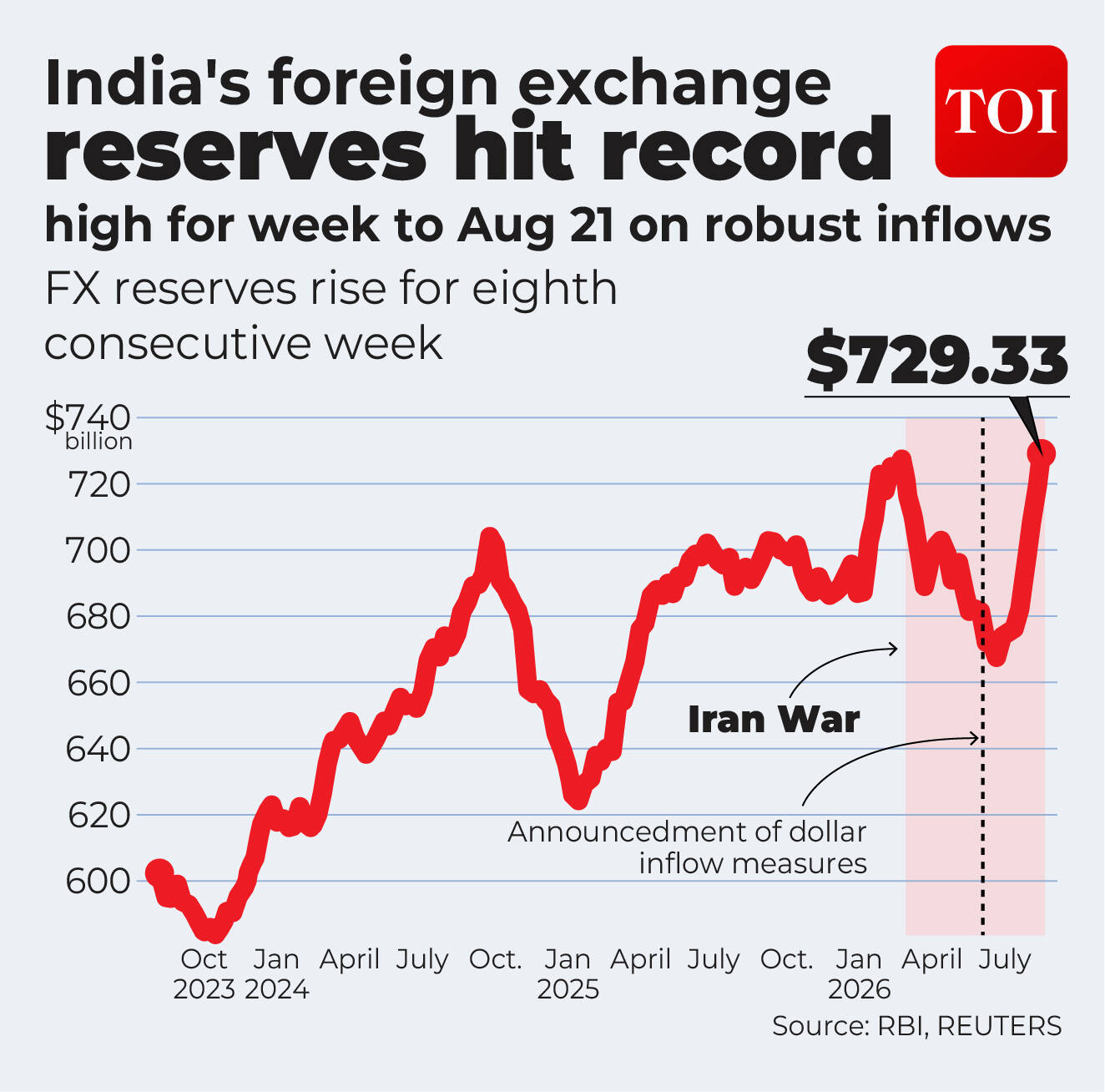
Forex reserves at record high
Not only that, the structure also allowed NRIs to borrow substantially more than the amount deposited. In some cases, borrowing could be as much as 19 times the deposit, with the borrowed funds placed as FCNR(B) deposits.This has led to India’s forex reserves touching new records even amid the conflict.The scheme revived a strategy used during the 2013 taper tantrum, when a similar window attracted about $26 billion and helped fuel a sharp rupee rally. The latest scheme was so successful that RBI ended the FCNR window a month earlier than announced.
What it means for India
Experts attribute a large part of the increase in forex reserves to RBI’s swap window. The added cover works well in the current economic situation, providing an important buffer from external shocks.Experts also note that while inflows from the swap facility were higher, forex reserves have not seen a commensurate increase due to possible central bank interventions to step rupee’s fall.“The swap facility has been responsible for the bulk of the recent reserve rebuilding, though the extent of lift is lower than the scale of inflows, implying some offset through intervention and balance-sheet adjustments,” says Radhika Rao, Senior Economist and Executive Director at DBS Bank.According to Rao, the rise in reserves strengthens India’s capacity to manage an oil shock, even if it does not fundamentally alter the economy’s dependence on imported energy.

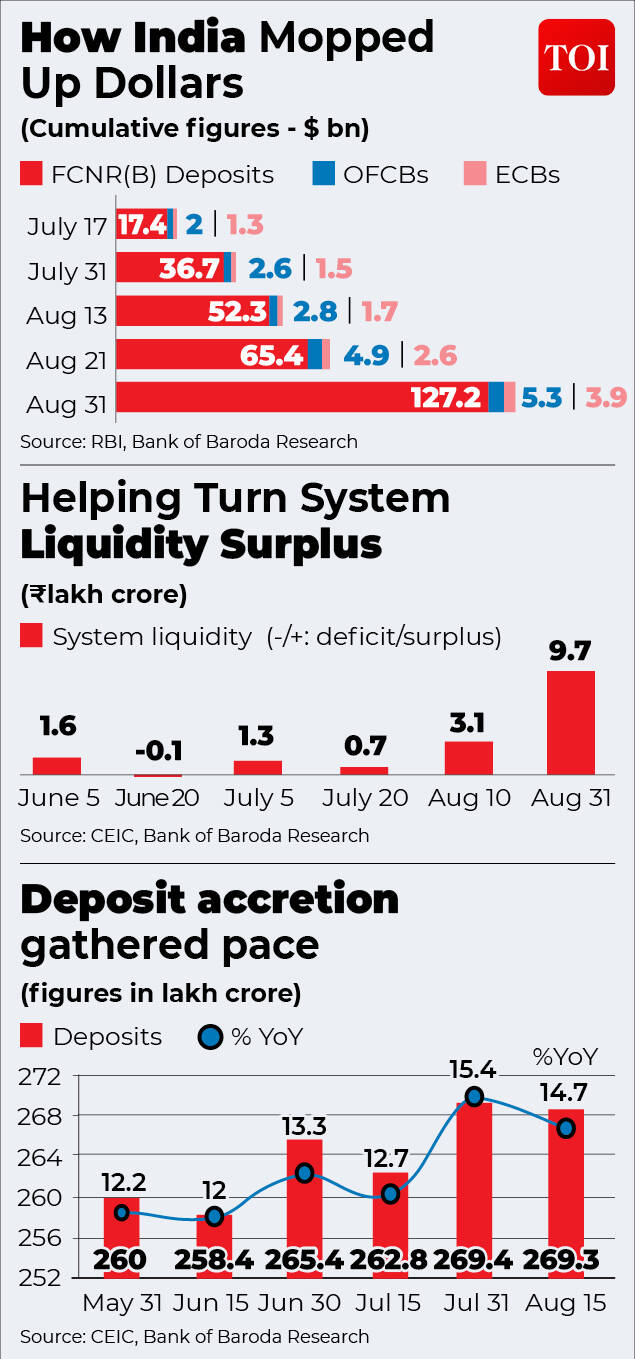
How India mopped up dollars
“FCNR deposits are usually medium-term liabilities and thereby a more durable form of financing. Further out, authorities will be focused on generating more resilient sources, including current-account-generated support, capital inflows, FDI, and remittances to backstop the reserves’ stock,” she tells TOI.Importantly, the increased forex reserves amid global turmoil provide confidence to investors and also keeps the speculators at bay knowing the RBI has the firepower to intervene if there is excessive speculative trade.Ranen Banerjee, Partner and Leader, Economic Advisory, PwC India says that with forex reserves covering over 10 months of imports, India is in a comfortable position.“The export margins on refined petroleum products have increased significantly and we are getting some cushion from the exports of these products given the hit on foreign refining capacity. Hence, we have a partial cushion on oil price shocks from these exports,” he explains.“The FII outflows have ebbed, FDI is improving, investments are growing and given markets have been subdued for almost 2 years, the valuations are normalising. Hence, the forex reserves are unlikely to face any immediate outflow concerns,” he adds.Madan Sabnavis, Chief Economist, Bank of Baroda is of the view that India’s forex position was strong entering into the crisis, and has now strengthened further.“Forex reserves were already quite strong covering 10-11 months of imports and hence were resilient. Adding these dollars just makes the position much stronger. At a different level given the rather high forward position of around $100 billion, these incremental deposits would in a way balance them,” he tells TOI.He adds that the current cushion is durable for at least a year, helping greatly in cushioning the blow. “We have been having a negative balance of payments in the last couple of years. This will make it positive,” he said.
Rupee on upward curve
With record inflows reported, the rupee has appreciated to hit a two-month high. Experts believe that had the window not existed, rupee’s depreciation would have been more rapid.On Thursday, the rupee strengthened by 49 paise, or 0.5%, to end at 94.48 against the dollar, marking its highest level in two months.The rupee’s appreciation followed the RBI’s disclosure on Wednesday that its special initiative to attract foreign currency deposits from non-resident Indians had generated several billion dollars of inflows.DK Srivastava, Chief Policy Advisor at EY India says that in the absence of FCNR contribution, it is likely that the rupee would have depreciated further.“It may be noted that the pressure on the rupee is driven by market forces, the balance between imports and exports of goods and services, net flow of capital and global crude prices. RBI does not aim to intervene in correcting the direction of change of the exchange rate which is determined by these broader forces. At best, it tries to contain the volatility of the INR/$. This became possible by the FCNR contribution,” he tells TOI.

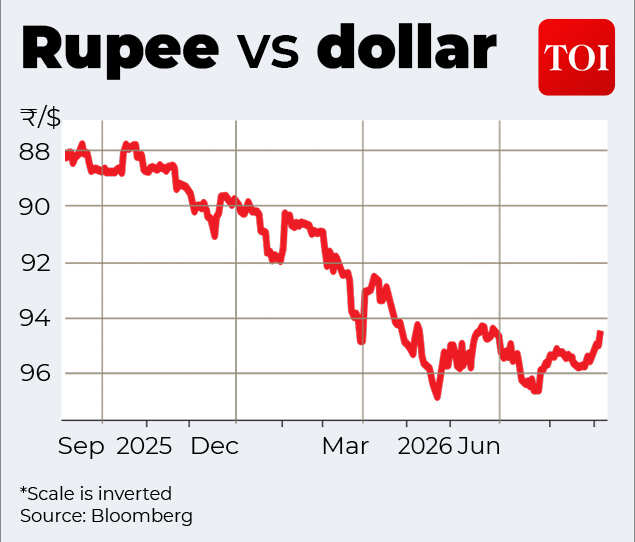
Rupee vs Dollar: Up upward curve
Caution ahead?
The US-Iran war is far from over and India is still importing energy needs such as crude oil, LPG, and LNG at high prices. Foreign investors are still pulling out money and the global economic headwinds continue.India’s forex cover has grown, which provides the economy with a credible external sector shield. But, the road ahead may continue to be bumpy in lieu of continued external pressures.DK Srivastava strikes a cautious stance.The previous peak of India’s forex reserves was $728.5 billion at the end February 2026 which was almost equal to the $729.3 billion post FCNR scheme, he notes.“Thus, the present level of forex reserves was already achieved earlier when the balance of trade was more favourable. It is important for India’s forex reserve profile to achieve a more positive balance of trade rather than depend on one time schemes which help to minimize depletion in the forex reserves,” he tells TOI.Some experts have also flagged the eventual hedging cost for RBI. But reports suggest that the government expects the central bank to face limited material costs from the swap facility.While economists have estimated that hedging could cost the RBI around 3% of roughly Rs 12 lakh crore, or Rs 36,000 crore, policymakers believe the returns from investing the dollars in US Treasuries could offset these costs.Even as the reserves touch record high, PM Modi has urged Indians to continue preserving forex. He has asked people not to go for foreign holidays, host weddings abroad, or buy gold unless necessary. And that itself is indicative of the government’s measured approach despite economic resilience.