
Europe’s efforts to build a stronger conventional deterrent against Russia are raising concerns as to whether a missile strike intended to weaken Moscow’s military capabilities could instead trigger a nuclear response. France is pressing Germany to clarify how it would use its expanding arsenal of long-range weapons, warning that a misreading of military intentions could push the continent towards a nuclear confrontation.Paris is concerned that a conventional attack on a target deep inside Russia could be interpreted by the Kremlin as a much broader threat, particularly if Moscow believes the strike has the backing of a nuclear-armed ally. A French official told the Financial Times that a conventional weapon could hit a Russian target and still provoke a nuclear response if the signal was misunderstood.The concern has become more pressing as Germany acquires and develops ground-launched missiles with ranges of between 500 km and more than 2,000 km. The weapons would give Berlin the ability to hit military installations far inside Russian territory, a significant expansion of its conventional strike capability.France is now holding discussions with German officials to establish a common understanding of when and how such weapons could be deployed, according to six people familiar with the talks cited by the Financial Times. Paris wants Germany’s approach to deep precision strikes (DPS) to be aligned with its own nuclear strategy, particularly over the risks of escalation and the messages military action could send to Moscow.The discussions expose a challenge facing Europe’s rearmament drive: expanding the ability to strike an adversary is only part of deterrence; countries also need to agree on how those capabilities will be used and how to prevent an attack from being mistaken for the start of a wider war.
France fears being drawn into a conflict
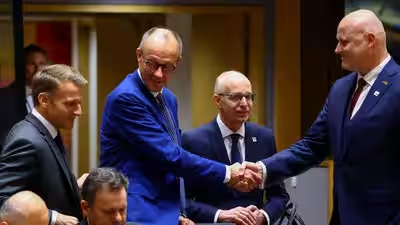
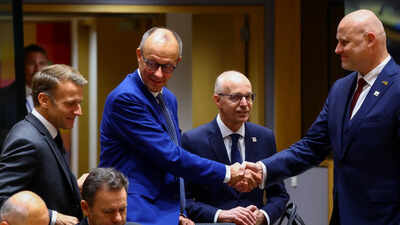
One source of French anxiety is president Emmanuel Macron’s proposal for France to extend its nuclear deterrence discussions to other European countries. Under the concept of ‘forward deterrence’, Paris is exploring how its nuclear capabilities could contribute to the security of European partners, while retaining sole control over any decision to use its nuclear weapons.French officials fear that if Germany launches a deep strike against Russia, Moscow could hold France responsible for the attack because of the two countries’ growing defence and deterrence cooperation.France has argued that nuclear deterrence depends not only on possessing weapons but also on a shared understanding of how threats, military movements and attacks are communicated.Paris wants a clearer doctrine, preferably one made public enough to ensure that Russia does not misinterpret the intentions behind a conventional strike.The issue is particularly relevant because France and Germany had already agreed to deepen cooperation on deterrence. In a joint declaration issued in March, Macron and German chancellor Friedrich Merz announced the creation of a high-level nuclear steering group to coordinate strategic cooperation, including conventional capabilities, missile defence and France’s nuclear forces. The declaration specifically identified deep precision strikes and the management of escalation below the nuclear threshold as areas for cooperation.
Germany says allies need common rules
Berlin has not rejected the French concerns. A senior German official told the Financial Times that Germany agreed European capitals needed a joint doctrine and a common understanding of the escalation ladder.The official added that the acquisition of deep-strike capabilities had always been expected to involve an agreement on how they would be deployed. Formal discussions had been delayed by France’s internal debate over its nuclear strategy but were now gaining momentum.The debate also raises questions about how individual European countries would coordinate long-range attacks within Nato. Germany’s growing capabilities are part of a wider effort involving Britain, Poland and Nordic and Baltic countries to strengthen Europe’s ability to deter Russia, particularly as uncertainty grows over the United States’ long-term security commitments under US president Donald Trump.General Ingo Gerhartz, the German officer who heads Nato’s command responsible for the defence of central Europe and its eastern flank, has argued that deep-strike decisions must be taken in consultation with allies. Russia, he said at the Berlin Security Conference last week, would tend to attribute an attack by one Nato member to the alliance as a whole.Germany’s defence ministry said it was developing deep precision strike capabilities jointly with Britain and exploring the possibility of including France.As countries develop weapons capable of reaching deeper into Russian territory, they must also establish how those weapons fit into a collective defence strategy, and how to ensure that a conventional operation does not become the trigger for a nuclear crisis.