


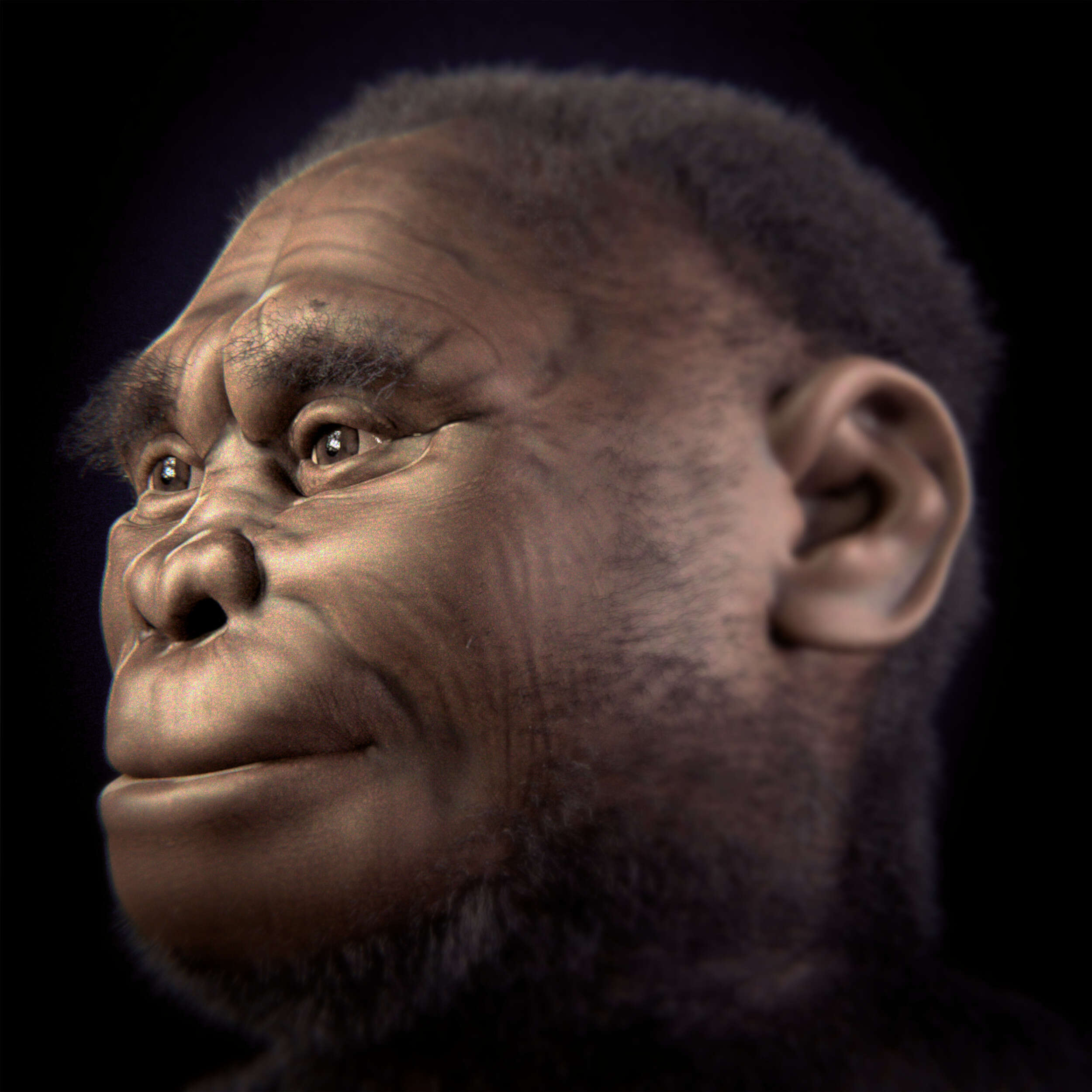
A strange theory has reopened one of anthropology’s most fascinating questions: could a tiny, human-like species still be hiding in the caves of Indonesia’s Flores Island? Anthropologist Gregory Forth believes that a creature described as half human and half ape may still exist somewhere in the mountain caves there, according to Popular Mechanics. The idea sounds like something from folklore, but it is rooted in a real extinct species that has puzzled scientists for years.That species is Homo floresiensis, better known by its nickname, the Hobbit. It was first discovered in 2004 inside Liang Bua cave in Flores, and the fossils immediately challenged what scientists thought they knew about human evolution. A study in Nature journal stated that the remains suggested a small-bodied, upright-walking human relative with unusually large feet, a tiny brain and features unlike modern humans, as per reports.
The fossil that changed the story

Ancient Flores hominins likely survived by scavenging large reptile leftovers. New research analysed fossilised bones and modern Komodo dragon feeding habits. Evidence shows these hominins consumed meat-poor skeletal remains after predators. Image Credit: Wikipedia
When researchers first studied the bones from Liang Bua, they found something remarkable. The individual stood only about 3.5 feet tall, had large teeth and feet, and a skull that held a very small brain. What made the discovery even more important was that the bones belonged to a single female, and later finds uncovered more evidence of the same species, including bones from 12 additional individuals.Scientists believe these remains date back to the Late Pleistocene era, and many think the species lived on Flores for a long period before disappearing around 50,000 years ago. That means these small humans were sharing the planet with early modern humans much more recently than many people would expect.The discovery was so unexpected that it forced experts to rethink the range of human diversity that once existed. Rather than being a simple straight line from ape to modern human, human evolution suddenly looked more like a branching, complicated tree with several unusual offshoots.
Why some people still wonder


Gregory Forth’s theory is not that scientists have proof of living Hobbits. It is that the possibility should not be dismissed too quickly. He points out that local communities have often known about animals long before scientists accepted them, using the Komodo dragon as an example. That is a fair reminder that not every unfamiliar creature is immediately recognized by science.Still, Forth also acknowledges that scientists need a specimen before they can confirm such a claim. In other words, stories and sightings are not enough. Real proof would have to come from physical evidence, not just oral tradition or anecdotal reports.Even so, his idea has attracted attention because it touches on a larger scientific tension: what happens when local knowledge, folklore and academic research do not match? Sometimes a story turns out to be true. Other times, it reflects a deep cultural memory of something long gone.
Why most scientists remain skeptical
For most paleoanthropologists, the idea that Homo floresiensis still survives today is highly unlikely. Matthew Tocheri of the Smithsonian Institution’s Human Origins Initiative has said he would be thrilled if it were true, but he also considers it extremely improbable.His skepticism is not based on disbelief alone. It is based on the lack of evidence. Scientists who study human evolution work from bones, tools, fossils and other physical traces. If an entire population of tiny human relatives were still living on Earth, Tocheri and others believe there should be signs by now.He compared the situation to Bigfoot or Sasquatch stories: people report sightings, but no verifiable evidence has ever appeared. That is the key issue. Fascinating claims are easy to make, but extraordinary claims require extraordinary proof.There is also another practical reason for doubt. If a surviving population existed, scientists would likely be looking for it much more actively. But because the idea does not fit well with the current scientific understanding, very few researchers are spending time searching for living Hobbits.
What we know about the hobbit
The known fossil evidence shows that Homo floresiensis was a truly unusual species. In some ways, it resembled Australopithecus afarensis, a much older species that died out millions of years before the Hobbit appeared. That similarity has added to the confusion, because it raises questions about how such a small-bodied human-like creature could exist so late in evolutionary history.Researchers believe one human species began living on Flores about one million years ago and eventually died out around 50,000 years ago. Exactly how they lived is still debated, but recent research has challenged some earlier assumptions.A study published in Science Advances on July 3 reported that these humans neither hunted in the way previously imagined nor used fire. That finding complicates the older view of them as active tool-using hunters.Earlier analyses had suggested they hunted stegodons, extinct animals related to modern elephants. But later examination showed that some marks on the bones were not made by stone tools at all. Instead, they may have come from Komodo dragons, which likely fed on the animals and left behind the damage.Further studies suggested that the Hobbits were carnivores, but their diet was broader than that. They likely ate plants, fruits and animals, and may also have consumed nuts or insects. That flexible diet would have helped them survive in a challenging island environment.
Why the story still matters
Even if the idea of living Hobbits turns out to be wrong, the debate around them is still valuable. It reminds us how much of human evolution remains mysterious. A small fossil find in a cave on a remote island rewrote part of the story of our species, and that alone is extraordinary.It also shows how science and imagination can collide. On one side are the fossils, the measurements and the careful analysis. On the other is the human fascination with hidden worlds and lost species. That is why the story of Homo floresiensis continues to capture attention two decades after its discovery.For now, the safest conclusion is the one most scientists already hold: the Hobbit was real, but living Hobbits almost certainly are not. Still, as long as there are caves, legends and unanswered questions, the possibility will continue to tempt the imagination.