
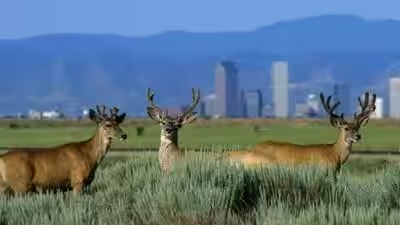
Just 10 miles northeast of Denver, Colorado, the Rocky Mountain Arsenal National Wildlife Refuge is now a vast urban wildlife sanctuary where bison graze, bald eagles fly over lakes and black-footed ferrets live in the grasslands. Covering about 15,000 acres, the refuge is home to more than 330 species of mammals, birds, reptiles, amphibians and fish.But the landscape once had a very different purpose. According to University of Colorado, Denver, in 1942, during World War II, the US Army selected about 17,000 acres of farmland in Commerce City for the production of chemical weapons and rocket fuel. From the 1950s through the 1980s, facilities at the Arsenal were also leased to Shell for pesticide production.Decades of chemical manufacturing left the land and groundwater heavily contaminated. More than 600 chemicals were identified at the site, which was placed on the Superfund National Priorities List in 1987.Millions of pounds of toxic waste were dumped at the Arsenal over the years, while several major spills were recorded. A 1947 spill released about 100,000 gallons of benzene. In 1978, another incident involved 58,864 gallons of dicyclopentadiene (DCPD), along with 87,000 gallons of other solvents, pesticides and metals.Pollution also reached groundwater. During the 1960s, chemicals were disposed of through deep-well injection, a practice that contributed to groundwater concerns and was suspected of triggering earthquakes.Wildlife was affected too. Thousands of migrating waterfowl died after exposure to pollutants, while badgers were found with high levels of dieldrin, a toxic pesticide. Research also found that American kestrels nesting in contaminated areas had lower reproductive success.

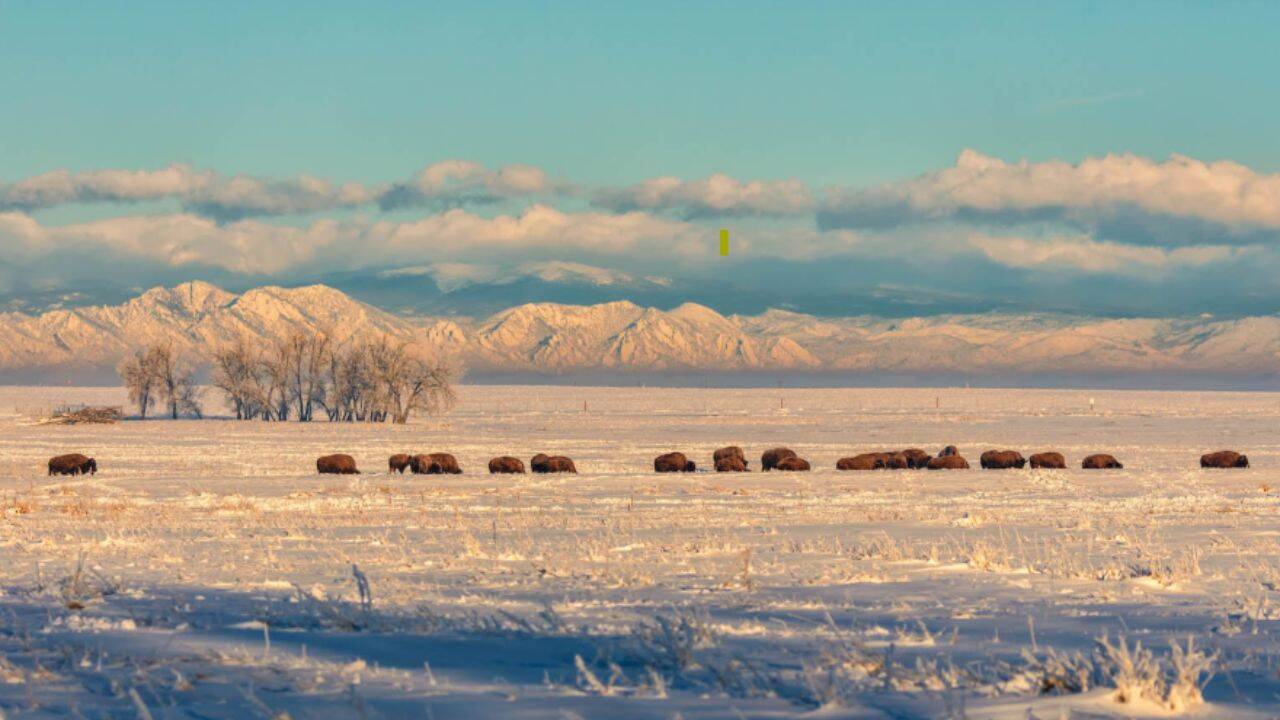
Bison herd at Rocky Mountain Arsenal National Wildlife Refuge (Picture: Uncover Colorado)
Nature reclaims Arsenal
Even during the years of industrial activity, wildlife continued to use the Arsenal. A major turning point came in the 1980s, when a bald eagle roost was discovered on the property. At the time, bald eagles were listed as endangered in the United States.The discovery helped demonstrate the site’s potential as a wildlife habitat. In 1992, Congress designated the area as a national wildlife refuge, and much of the land was eventually transferred to the US Fish and Wildlife Service as cleanup progressed.The cleanup involved removing contaminated soil, restricting access to polluted groundwater and managing waste so that people and animals could not come into contact with it. In many affected areas, contaminated soil was removed to depths of up to 10 feet and placed in two hazardous-waste landfills on the property.Where waste could not be removed, it was placed beneath large engineered covers designed to prevent exposure and reduce the risk of groundwater contamination. Contaminated groundwater is also pumped out and treated, according to Environmental Protection Agency.Prairie dogs also played an important role in the restoration. Their colonies form the foundation of much of the refuge’s food chain, but some were located in heavily contaminated areas. Those colonies were relocated to safer parts of the site.
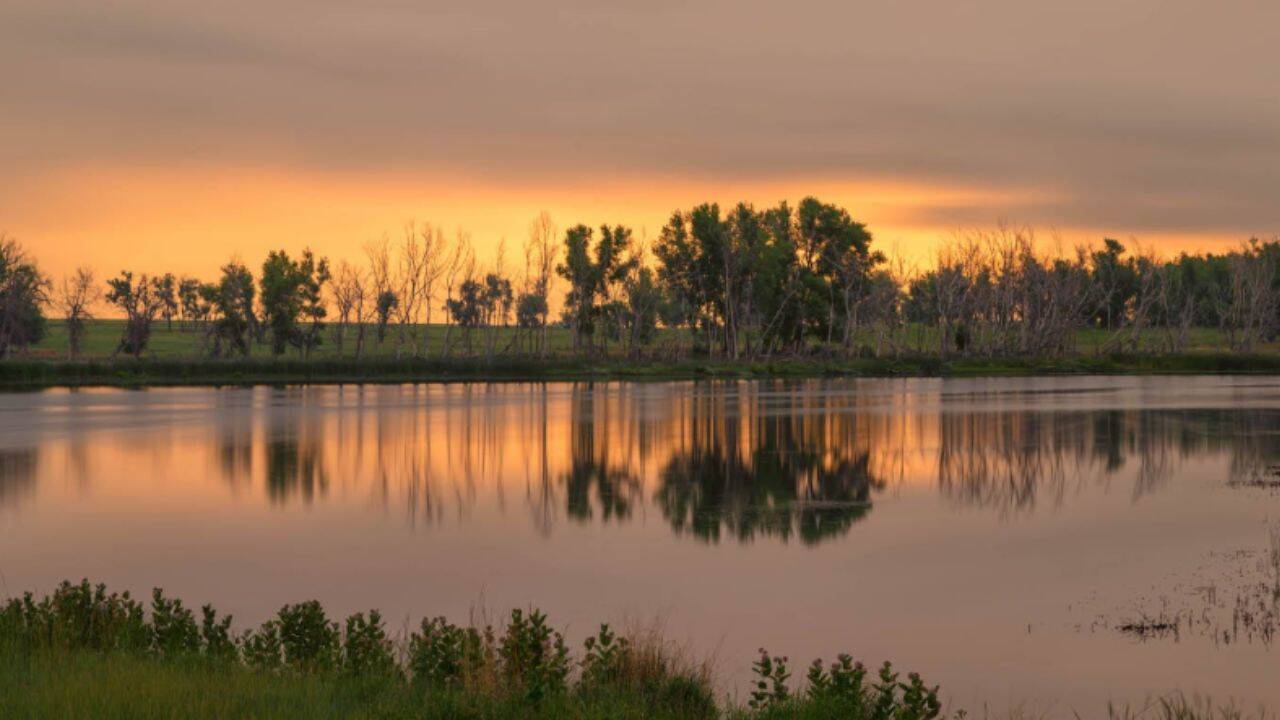
Sunrise over Derby Lake, Rocky Mountain Arsenal. (Uncover Colorado photo)
A new landscape
The cleanup cost about $2.1 billion and took 15 years. Around 1,000 acres remain under US Army management, including areas containing waste and groundwater treatment facilities.The transformation has also opened the land to public and community uses. Commerce City and a sports enterprise business have invested more than $120 million in the property. The wider area now includes public open space, a civic centre, a high school and a soccer complex.Meanwhile, the refuge has become one of the largest urban wildlife refuges in the United States and attracts nearly 500,000 visitors each year.Its wildlife is now one of the clearest signs of the site’s recovery. Bison, mule deer, white-tailed deer, bald eagles, prairie dogs and black-footed ferrets live across the grasslands.The black-footed ferret, one of the most endangered mammals in the United States, has also been reintroduced at the refuge. Its successful reintroduction has further strengthened the site’s importance as a wildlife habitat.According to US Fish and Wildlife Service, birdlife changes with the seasons. Spring brings migrating songbirds, including warblers, finches and Bullock’s orioles, while great blue herons, American avocets and snowy egrets gather around the wetlands. Summer brings wildflowers, prairie grasses and burrowing owls nesting in abandoned prairie dog burrows. In autumn, coyotes and deer move through the grasslands as migrating waterfowl return to the lakes. Winter brings bald eagles that shelter in cottonwood trees near the water.