
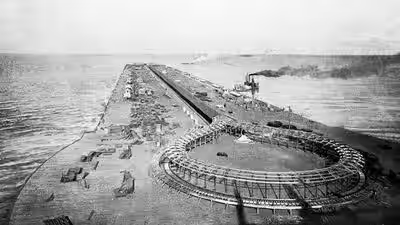
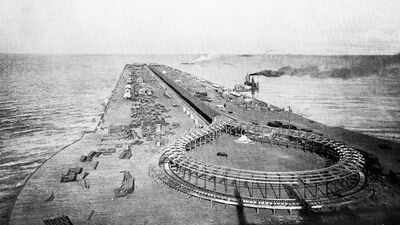
The first moving walkway appeared in 1893 at the World’s Columbian Exposition in Chicago, United States. It was also the longest ever, and riders paid five cents to use it. Separate levels let riders stand or sit while moving along the route. It ran over 1 kilometre along a pier and onwards to the Exposition entrance. According to John J. Flinn’s 1893 Official Guide to the World’s Columbian Exposition, one half of the platform travelled at three miles an hour, while the other moved at six miles an hour. Passengers paid five cents to use it at the exposition. The walkway was destroyed by fire in 1894, according to Guinness World Records.
How the moving sidewalk worked at the 1893 World’s Fair
The guide lists the attraction under the heading ‘Moveable Sidewalk’ in its section of practical information for visitors. It calls it ‘a mechanical contrivance’ that carried passengers from the steamship landing at the pier to the Peristyle. The structure consisted of a continuous double platform. One half moved at three miles an hour and the other at six miles an hour.This arrangement gave passengers a choice of two moving speeds while travelling along the same route. The guide records a fare of five cents. It does not explain how passengers transferred between the two sections, how long the journey took, or how the machinery was powered.

PC: Wikipedia
The walkway connected the pier with the Peristyle
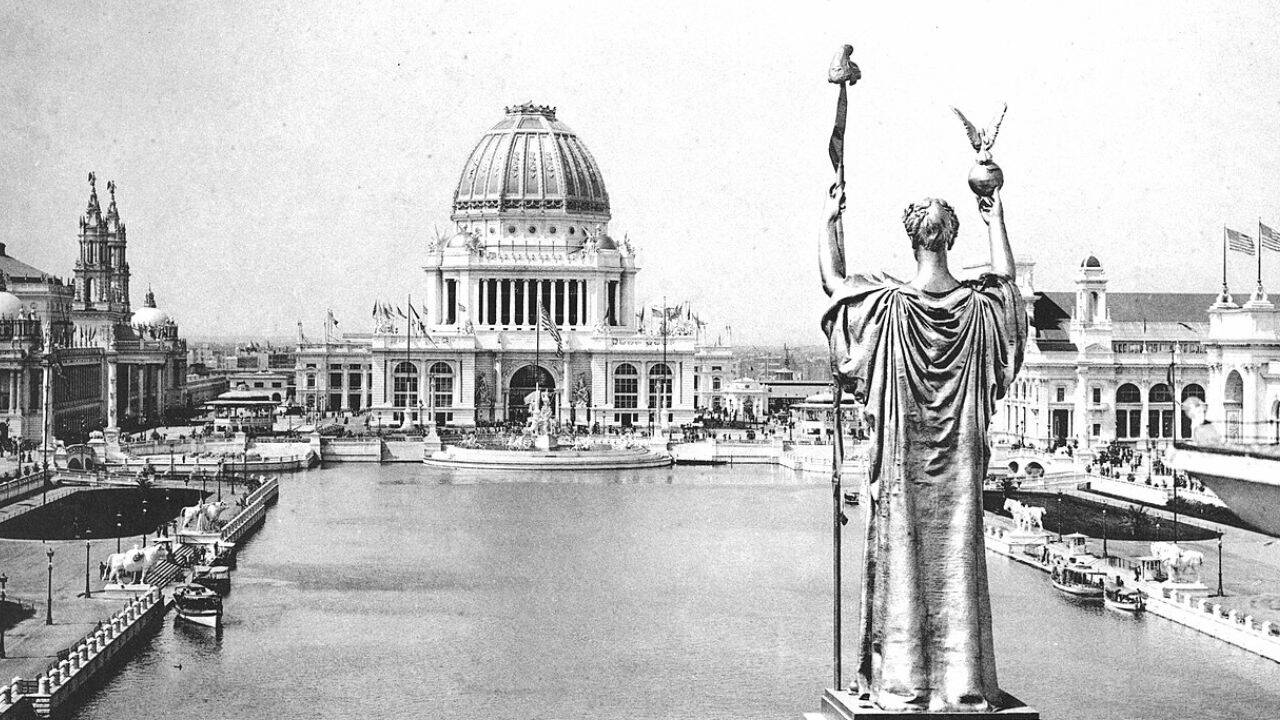
The moving platform served as a route between the pier and the Peristyle, which stood at the water-facing entrance to the fair. The guide notes that boats from the city landed at the pier, which extended beyond the Peristyle. It also records that twenty turnstiles for the sale of admission tickets were located there.The walkway therefore connected the steamship landing with the area where visitors entered the exposition grounds. It identifies the starting point, destination, operating speeds, and fare. It gives no estimate of the platform’s overall length or passenger capacity.
How visitors travelled across the exposition grounds
The walkway was one of several ways to move around the exposition grounds. The guide also describes the Intramural Railway, which ran around the outside of the grounds from the South Pond to the North Inlet. It provided a rapid means of travel, with stations at several points and a fare of ten cents for any distance. Trains travelled at about twelve miles an hour, and a complete circuit of the grounds took twenty minutes.Visitors could also hire rolling chairs at stations inside the main gates, near major buildings and at other points. These options gave visitors ways to cover the extensive fair site, depending on their needs and destination.
Boats and gondolas provided additional transport options
Water transport offered another way to see the fair. Electric boats travelled through the lagoons, the Basin and the North Pond. A round trip took about an hour and cost fifty cents, while shorter journeys cost twenty-five cents. Gondolas, built to represent those used in Venice and operated by Italian gondoliers, also offered round trips for fifty cents.Steam launches followed a route that took passengers out into Lake Michigan and back to the South Pond, charging twenty-five cents for the full trip. The guide presented these services alongside the land transport options and their fares.