
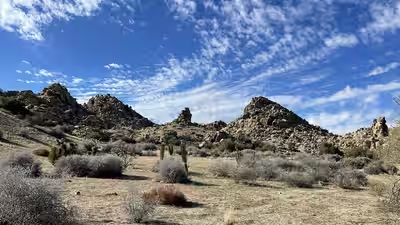
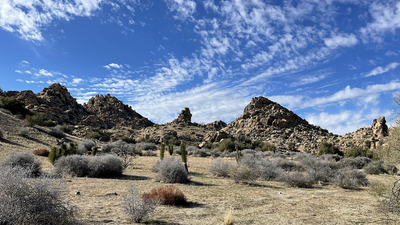
California state officials have completed the purchase of 640 acres of desert land near Pioneertown, securing a large area that researchers say is highly likely to remain suitable for western Joshua trees as the climate changes. The California Department of Fish and Wildlife (CDFW) completed the purchase on August 24, 2026. The land is northwest of Pioneertown in San Bernardino County and has been identified as one of Southern California’s most promising areas for future western Joshua tree habitat. Researchers used environmental factors and climate projections to identify land that is likely to remain suitable for the species in the future. CDFW is now working with the Native American Land Conservancy (NALC) and California Native American tribes to develop plans for long-term protection and co-management of the property.
Protecting critical future habitat
The newly protected parcel sits northwest of Pioneertown in San Bernardino County. Its environmental conditions make it an important area for future western Joshua tree survival. State research shows that much of the species’ current range could become unsuitable by the end of the 21st century as climate conditions change. “This is an example of the Western Joshua Tree Conservation Plan successfully put into action, as was intended, to help us protect this unique species in collaboration with tribal partners,” CDFW Director Meghan Hertel said in an official statement. “There is nothing else quite like the western Joshua tree. They are an important part of Native American cultural traditions, a keystone species for our desert ecosystems and they are also a sight worth taking a road trip for.” The purchase is the second property acquired with money from the Western Joshua Tree Conservation Fund. The fund was created under the Western Joshua Tree Conservation Act, which became law in July 2023. It receives mitigation fees from projects that are permitted to affect western Joshua trees. More than $23.5 million has now gone into the state conservation fund. With the new Pioneertown property, CDFW says 923 acres of western Joshua tree habitat have been conserved. The department is also looking into additional properties totaling 2,500 acres.
Collaborative tribal stewardship
The property is important not only for its environmental value but also for its cultural importance to Native American communities. CDFW’s conservation plan includes tribal co-management and recognizes the value of traditional ecological knowledge in managing western Joshua tree habitat. Michael Madrigal, president of the Native American Land Conservancy and a member of the Cahuilla Tribe, spoke about the importance of protecting the newly acquired property after an initial visit. “We are so blessed to be able to steward this place into the future,” Madrigal said. “I will never forget the first time I went to this new preserve. It is such an amazing place with some of the largest Joshua trees I have ever seen.” The Western Joshua Tree Conservation Plan was approved by the California Fish and Game Commission on August 13, 2025. The plan includes objectives for co-management with California Native American tribes. CDFW says the long-term co-management process will involve continued work with tribes as the plan is put into practice.
Public accountability and funding transparency
Along with the land purchase, CDFW launched a public webpage showing the financial activity of the Western Joshua Tree Conservation Fund. The page tracks money that has been spent, committed and reserved and organizes it by conservation actions, including land acquisition, habitat management and other conservation work. Under the Western Joshua Tree Conservation Act, people and businesses must obtain permits for activities that involve taking, or removing, western Joshua trees. The fees from those permits go into the Western Joshua Tree Conservation Fund. State law limits the use of that money to acquiring, conserving and managing western Joshua tree lands and other conservation activities. By protecting land that is expected to remain suitable for western Joshua trees in the future, state officials hope to give the species more room to survive as climate conditions change. The 640-acre acquisition also adds to a wider conservation effort aimed at protecting the species and its habitat over the long term.