
In the middle of Manhattan, Broadway’s green medians are being transformed into a connected habitat for birds, bees and other urban wildlife. The Broadway Mall Association (BMA), a nonprofit organisation, is replanting the city’s Broadway malls with native plants as part of a long-term project called The Great Green Way.According to a report by Eco Portal, the project aims to turn five miles of Broadway’s green spaces into one continuous corridor. Instead of each median being a separate garden, the restored spaces will work together and provide habitat across the length of Broadway.The work is taking place in a challenging setting. The Broadway malls are made up of gardens in medians that are about 20 feet wide and surrounded by six lanes of traffic. The conditions make planting and maintaining these spaces difficult, but careful selection of plants can help them support more wildlife.The plants are selected according to factors such as sunlight, soil, wind and how each space is used. The aim is to create gardens that can support wildlife while also needing less water and maintenance over time. Native Northeast species are being chosen for the conditions of each individual mall.
How plantation is being done
The restoration work began in 2024 with pilot projects at 83rd–84th Streets and 164th–165th Streets. The two locations had different conditions, including differences in topography, vegetation, soil and sunlight. Because of this, they were used as living laboratories to understand how restoration could work in different parts of Broadway.As of 2026, 12 malls have been restored, including sites at 73rd, 74th, 75th, 83rd, 93rd, 94th, 98th, 119th, 120th and 164th Streets. A dedicated pollinator garden has also been created at 150th Street.Several more restorations are expected to be completed by the end of 2026. BMA wants to restore all 83 malls and connect them into the Great Green Way.Over time, the individual gardens are expected to provide connected habitat for wildlife while also bringing more greenery into neighbourhoods along Broadway.

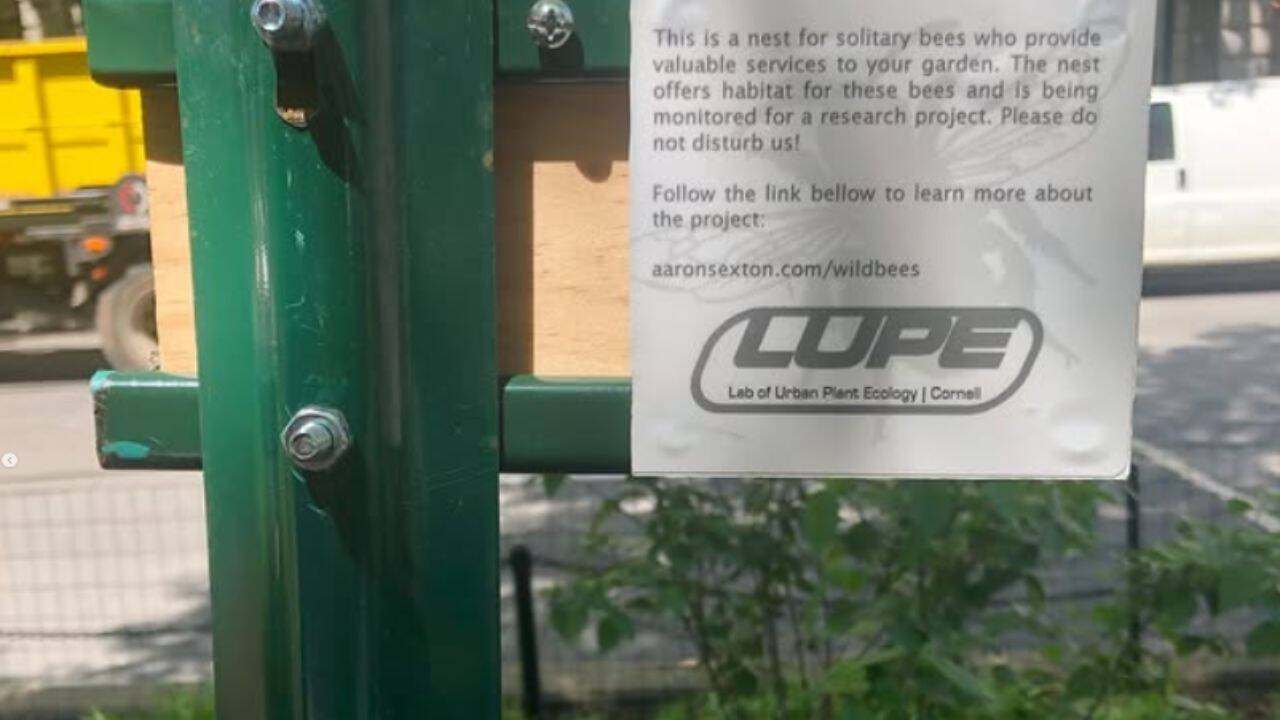
The pollinator garden (Picture: Instagram/BMA)
Importance of native plants
The restoration is not simply about making the medians look greener. Native plants have been selected because they can provide several ecological benefits in the city. According to BMA, the new plantings provide food and habitat for birds and pollinators. They can also improve soil health and need less water and maintenance as they become established.The plants include native trees, shrubs, grasses and perennials. Their deep root systems can absorb stormwater and store carbon, adding another ecological function to the small gardens.Each mall is trated as its own ecosystem. That means the same planting approach is not applied everywhere, but plants are matched to the conditions of individual blocks. This is important because the Broadway malls are not uniform spaces. Some receive different amounts of sunlight, while soil, wind, vegetation and topography can vary from one location to another.
The pollinator garden
One of the project’s dedicated spaces is the pollinator garden at 150th Street. It was planted in spring 2024 with help from community volunteers.The garden uses native species selected to provide nectar, shelter and seasonal food for butterflies, bees and other pollinators. Its location also gives the garden a wider role in the planned green corridor. The Broadway malls sit between Riverside Park to the west and Central Park to the east. The pollinator garden helps strengthen this link for pollinators whose populations are under pressure.
Birds on Broadway
According to BMA, the Broadway malls provide food sources including insects, seeds, fruit and nectar. Birds such as robins, cardinals, warblers, woodpeckers and hawks can be found along the corridor. Some use the malls as a stopover, while others use them as habitat within the city.To understand how the restored spaces affect wildlife, BMA is working with NYC Bird Alliance to study bird and insect activity on the malls. The research is intended to help measure how the restored areas support wildlife. It will also help inform how the Great Green Way can develop as a bird-friendly urban corridor.
The restoration will expand
The restoration is still underway, and the association says the work will expand substantially. Future plantings are expected to add thousands of native trees, shrubs, grasses and perennials. BMA plans to introduce more than 3,000 plants per mall as the project grows. The aim is eventually to restore all 83 Broadway malls and create a continuous green corridor connecting neighbourhoods, parks and ecosystems across Manhattan.The association says the restored spaces can help address several challenges facing the city. The Broadway malls can cool streets, clean air, absorb stormwater and provide habitat in a densely built environment. At the same time, the project is intended to make the spaces more welcoming for people, particularly in neighbourhoods with limited access to green space.The Broadway Mall Association says the existing landscapes are ageing while climate change is increasing pressure on them. The Great Green Way is therefore designed not only as a planting project but as an effort to restore the ecological health of the malls and make them more resilient. For people travelling along Broadway, the changes are taking place in small sections of the street.