
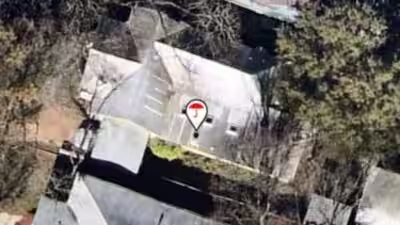
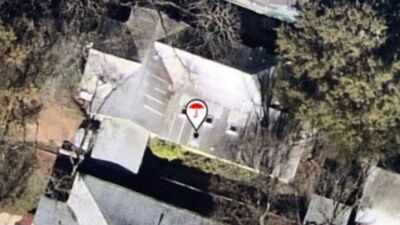
For years, Tracy Gartenmann had insured her Austin home against wildfires, hailstorms and high winds. Then, in January, she received an email telling her that her insurance would not be renewed.The reason was visible in two photographs attached to the message that showed trees near her roof, photographed from high above her house.“I thought it was a scam,” Gartenmann told KUT News. After she realised the email was genuine, she felt like an infringement on her rights.Gartenmann’s case is only one of the wider use of aerial images by insurance companies in Texas. Official records reportedly show hundreds of pages of complaints and state filings. Insurers are widely using images taken by satellites and aircraft to assess homes and decide whether they want to continue providing coverage.Travelers gave Gartenmann two months to cut back the trees or risk losing her insurance. Without insurance, she could face the cost of rebuilding after a storm, while mortgage lenders could also penalise homeowners who do not have coverage.Gartenmann paid a landscaping company $3,000 to prune the trees. She then sent Travelers photographs showing the branches had been cut back. Acording to her, the company agreed to renew her policy only days before it was due to expire.
Watching from above
According to records from the Texas Department of Insurance, homeowners in San Antonio, Houston and Austin have reported that insurers threatened not to renew their policies because of aerial photographs. Meanwhile, homeowners in Florida, North Carolina and Pennsylvania have also reported nonrenewals linked to aerial images. The Wall Street Journal reported a similar case in California last year.At least a dozen complaints have been filed with the Texas Department of Insurance since 2023. Some homeowners complained they were surprised that insurers were monitoring their properties from above. In some cases, they said policies were not renewed because of images they believed were poor, outdated or inaccurate. Some homeowners also struggled to see the images insurers were using to make decisions.In 2023, State Farm told a homeowner outside Galveston that the policy would not be renewed unless the roof was replaced. The homeowner hired a roofing company, which said the roof only needed a thorough cleaning.The homeowner then asked State Farm for the report and images used by its underwriting team. “I have asked on numerous occasions for the report & drone pictures from underwriting to support their so called decision,” the homeowner said in a complaint.State Farm responded that it had the right to survey a home at any time and was not required to provide inspection reports. Only, after the state became involved, State Farm agreed to renew the policy.David Bolduc, who heads the Texas Office of Public Insurance Counsel, said insurers have the right to inspect homes. “They have the right to come out and look at your house. They, I guess, have a right to look at it on a satellite,” Bolduc said.
How insurers use aerial images
The use of aerial imagery is growing as insurers deal with more extreme weather and higher costs from damage to homes. Between 2020 and 2023, the rate at which insurers in Texas chose not to renew home insurance policies had almost doubled.Insurance groups say aerial photographs can help companies inspect many properties more efficiently than sending workers from house to house. Consumer groups, however, warn that the images can result in inaccurate decisions that homeowners may find difficult to challenge.Ware Wendell, executive director of consumer advocacy group Texas Watch, said the use of such technology was reducing the human element in insurance.“We are really losing the human touch when it comes to the purchasing and servicing and adjusting of insurance policies,” Wendell said. “And I think that’s a bad thing for policyholders.”Insurance companies can obtain aerial photographs through third-party technology providers. State Farm, which has policies across Texas, said in state filings that it uses CAPE Analytics to obtain and assess aerial images of homes.According to state data, CAPE’s technology is used by insurers that represent at least 20% of the Texas home insurance market.

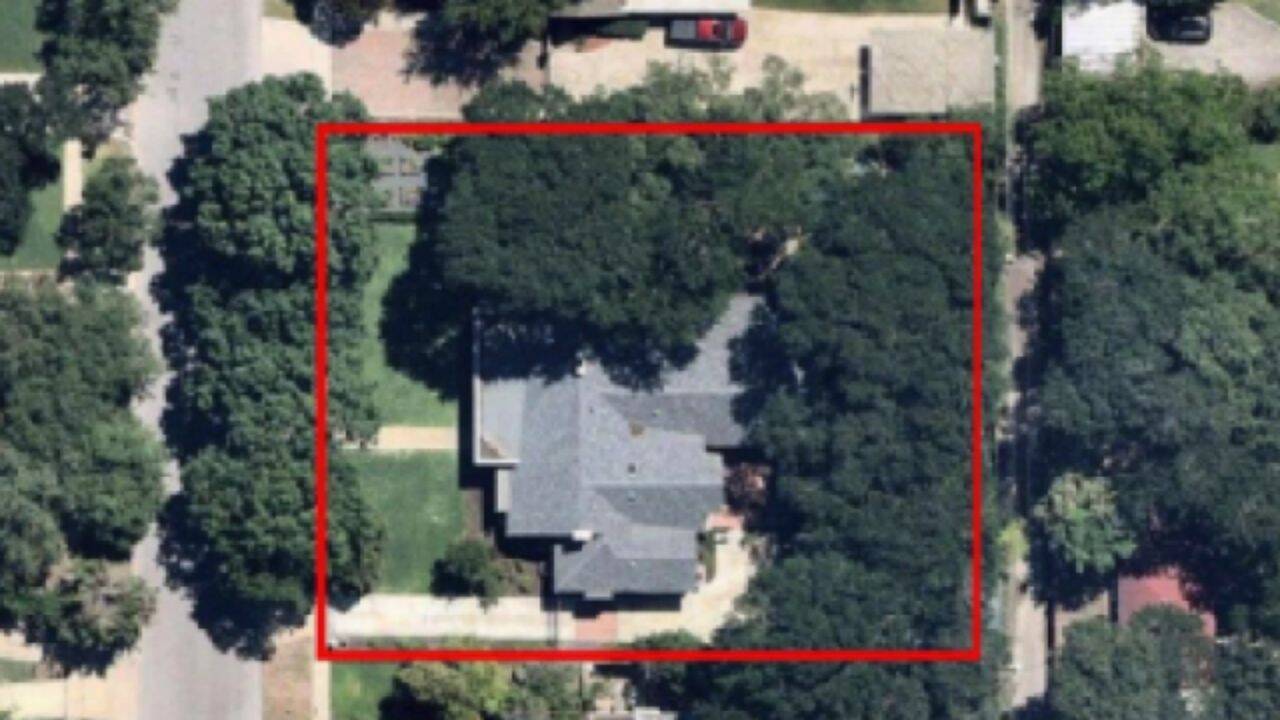
Nationwide used an AI-analysed aerial image to flag a San Antonio homeowner’s roof as poor.
CAPE says it has access to aerial images covering nearly all of the US. Its technology uses artificial intelligence to analyse roofs in the images and rate them based on what its system identifies as damage.KUT News obtained a CAPE manual that an insurer filed with the state in 2024. The manual appears to describe an older version of the technology, but the technology is still being used by insurers. The document describes the roof-rating system as a low-cost alternative to inspections carried out in person.Richard Johnson, director of communications for the Insurance Council of Texas, said the technology allows insurers to assess large areas quickly.“Rather than having somebody walk through neighborhoods or go from house to house, insurer] can cover a large amount of area,” Johnson said.But the same CAPE manual also points to a limitation. It says aerial photographs are generally less accurate than inspections carried out by people.“Roof conditions derived from drive-by or on-site inspections of residential single family dwelling structures can typically return more detailed analysis of minor defects of the roof,” the manual reads.
When insurers get the roof wrong
The concerns over accuracy became clear in a case involving Nationwide. In 2023, the company told an Austin homeowner that it would not renew their policy because an aerial image showed the roof was in poor condition. Nationwide said the roof was discoloured and that this could indicate algae on the shingles.But the homeowner said the roof was only a year old.In the complaint, the homeowner said they discovered the insurance had been cancelled after their mortgage company sent them a bill.When a home loses insurance while the owner still has a mortgage, the lender can take out insurance on the homeowner’s behalf. These policies can cost more and provide less coverage than standard home insurance.In this case, the homeowner owed the mortgage lender $156 for the month they went without insurance. The homeowner later found another insurer and asked the state to investigate.Two months later, Nationwide responded to questions from the state and said it had made a mistake. “After further review, it was determined that our underwriting associate had initially reviewed the wrong aerial report,” a company employee wrote. “The correct aerial report would not have warranted any action to be taken regarding the roof.”Nationwide and Travelers both have also confirmed that they use aerial imagery to help write policies. “As an insurance and financial services company, we continually assess and balance our portfolio based on the level of risk in our books of business,” said Kevin Kemper, a Nationwide spokesperson. “We utilize technology and third-party services to assist in the underwriting of those risks, including aerial imagery.”
The law that lets insurers fly drones
The use of aerial imagery also raises questions about privacy. Texas law gives insurers more freedom to use drones over private property than many homeowners may realise.In 2013, Texas lawmakers passed legislation aimed at protecting residents from unmanned aircraft, including drones, flying over their homes. The law limited who could take photographs of private property from above, while creating exceptions for groups including law enforcement, oil and gas companies and organisations using satellites for mapping.The law was later changed. Senate Bill 840, which became law in 2017, gave insurers and their affiliates the right to fly drones over private property for the purpose of writing insurance policies, including renewals.Texas also does not currently prohibit insurers from using artificial intelligence. But some consumer advocates want lawmakers to introduce rules around the technology.Texas lawmakers are considering legislation on the use of AI in insurance. The bill would require health insurance companies to disclose on their websites and to individual customers if they use AI-based algorithms to evaluate claims. The bill, however, would not cover companies that provide other forms of insurance, including home insurance.